Introduction
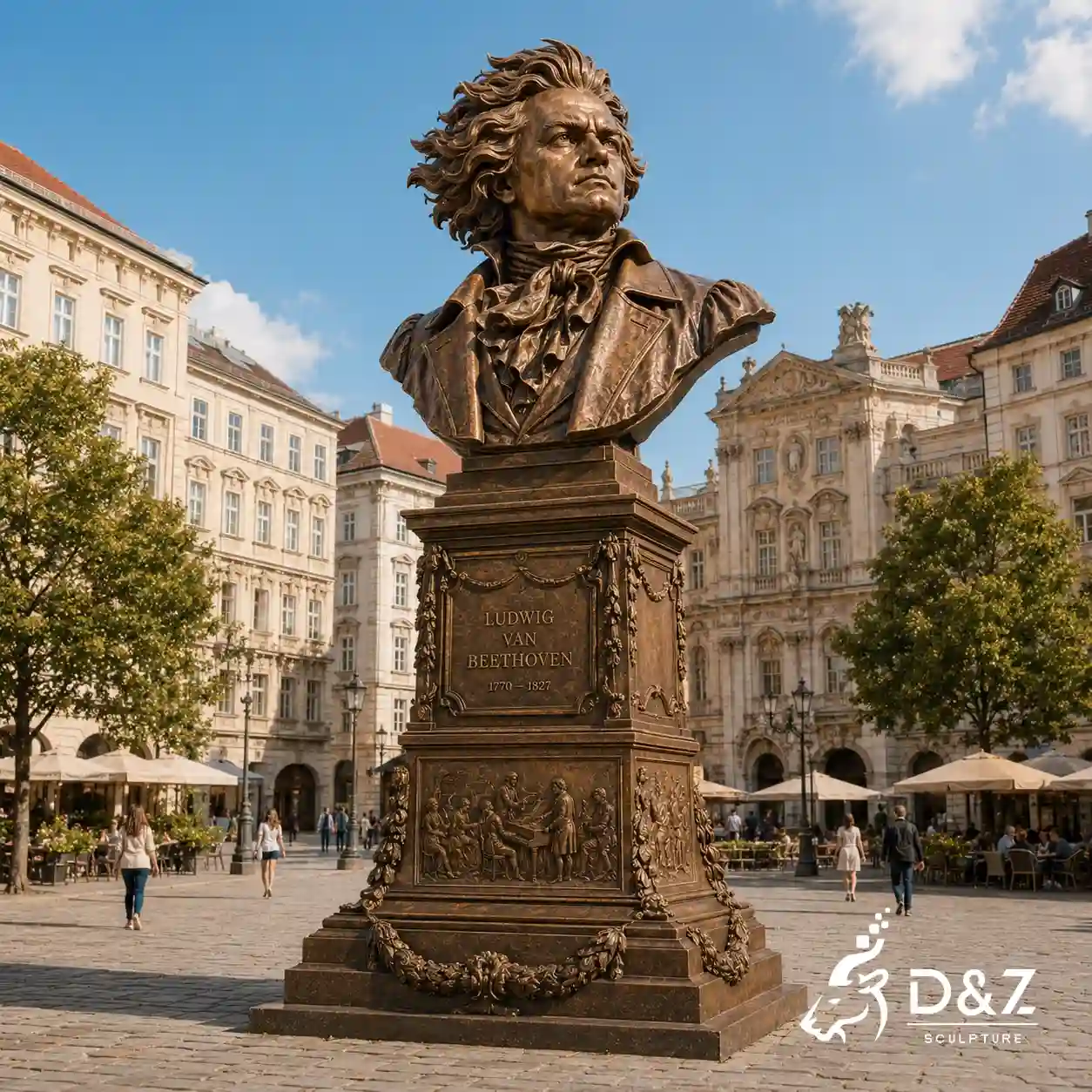
A bust statue is a three-dimensional sculpture depicting a person’s head and upper torso, commonly crafted from materials such as bronze or marble. These sculptures range from small tabletop ornaments to life-size commissions or large-scale works designed for public spaces.
In contemporary society, busts are widely utilized in commemorative, cultural, educational, artistic, and public projects, remaining a significant form of expression within portrait sculpture and commemorative art honoring public figures.
Table of Contents
- Introduction
- 1. What Is a Bust Statue?
- 2. What Parts of the Body Does a Bust Include?
- 3. What Is the Difference Between a Bust and a Statue?
- 4. Why Are Bust Statues Created and What Do They Represent?
- 5. A Brief History of Bust Sculpture
- 6. What Are the Main Types of Bust Statues?
- 7. What Materials Are Bust Statues Made From?
- 8. How Are Bust Statues Made?
- 9. What Sizes Do Bust Statues Come In?
- 10. Where Are Bust Statues Used Today?
- 11. How to Choose the Right Bust Statue for a Space or Project
- 12. How to Choose a Bust Sculpture Manufacturer?
- 13. Bust Sculpture Examples and Custom Projects
- 14. FAQs About Bust Statues
- Conclusion
1. What Is a Bust Statue?
A bust in art generally refers to a three-dimensional representation of a person’s head and upper body.
A bust is a form of portrait sculpture, also known as a portrait bust or bust sculpture. However, portrait sculpture is a broader category. It may include busts as well as full-body portraits and other sculptural representations of an individual.
A bust works especially well because many of a person’s most identifiable characteristics are concentrated in the head and upper body. These may include:
- Facial structure
- Eye expression
- Hairstyle
- Clothing
- Headwear
- Armor
- Medals
- Religious or cultural symbols
Even without showing the whole body, a sculptor can communicate identity and personality through these features.
Therefore, the meaning of a bust statue is not simply “a statue without the lower body.” It is a deliberate form of three-dimensional portrait art that concentrates attention on facial likeness, expression, identity, and character.
Real people, historical figures, political leaders, composers, artists, scientists, founders, religious figures, and mythological characters can all be represented as a sculpted portrait.
2. What Parts of the Body Does a Bust Include?
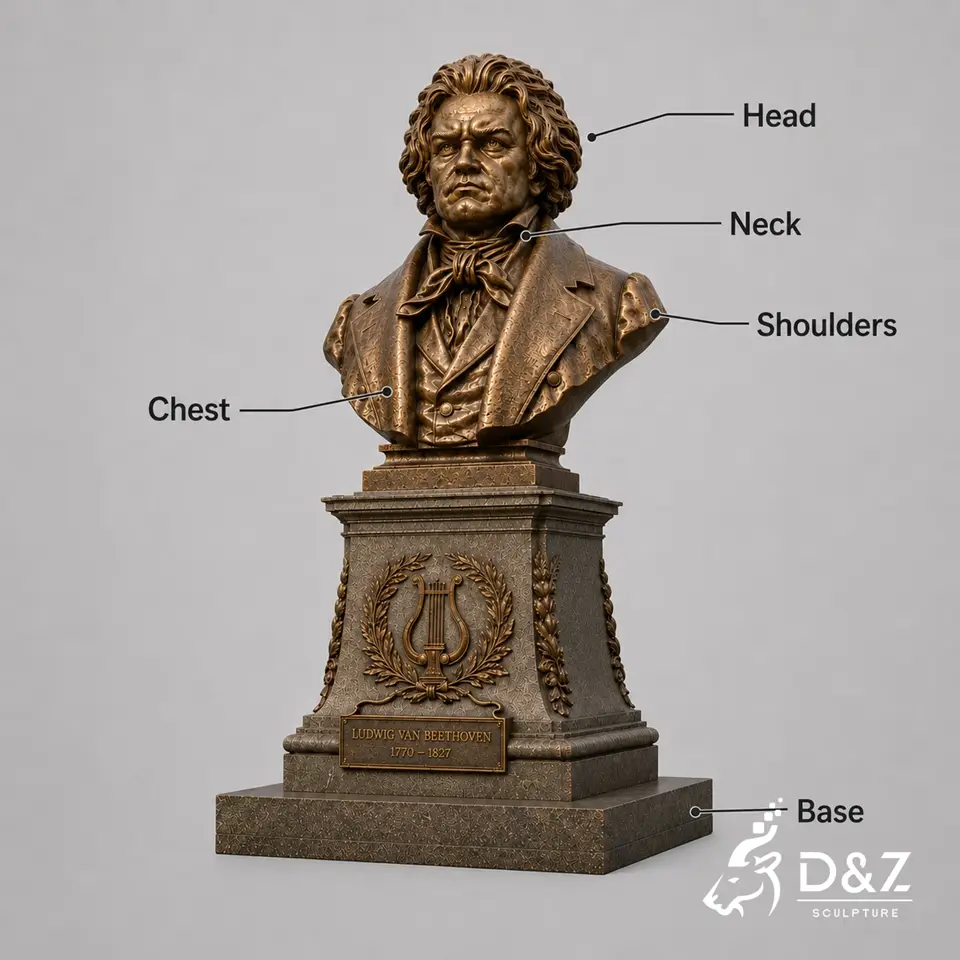
A typical human bust usually includes:
- Head
- Neck
- Shoulders
- Upper chest
- Part of the upper torso
Depending on the subject and design, it may also include clothing, drapery, armor, helmets, scarves, medals, or symbolic decorative elements.
For example, a mythological subject may require a helmet, breastplate, or cloak. A historical figure may be shown in period clothing, while a military figure may include a uniform, medals, or epaulettes.
Actually, there is no single fixed cut-off line for every bust.
- Some designs include only: Head + Shoulders
- Others include: Head + Shoulders + Chest
- Larger busts may preserve a more complete upper torso.
Therefore, identifying a bust is less about an exact anatomical cut line and more about whether the sculpture is centered on the head and upper body, with portraiture as its main visual purpose.
For custom projects, the shoulder width, chest depth, torso length, and pedestal proportions can all be adjusted according to the subject, viewing distance, and architectural setting.
3. What Is the Difference Between a Bust and a Statue?
Strictly speaking, a bust is itself a type of sculpture or statue. The real difference lies in how much of the body is represented and what the artwork is intended to emphasize.
Bust vs. Full-Body Statue
A bust sculpture usually represents the head, shoulders, and upper chest. It places greater emphasis on:
- Facial likeness
- Facial expression
- Identity
- Character
- Hairstyle
- Clothing details
A full-body statue usually includes the entire figure and can communicate more through:
- Full-body proportions
- Arms and legs
- Gesture
- Pose
- Movement
- Body language
- Interaction with the surrounding space

4. Why Are Bust Statues Created and What Do They Represent?
Bust statues have never been purely decorative objects.
Across different historical periods, the portrait bust has been used to record identity, preserve memory, commemorate achievement, and communicate cultural values.
Preserve a Person’s Likeness
Busts can preserve a person’s most recognizable facial characteristics.
Before photography became common, sculpture and painting were among the most important ways to record the appearance of significant individuals.
Memory and Commemoration
Many forms of memorial sculpture and commemorative sculpture use the bust format.
Historical figures, scholars, musicians, political leaders, university founders, and business founders may all be commemorated through portrait busts.
Identity and Character
A successful bust should not only look like the subject. It should also communicate something about the person.
Eye direction, facial expression, head angle, clothing, and symbolic elements can influence how the viewer understands the figure.
Cultural and Symbolic Meaning
A bust can also represent ideas beyond the person’s physical appearance.
Take Athena as an example.
An Athena bust does not simply reproduce the image of a Greek goddess. Her helmet, expression, classical warrior features, and overall presence may also communicate wisdom, strategy, rationality, and strength. In this way, a figurative sculpture can function simultaneously as portraiture and as a symbolic cultural object.
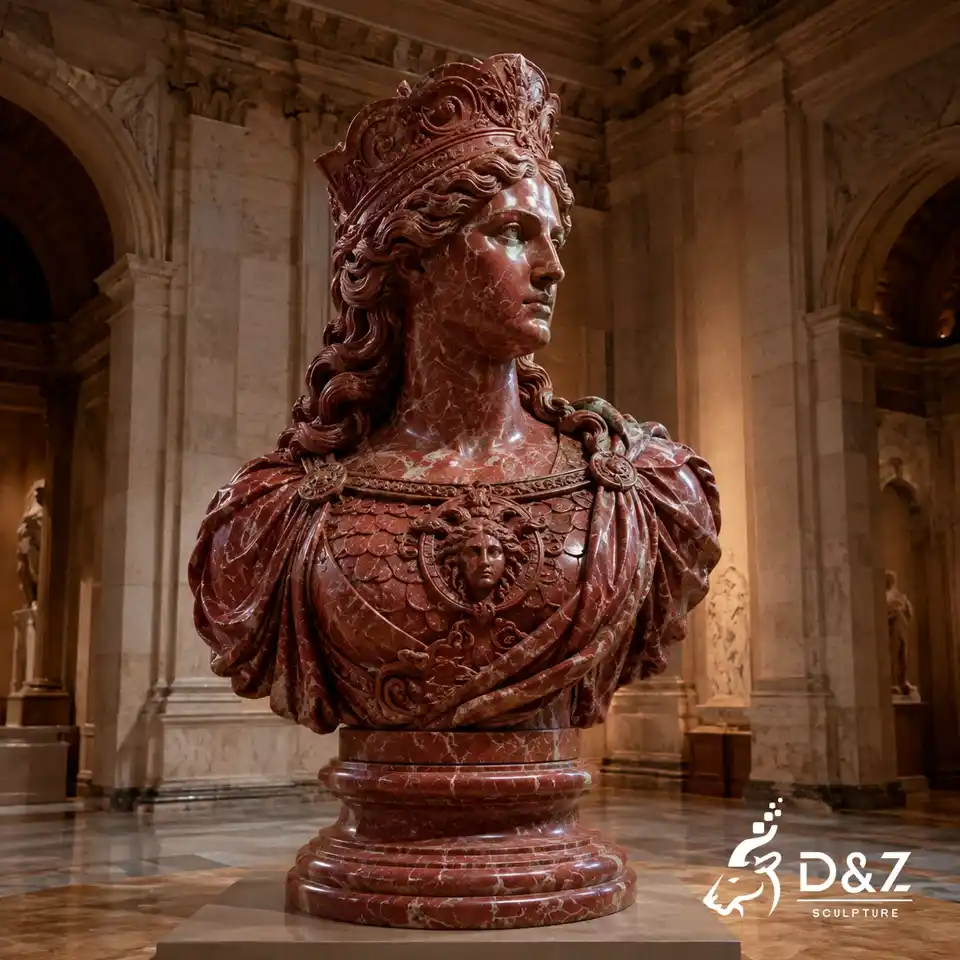
The same applies to Beethoven.
A Beethoven bust represents Ludwig van Beethoven as a historical figure, but it may also symbolize classical music, artistic creativity, cultural heritage, and musical legacy.
That’s why bust sculpture remains common in universities, music halls, museums, libraries, memorial buildings, and other cultural institutions.
5. A Brief History of Bust Sculpture
Bust sculpture has developed over a very long period, and different eras have approached portraiture in different ways.
Ancient Greece
Ancient Greek sculpture established many of the foundations of Western figurative art.
Idealized anatomy, mythological subjects, philosophers, and important public figures all influenced the later development of portrait sculpture.
These works were not always identical to the Roman portrait busts that developed later, but Greek portrait traditions strongly influenced the evolution of the bust form.
Roman Portrait Busts
The Roman period was especially important in the development of portrait bust sculpture.
Emperors, politicians, military leaders, philosophers, and other prominent individuals were frequently represented in sculptural portraits.
Compared with more idealized traditions, many Roman portraits placed greater emphasis on:
- Age
- Facial structure
- Wrinkles
- Hairstyle
- Expression
- Social identity
Portrait busts therefore became an important way to commemorate individuals, communicate status, and display identity in public and private settings.
Middle Ages
During the Middle Ages, independent secular portrait busts became less common.
Much figurative sculpture was connected with churches, saints, religious architecture, reliquaries, and devotional art.
Renaissance
The Renaissance renewed interest in Greek and Roman artistic traditions while also emphasizing humanism, individuality, and realistic portraiture.
Bronze, marble, terracotta, and other materials again became important for portrait sculpture.
Busts increasingly reflected not only social status but also recognizable personal features and individual character.
Baroque
Baroque portrait busts placed greater emphasis on emotion, movement, and psychological expression.
Drapery, head direction, gaze, and facial movement became more dynamic, helping transform the bust from a relatively static portrait into a more dramatic form of figurative art.
Neoclassical Period
Neoclassicism revived the balance, order, and idealized aesthetics associated with ancient Greek and Roman sculpture.
White marble busts, classical clothing, restrained expressions, and formal poses again became popular.
Modern and Contemporary Bust Sculpture
Modern bust sculpture is no longer limited to traditional realistic portraiture.
Artists may use:
- Simplification
- Abstraction
- Exaggerated proportions
- Contemporary metals
- Stainless steel
- Mixed materials
Subjects have also expanded beyond political leaders and historical figures to include contemporary personalities, ordinary individuals, cultural figures, and original artistic characters.
A bust today can therefore be both a traditional sculpted portrait and a contemporary public artwork.

6. What Are the Main Types of Bust Statues?
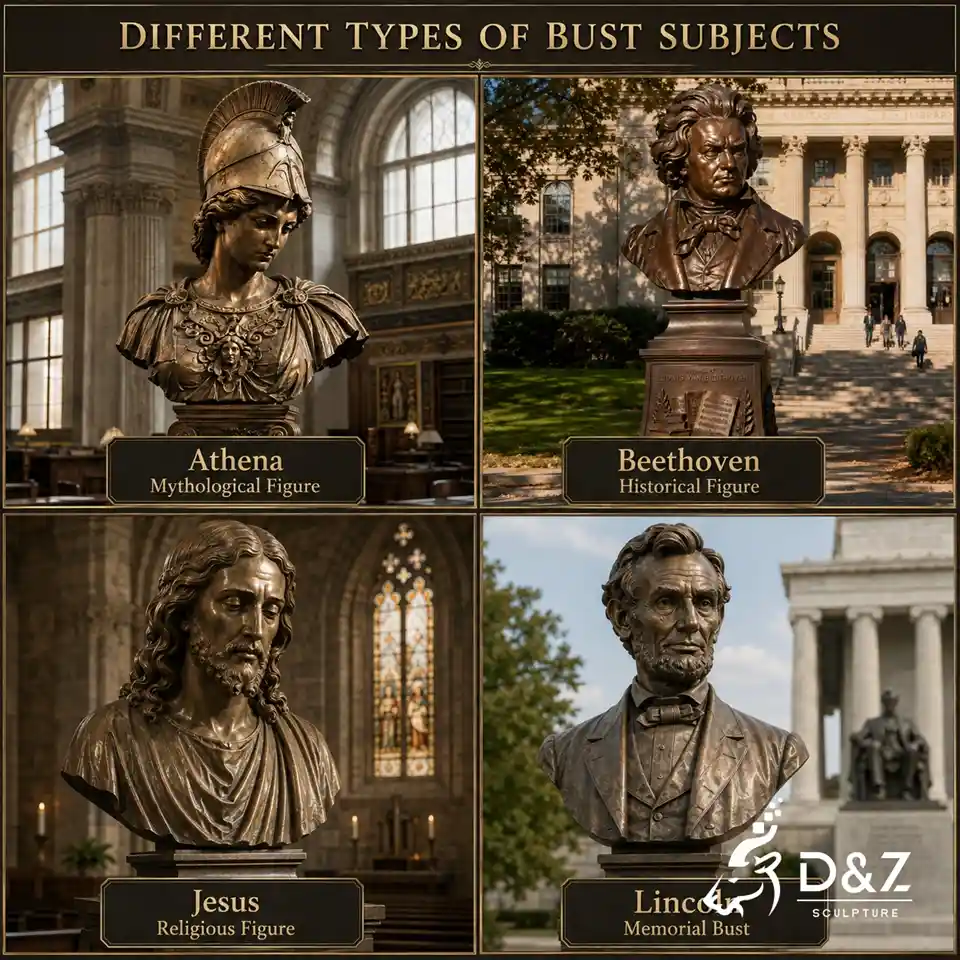
Busts can be classified according to subject, function, and artistic purpose.
Portrait Bust
A portrait bust represents a specific person and focuses on recognizable appearance and personality.
Memorial Bust
A memorial bust commemorates a deceased person or someone with an important cultural, academic, political, or social contribution.
These are often installed in memorial halls, universities, parks, and civic spaces.
Historical Figure Bust
Historical busts may represent political leaders, composers, scientists, philosophers, military figures, writers, or artists.
Religious Bust
Religious busts depict saints, religious leaders, or figures with spiritual significance and are often used in churches, religious institutions, and cultural projects.
Mythological Bust
Mythological busts depict figures from Greek, Roman, or other mythological traditions.
Athena, Apollo, and Zeus are common examples.
Classical Bust
A classical bust uses Greek, Roman, Renaissance, or Neoclassical visual language, often emphasizing balanced proportions, classical garments, and formal expressions.
Contemporary Bust
Contemporary bust sculpture may use abstract, geometric, simplified, or modern metal forms instead of strict realism.
These categories can overlap.
For example, an Athena bust can be both a mythological bust and a classical bust.
7. What Materials Are Bust Statues Made From?
Bust statues can be made from many materials. Traditional choices include bronze, marble, natural stone, terracotta, plaster, and wood. Modern projects may also use stainless steel, fiberglass, resin, and composite materials.
Among them, bronze bust sculpture and marble bust sculpture remain two of the most important choices for commemorative, architectural, and portrait projects.
Bronze Bust Sculpture
Bronze is particularly suitable for detailed portrait work.
Traditional bronze sculpture normally begins with a clay or digital model and is then transformed into metal through mold making and the lost-wax casting process.
This process can preserve fine details such as:
- Facial features
- Hair texture
- Clothing folds
- Armor details
- Surface texture
Bronze surfaces can also be finished with different patinas, including warm brown, dark brown, black-brown, natural bronze, and other artistic finishes.
For a long-term outdoor bust statue, bronze offers strong advantages.
With appropriate alloy selection, wall thickness, internal reinforcement, welding, and surface treatment, bronze busts can perform well in both indoor and outdoor environments.
This is why bronze bust sculpture is frequently used in:
- Memorials
- Universities
- Cultural institutions
- Government spaces
- Music halls
- Public parks
- Outdoor public art
Marble Bust Sculpture
Marble creates a very different visual effect.
Unlike bronze, it does not rely on metallic color or patina. Its appearance comes from the natural stone itself, including its tone, crystalline structure, veining, and carved surface.
Facial features, hair, eyes, lips, garments, and armor must all be carved directly from the stone.
A marble bust sculpture is therefore created through subtractive carving: the sculptor gradually removes excess material until the final form remains.
White and light-colored marble are especially associated with:
- Greek sculpture
- Roman sculpture
- Renaissance art
- Neoclassical sculpture
For this reason, marble busts are often used in museums, classical architecture, hotels, private estates, cultural spaces, and high-end interior environments.
8. How Are Bust Statues Made?
The production method depends mainly on the material.
How Is a Bronze Bust Made?
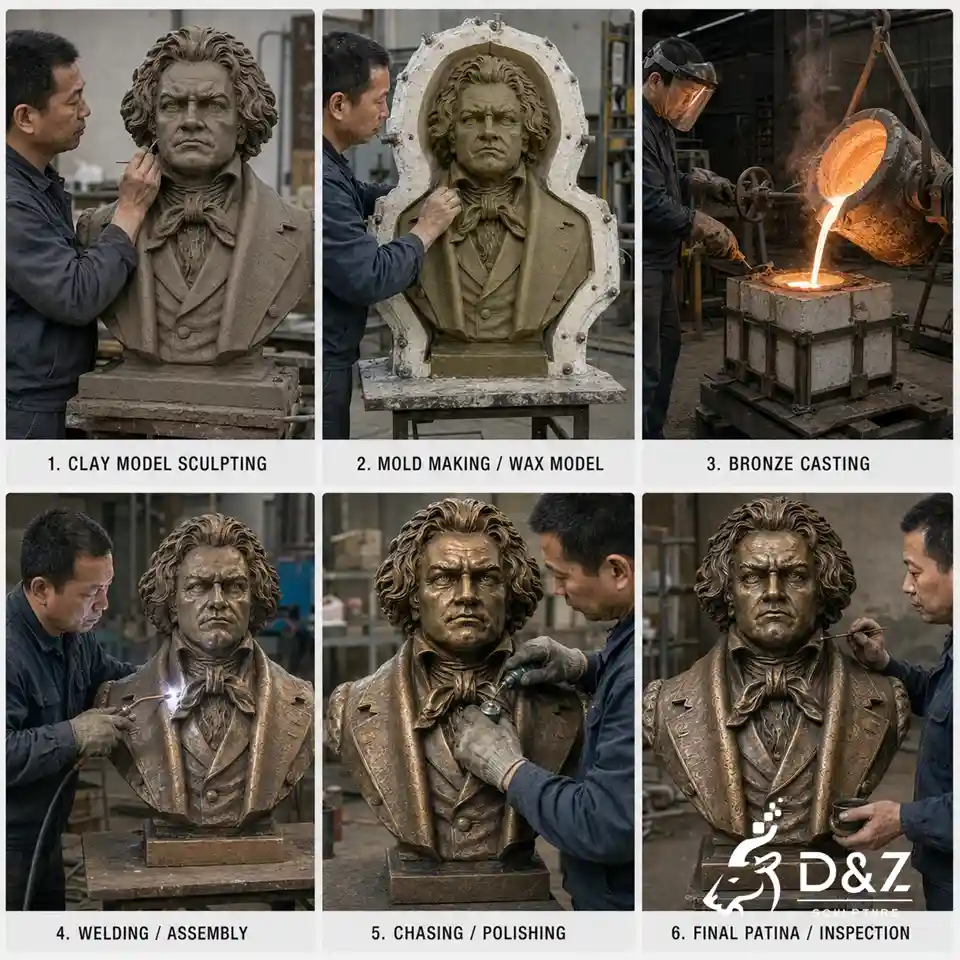
A typical bronze bust production process can be summarized as: Reference and Concept→ Clay or 3D Model→ Mold Making→ Wax Model→ Lost-Wax Casting→ Welding and Chasing→ Patina and Finishing→ Final Inspection
For a custom portrait, the modeling stage is especially important.
Facial proportions, eyes, mouth, hairstyle, expression, and overall likeness should be carefully reviewed before casting begins.
The model is then converted into bronze components through the lost-wax process before welding, refining, finishing, and patination.
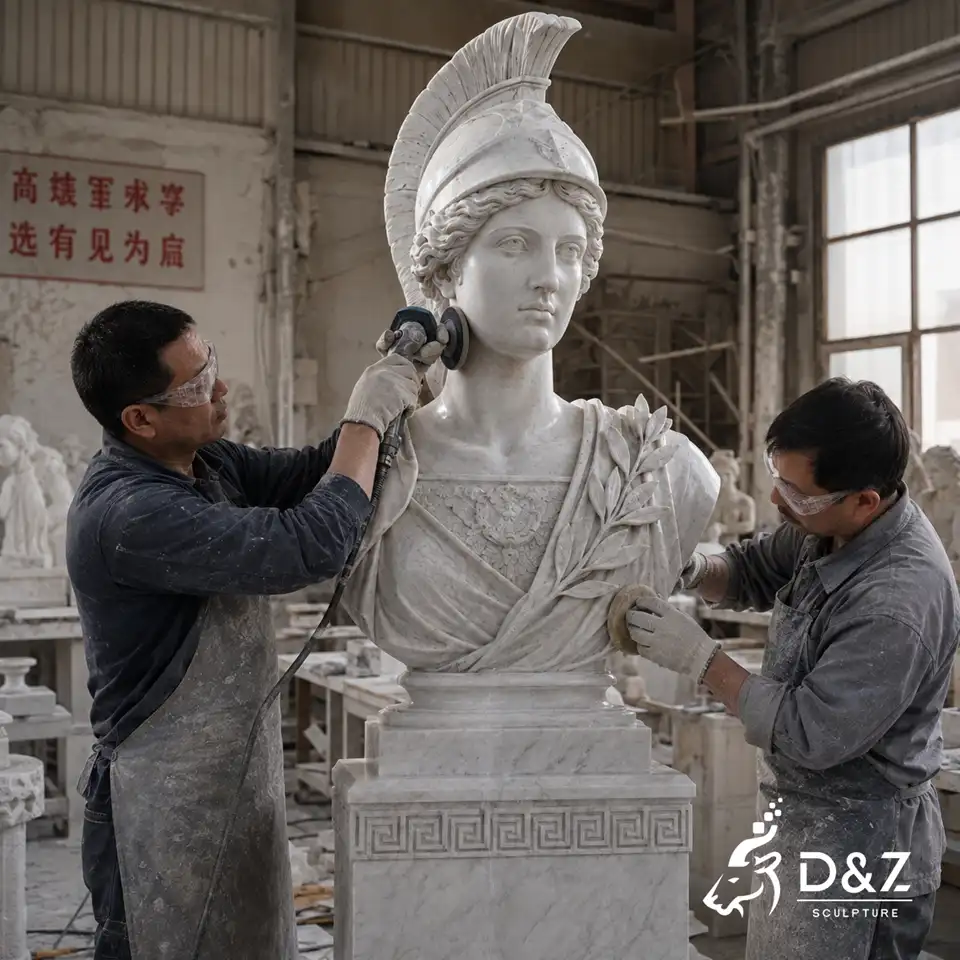
How Is a Marble Bust Made?
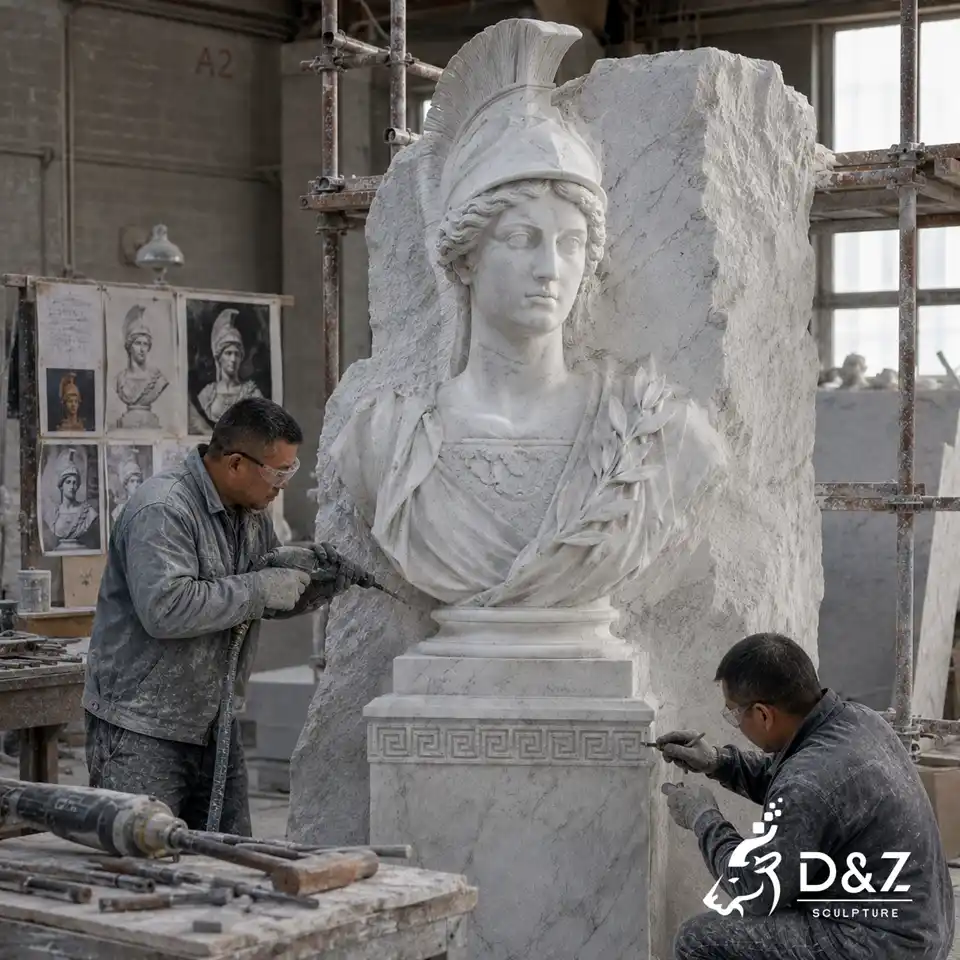
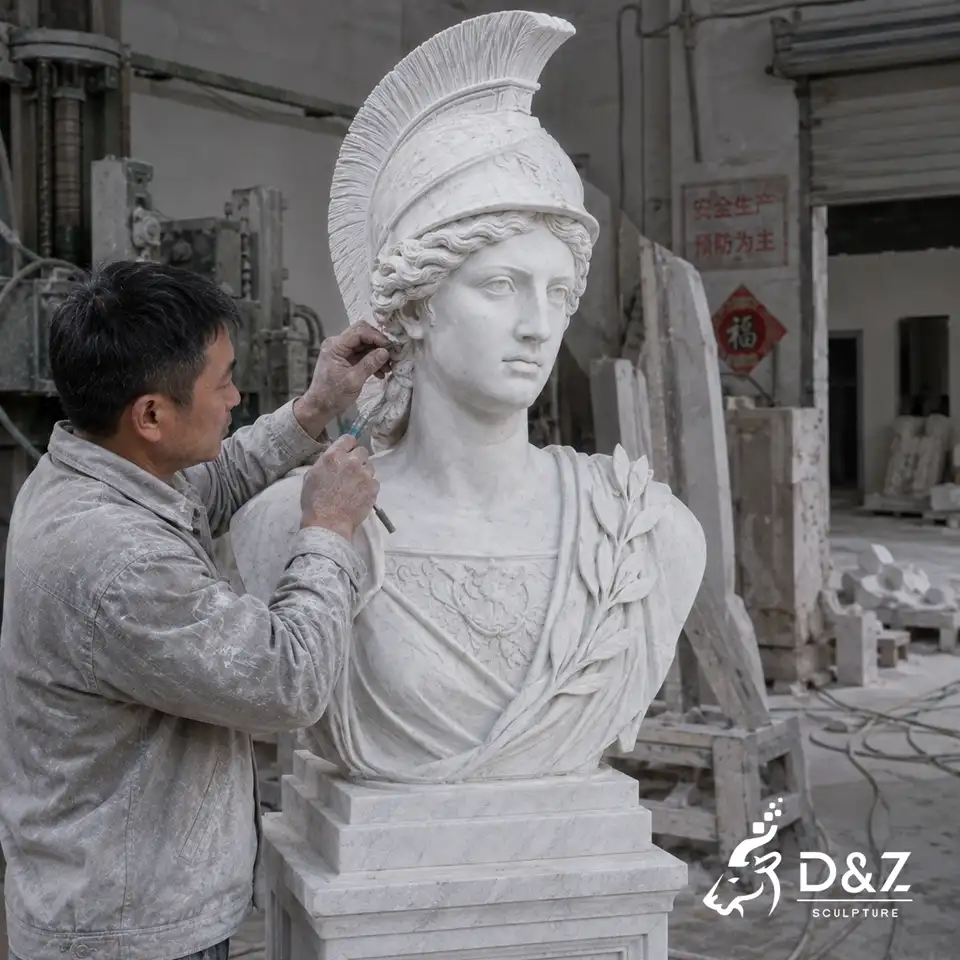
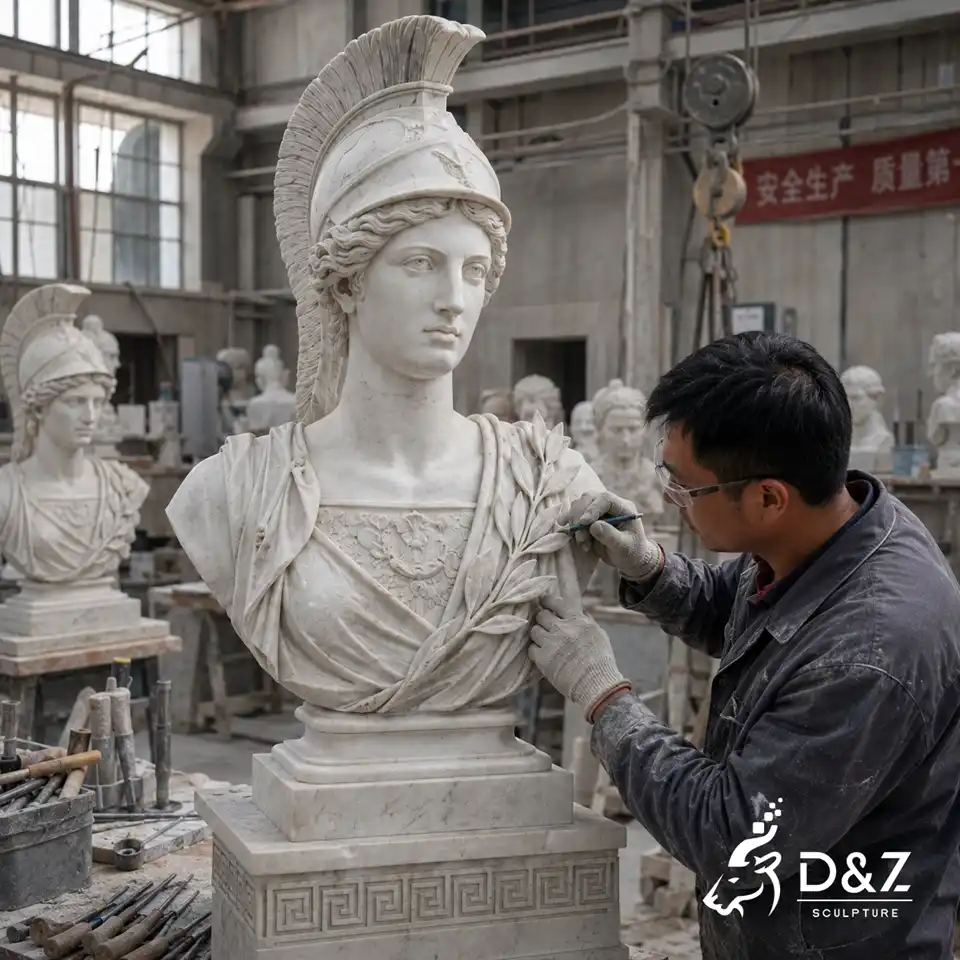
A marble bust generally follows a different process: Reference or Design→ Marble Selection→ Rough Carving→ Fine Carving→ Facial Detail Refinement→ Sanding and Polishing→ Final Inspection
Bronze production is based mainly on modeling and casting, while marble production is based on carving.
Both materials can achieve highly detailed portrait results, but they reach the final form in fundamentally different ways.
9. What Sizes Do Bust Statues Come In?
A bust statue does not have one standard size. It can be a small tabletop artwork or a monumental sculpture several meters high.
Tabletop Bust
Small bust sculptures are commonly used for:
- Desks
- Bookshelves
- Private collections
- Interior decoration
- Gallery display
This size is closer to bust sculpture decor and collectible art.
Life Size Bust Statue
A life-size bust statue is generally designed according to realistic human proportions for the head, shoulders, and chest.
It works well in:
- Museums
- Universities
- Libraries
- Memorial halls
- Corporate interiors
- Cultural institutions
Large Bust Sculpture
A large bust sculpture may reach several meters in height and can be combined with a substantial pedestal or architectural base.
It is suitable for:
- University campuses
- Memorial parks
- Public squares
- Cultural centers
- Museum entrances
- Government spaces
Monumental Bust
For major civic projects or landmark installations, a bust may be enlarged even further.
At that scale, the design must consider more than the portrait itself.
Important factors include:
- Viewing distance
- Building scale
- Pedestal height
- Structural stability
- Wind load
- Foundation
- Installation method
The correct size should therefore be determined according to the whole site, not by sculpture height alone.
10. Where Are Bust Statues Used Today?
Today, bust sculpture appears in a wide range of cultural, institutional, architectural, and public environments.
Large portrait busts in particular can commemorate individuals, create cultural identity, and become visual focal points within a space.
Museums and Cultural Institutions
Busts can represent artists, scientists, writers, historical figures, and cultural personalities.
Universities and Schools
Busts of founders, presidents, professors, scientists, or notable alumni can help preserve institutional history and academic identity.
Libraries
Portraits of writers, philosophers, and scholars are especially suitable for libraries and educational spaces.
Memorial Halls
Commemoration remains one of the most important uses of memorial sculpture.
Music Halls and Theaters
Composers, musicians, conductors, and performing artists are often represented as portrait busts in conservatories, theaters, and concert halls.
Churches and Religious Spaces
Busts of saints and religious figures can be integrated into churches and religious cultural spaces.
Corporate Headquarters
Founder busts and sculptures of important company figures can communicate corporate history and legacy.
Parks and Public Spaces
A large bronze portrait bust can be combined with a stone pedestal, landscaping, an entrance plaza, or a memorial setting to create a strong public art presence.
11. How to Choose the Right Bust Statue for a Space or Project
Choosing a bust statue involves more than deciding how the person should look.
The subject, material, style, architecture, scale, and installation environment should all be considered together.
Determine the Subject
First determine who or what the sculpture represents:
- Real person
- Historical figure
- Mythological figure
- Religious figure
- Memorial figure
- Founder
- Cultural figure
For a custom portrait, clear photographs, archival images, drawings, or 3D data can help improve likeness.
Choose the Material
Bronze works especially well for memorial, public art, and outdoor projects.
Marble suits classical, architectural, and premium interior spaces.
Contemporary projects may also use stainless steel or other metals depending on the desired visual language.
Choose the Artistic Style
Common options include:
- Classical
- Realistic
- Neoclassical
- Contemporary
- Abstract
- Simplified
A commemorative portrait may require very high facial likeness, while a contemporary public art project may allow more abstraction.
Match the Sculpture to the Architecture
The sculpture should visually relate to its environment.
For example:
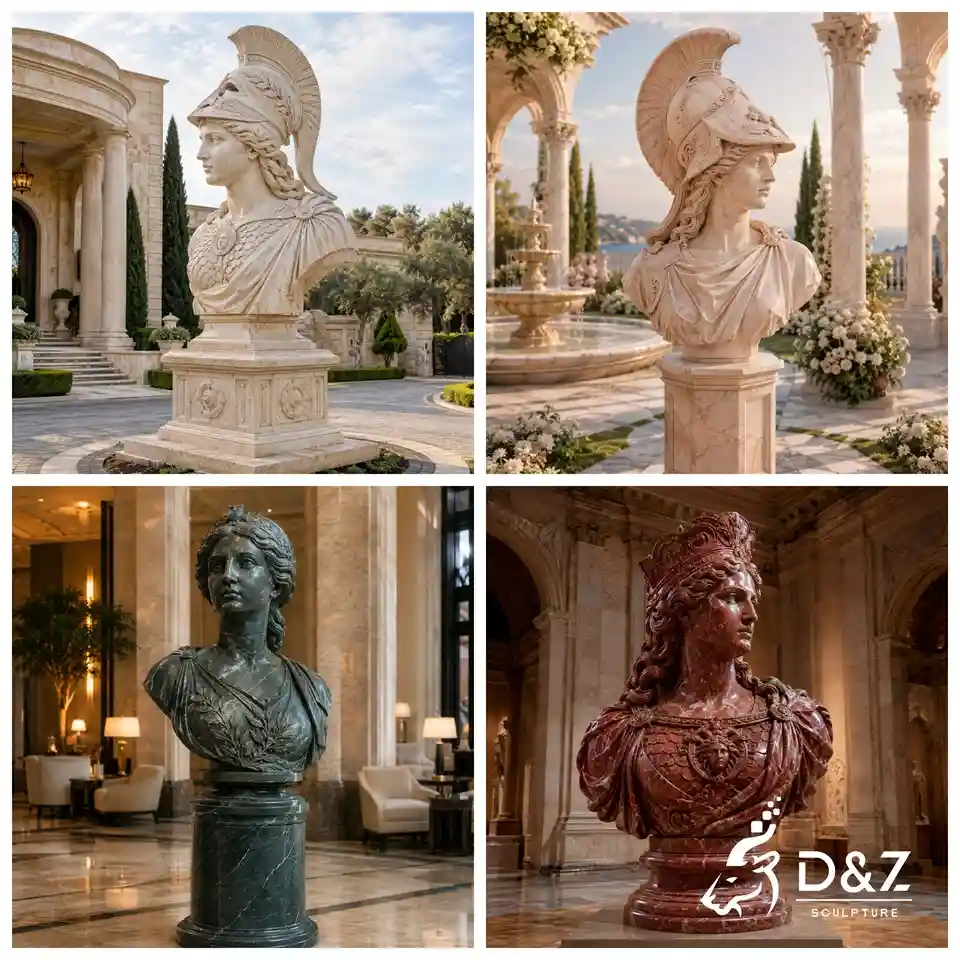
A classical marble bust sculpture can work well in museums, European-style interiors, and traditional architectural spaces.
A dark bronze bust sculpture often suits memorial halls, universities, corporate headquarters, civic buildings, and outdoor landscapes.
Contemporary metal busts may work better with modern architecture and public art settings.
Choose the Right Size and Viewing Height
Bigger is not always better.
Important factors include:
- Viewing distance
- Main viewing angle
- Building height
- Pedestal height
- Landscape scale
- Human eye level
Consider Indoor or Outdoor Installation
An outdoor bust statue requires additional engineering considerations, including:
- Wind load
- Internal structure
- Anchoring
- Foundation
- Drainage
- Weather resistance
- Surface maintenance
For large-scale projects, structural planning is just as important as artistic design.
12. How to Choose a Bust Sculpture Manufacturer?
For a large project, choosing a reliable bust sculpture manufacturer should involve more than comparing unit prices. Large memorial, campus, architectural, and public art projects require both artistic and engineering capability.
Important factors include:
- Portrait modeling ability
- Facial likeness
- Material quality and authenticity
- Bronze casting or marble carving capability
- Large-scale project experience
- Structural engineering
- Surface finishing and patina quality
- Pedestal and foundation coordination
- Quality inspection
- Professional packing
- International shipping
- Installation support
- Long-term maintenance service
D&Z Sculpture is a large metal and bronze public art manufacturing partner providing one-stop sculpture project solutions.
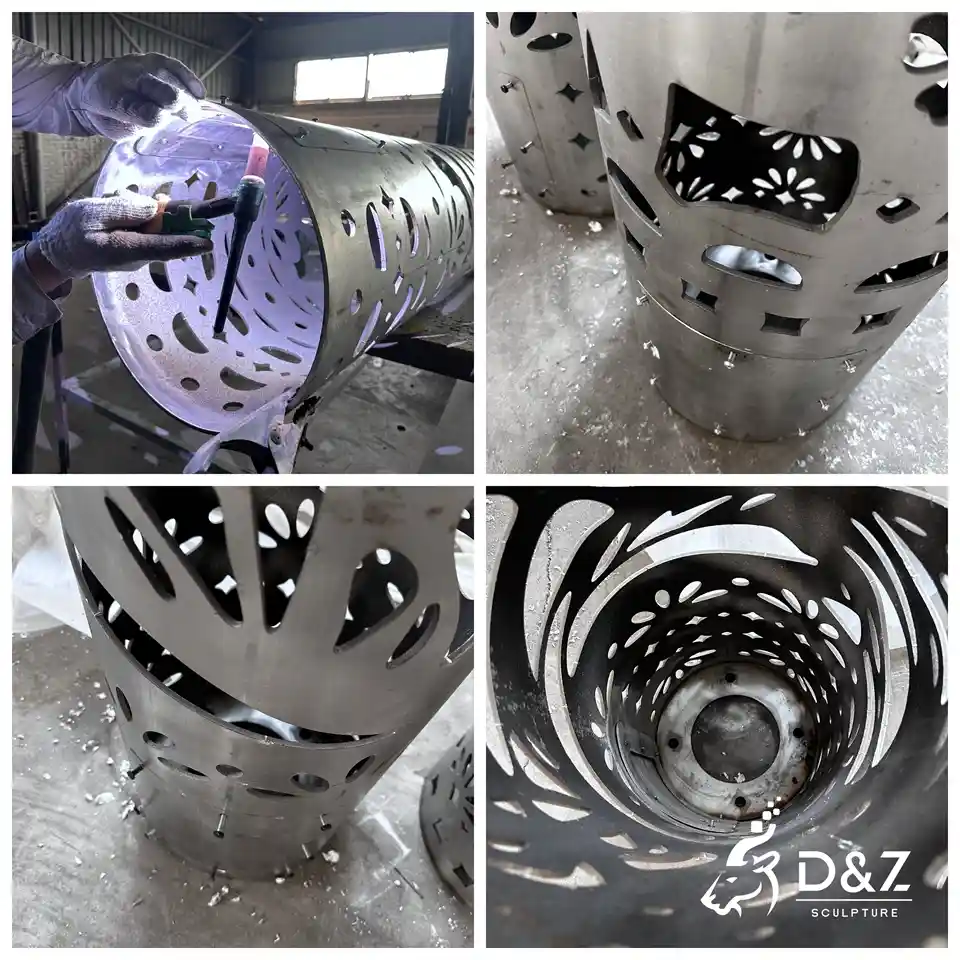
Our team can develop a custom bust statue from a concept, photograph, drawing, historical reference, or project brief. Depending on the project, we can also provide design drawings, structural drawings, installation drawings, and engineering support.
For large sculpture projects, we coordinate the complete process from artistic development and manufacturing to structural planning, packing, international transportation, and installation.
D&Z Sculpture offers:
- 30+ years of custom sculpture experience
- 1,000+ global sculpture project cases
- Direct sculpture manufacturing and metal fabrication
- Professional bronze casting capability
- Design, sculpture, engineering, and installation teams
- Design, structural, and installation drawing support
- International sea, land, and air transportation
- Port-to-port and door-to-door shipping options
- Installation guidance and on-site installation support
- Long-term after-sales and maintenance support
For major portrait and public art projects, a manufacturer’s ability to coordinate art, engineering, logistics, and installation is often more important than simply offering the lowest product price.

13. Bust Sculpture Examples and Custom Projects
Different subjects, materials, and artistic goals can create very different bust sculptures.
The following examples show how material and subject can change the character of a portrait.
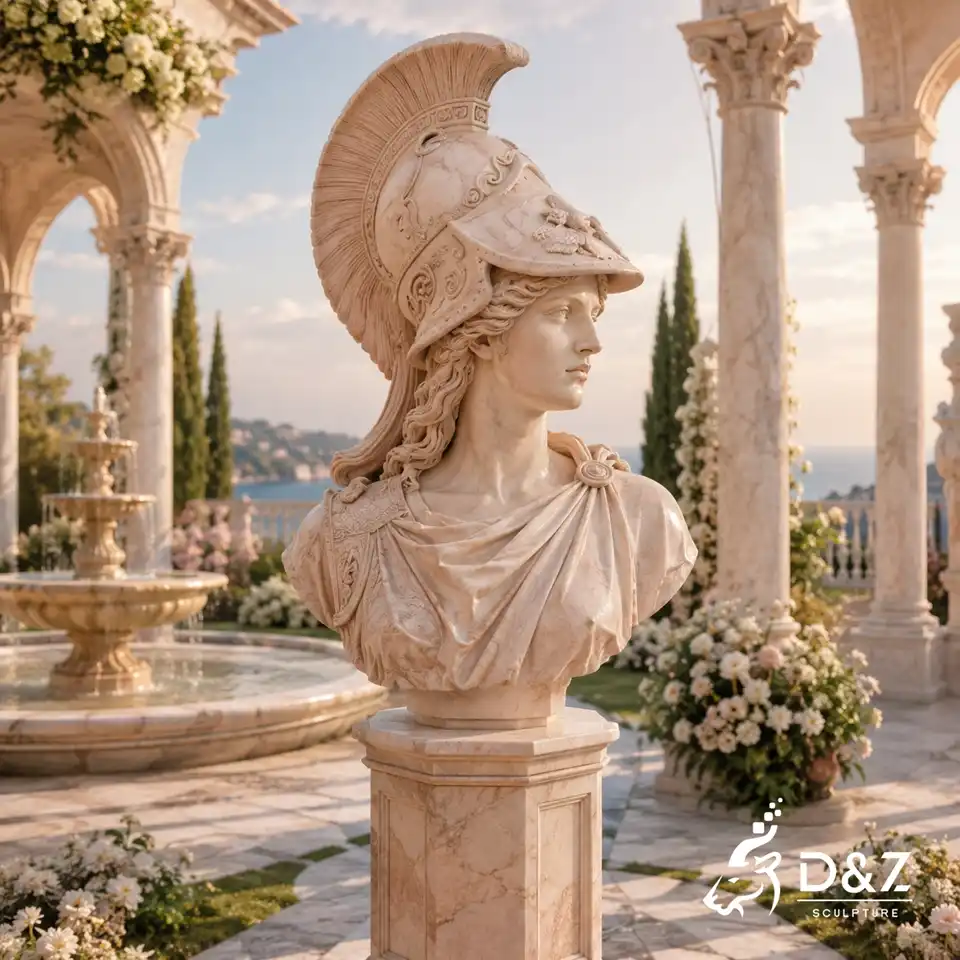
Marble Athena Bust Statue
A marble Athena bust statue can use natural marble, classical helmet details, carefully carved facial proportions, and traditional garments to express the dignity of Athena and the visual language of classical sculpture.
White or light-colored marble can further reinforce associations with Greek and Neoclassical art.
This type of sculpture can work well in:
- Museums
- Classical interiors
- Hotels
- Universities
- Cultural spaces
- Private estates
Athena Bronze Bust
Compared with marble, an Athena bronze bust creates a heavier and more monumental visual impression.
The metallic surface, patina, helmet, armor, and sculpted facial details make bronze particularly suitable for indoor and outdoor public environments.
The same Athena subject can look completely different in marble and bronze.
This illustrates an important point: The subject may remain the same, but the material becomes part of the artistic language.
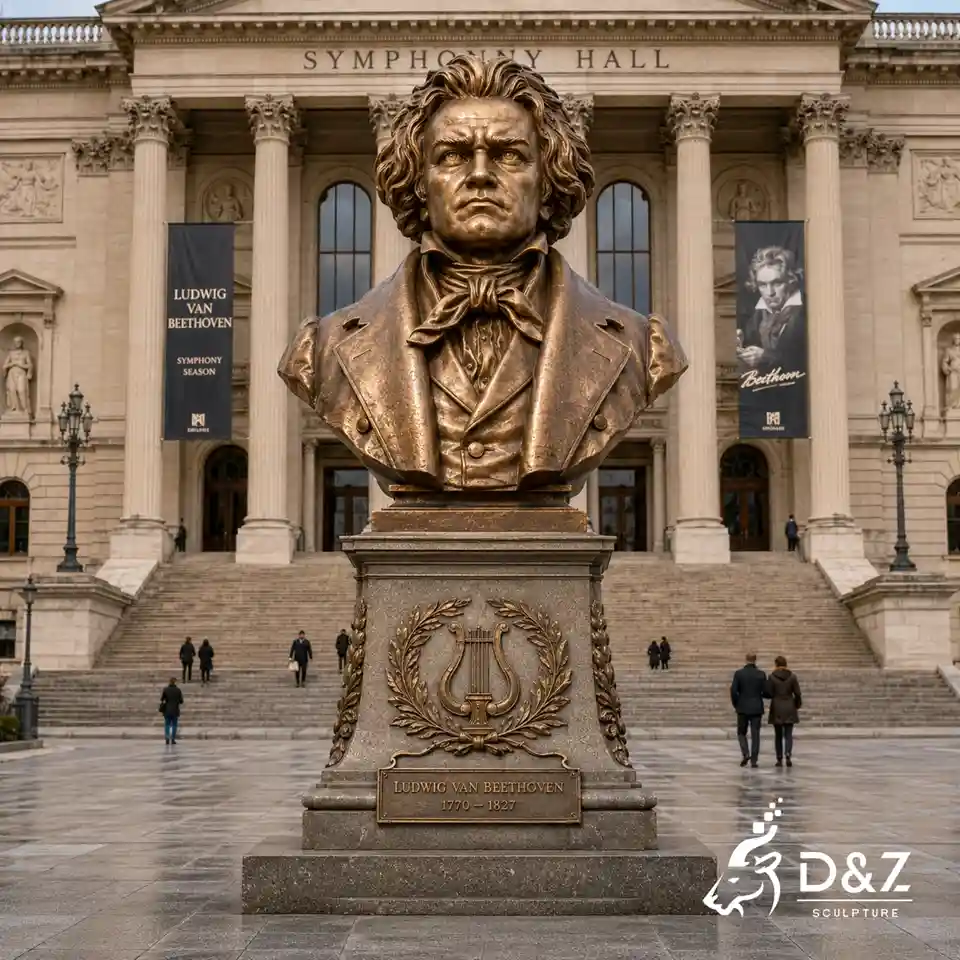
Bronze Beethoven Bust
A bronze Beethoven bust is a typical historical figure bust and portrait sculpture.
Beethoven’s recognizable hair, eyes, facial expression, scarf, and 19th-century clothing can all become important elements in the portrait.
The sculpture represents more than his physical likeness. It can also symbolize:
- Classical music
- European culture
- Artistic achievement
- Musical legacy
This makes a Beethoven portrait bust suitable for:
- Music halls
- Conservatories
- Universities
- Museums
- Cultural centers
- Memorial spaces
These projects show that a successful bust should balance facial likeness, material, symbolism, proportion, and architectural setting.
14. FAQs About Bust Statues
Q: What is a bust statue?
A: It is a three-dimensional portrait showing the head, neck, shoulders, and upper chest.
Q: What parts of the body does a bust include?
A: It usually includes the head, neck, shoulders, and part of the chest.
Q: Is a bust considered a statue?
A: Yes. It is a type of sculpture focused on the upper body.
Q: What is the difference between a bust and a full-body statue?
A: The former focuses on portrait likeness and expression, while the latter shows the complete figure and pose.
Q: What is the difference between a bust and a head sculpture?
A: A head sculpture mainly shows the head, while a bust also includes the shoulders and chest.
Q: Why are bust statues made?
A: They are created to preserve likeness, honor individuals, commemorate achievements, and express cultural meaning.
Q: What materials are bust statues made from?
A: Common materials include bronze, marble, stone, wood, resin, fiberglass, and stainless steel.
Q: What size is a life-size bust statue?
A: Its dimensions are usually based on realistic human proportions and adjusted to suit the pedestal and installation space.
Q: Can bust statues be installed outdoors?
A: Yes. Bronze is especially suitable for outdoor use when proper structure, anchoring, and surface protection are provided.
Q: Can a custom bust be made from photographs?
A: Yes. It can be created from photographs, drawings, 3D scans, or historical references.
Q: How is a bronze bust made?
A: It is typically modeled, molded, cast using the lost-wax process, welded, refined, and finished with patina.
Q: How is a marble bust made?
A: It is created through stone selection, rough carving, fine carving, detail refinement, sanding, and polishing.
Conclusion
So, what is a bust statue? At its most basic level, it is a three-dimensional portrait that focuses on the head and upper body of a person. But historically and artistically, the meaning of the bust goes far beyond physical likeness.
A well-designed bust can preserve identity, commemorate achievement, communicate character, and represent broader ideas such as wisdom, authority, faith, music, cultural heritage, or collective memory.
From ancient Greek and Roman portrait traditions to Renaissance, Baroque, and Neoclassical sculpture, and from today’s museums and universities to memorials, corporate headquarters, and public spaces, bust sculpture has continued to evolve while keeping portraiture and human identity at its core.
Whether you need a tabletop portrait bust, a life-size bust statue, or a monumental large bust sculpture for a campus, memorial, cultural building, or public art project, a successful result should balance likeness, material, artistic style, proportion, structural safety, and the final installation environment.
If you are planning a custom bust statue, memorial portrait, or large-scale public sculpture project, D&Z Sculpture can support the project from initial concept through design, engineering, manufacturing, transportation, and installation.
Bring us a person, a story, or even an initial idea — and we can help transform it into a sculpture designed to be remembered.
Contact D&Z Sculpture to start your custom portrait sculpture project.