What does the Statue of Liberty represent? Taken literally, the first word that comes to mind is “liberty”—or freedom. Beyond that, the statue embodies hope, democracy, independence, and the pursuit of equality. Yet, its meaning runs much deeper; every detail of the sculpture carries its own symbolic significance.
Many visitors and sculpture enthusiasts often wonder: does it represent freedom specifically for the United States, or does it symbolize the universal human aspiration for freedom shared by people across the globe?
In truth, the meaning of the Statue of Liberty was not fully defined from the start. Originally a commemorative gift from France to the United States, it later became closely intertwined with the American abolitionist movement, the history of immigration, and the hopes of those seeking a new life. Through these diverse historical experiences, it has evolved into a globally recognized cultural icon.
In this article, we will explore the true meaning of the Statue of Liberty—examining its overall significance, the symbolism of its individual components, its design and construction, and its profound connection to immigrant culture—to understand what it represents and how these meanings have taken shape and evolved over time.
Table of Contents
01 | What Does the Statue of Liberty Represent?
The symbolic meaning of the Statue of Liberty can be summarized by several key concepts: freedom, democracy, independence, hope, human rights, and equality. These meanings are not isolated; rather, they collectively form the set of values that the statue is intended to convey.
Freedom and Autonomy
Freedom is the core theme of the statue and a fundamental principle behind its original design.
The freedom represented here goes beyond merely being free from external constraints; it encompasses the right of individuals to choose their own lives, express their own ideas, and determine their own futures. It embodies the human aspiration to break free from oppression and to pursue autonomy and dignity.
It is worth noting that although the Statue of Liberty is located in New York Harbor, the concept of freedom it conveys is not limited to any single nation. For people from diverse countries and cultural backgrounds, freedom signifies the right to choose how one lives and the opportunity to pursue a better future.
Democracy and Independence
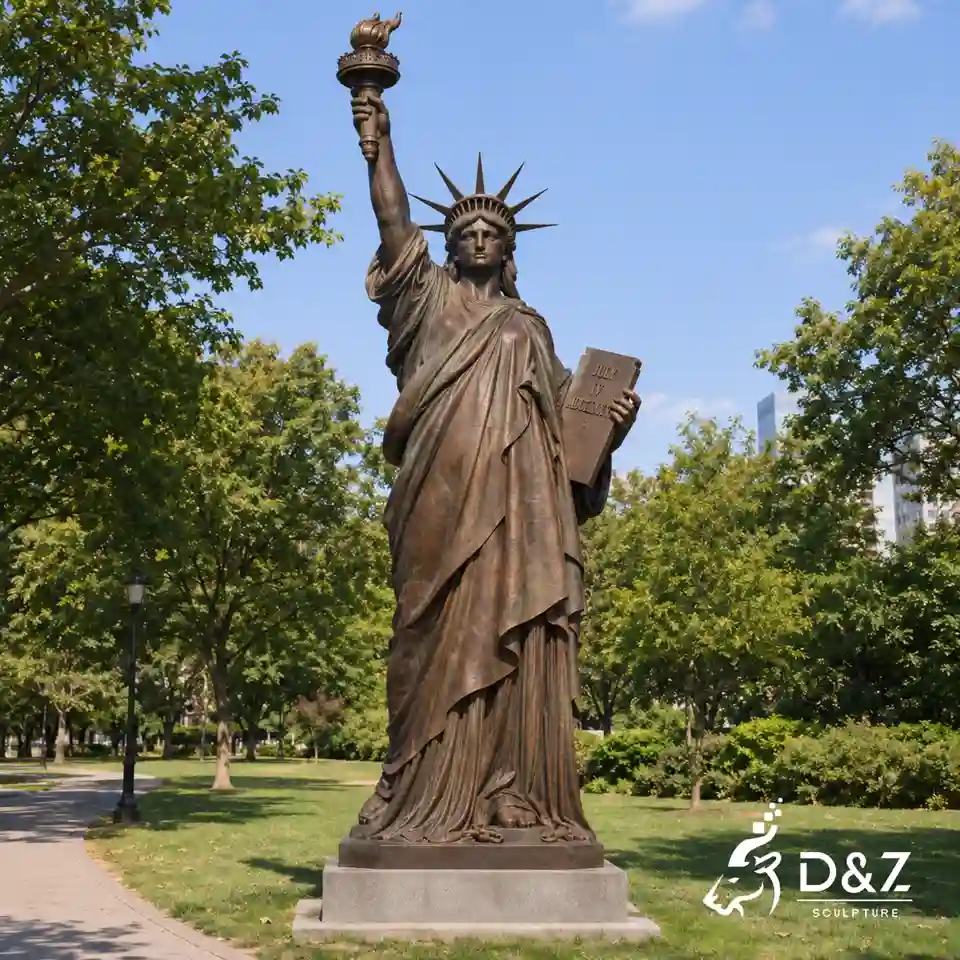
The Statue of Liberty is closely linked to the history of American independence. The date inscribed on the tablet held by the statue marks the adoption of the U.S. Declaration of Independence, symbolizing both American independence and the people’s quest for self-governance.
However, it would be a mistake to view the statue solely as a monument to American independence.
Its deeper significance lies in using the history of American independence to articulate broader ideals: the right of people to govern themselves, opposition to tyranny, and the pursuit of democracy. For the French proponents who initiated the project, the statue served not only as a tribute to the United States but also as an expression of their own hopes for the development of democracy in France.
Hope and New Opportunities
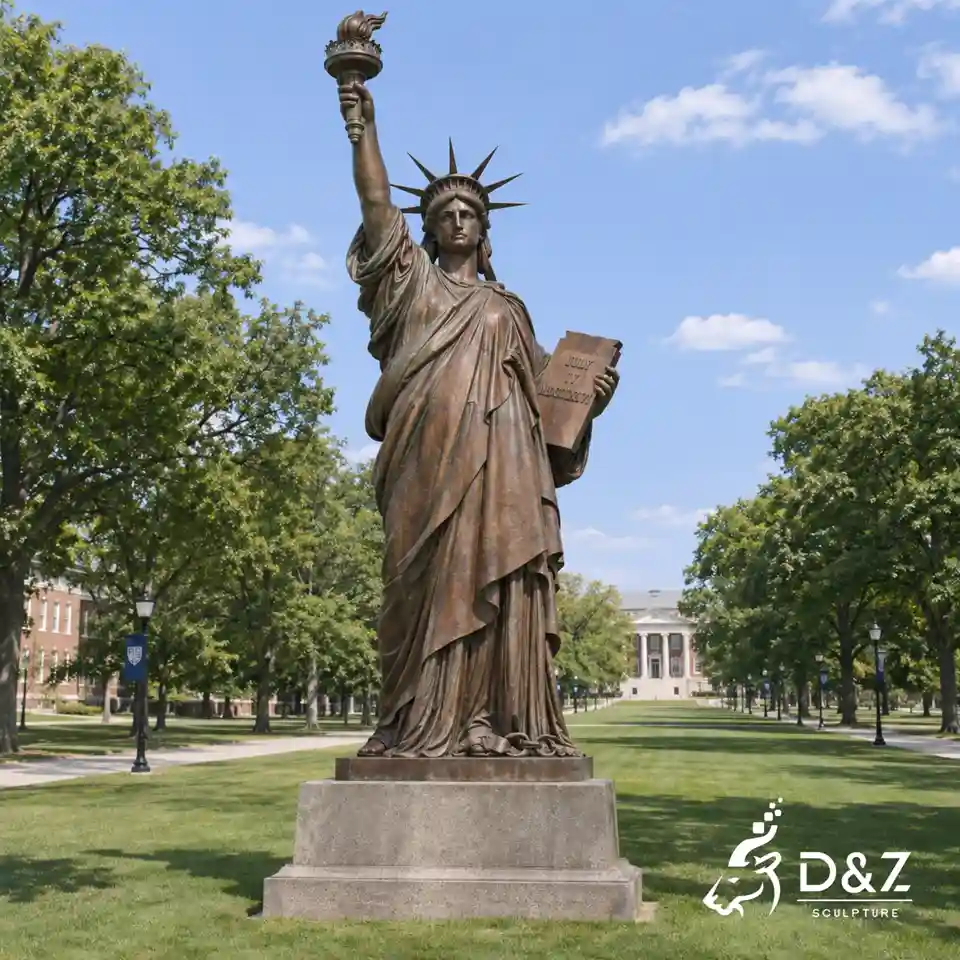
For countless individuals who left their homelands in search of a better life, the Statue of Liberty became a powerful symbol of hope and new beginnings.
During the late 19th and early 20th centuries, many immigrants arrived in New York aboard ocean liners. Catching sight of the Statue of Liberty in the harbor often signaled that a long, arduous journey was coming to an end—and that a brand-new life might be about to begin.
While the statue could not guarantee that every person would realize their dreams in America, the hope, opportunity, and the possibility of a fresh start that it represents became a source of profound inspiration and spiritual sustenance for many.
Human Rights and Equality
The Statue of Liberty embodies the ideal that all people are entitled to fundamental rights and the pursuit of dignity and equality.
In the context of its creation, this concept was closely linked to the end of the American Civil War, the abolition of slavery, and the aspirations of the time for a free society.
However, it is necessary to view history objectively: while the statue symbolizes equality, this does not mean that true equality for all had been achieved in American society at that time. Even after the statue’s official unveiling in 1886, African Americans continued to face severe racial discrimination and the restriction of their rights.
For this reason, the equality represented by the Statue of Liberty should be understood as an ideal to be continuously pursued, rather than a reality that has been fully realized.
Friendship Between the United States and France
The Statue of Liberty was originally a gift from France to the United States, intended from its inception to commemorate the friendship between the two nations.
Through this sculpture, France expressed its alignment with the history of American independence and the ideals of liberty, while also hoping to encourage the further pursuit of democracy within French society.
Thus, it serves not only as a national symbol for the United States but also as a commemorative public artwork that bears witness to the historical ties between France and the United States.
In short, the Statue of Liberty holds a dual identity: it is both a significant national symbol for the United States and an international cultural icon—one that encapsulates the concepts of liberty, democracy, opportunity, and equality, as well as humanity’s enduring quest for a better life.
02 | The Meaning Behind the Symbols on the Statue of Liberty
To understand the Statue of Liberty, one cannot look solely at its overall form. The torch, the crown, the tablet, the broken chains—and even the figure’s stance—all carry their own symbolic significance.
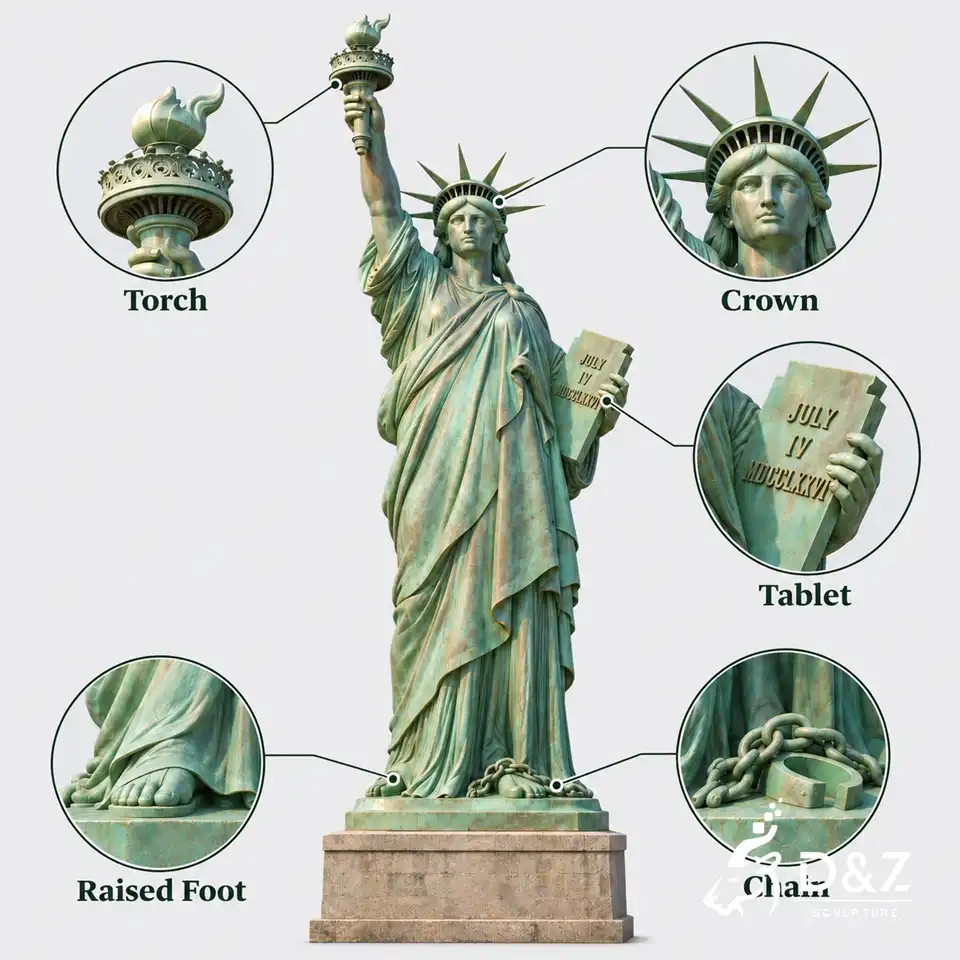
These details are not merely decorative; they are essential tools through which the designer, using the language of sculpture, conveys specific ideas.
What Does the Torch on the Statue of Liberty Represent?
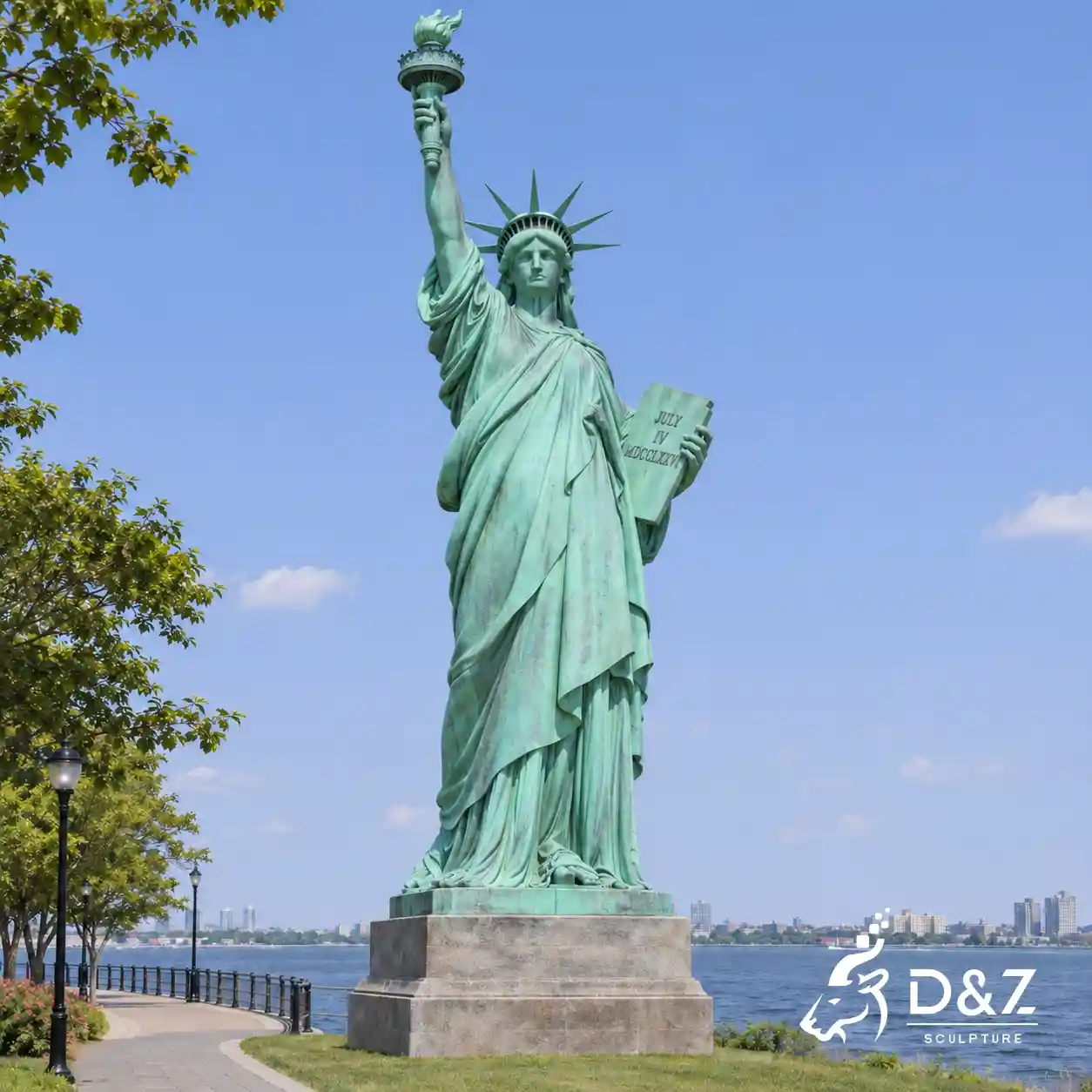
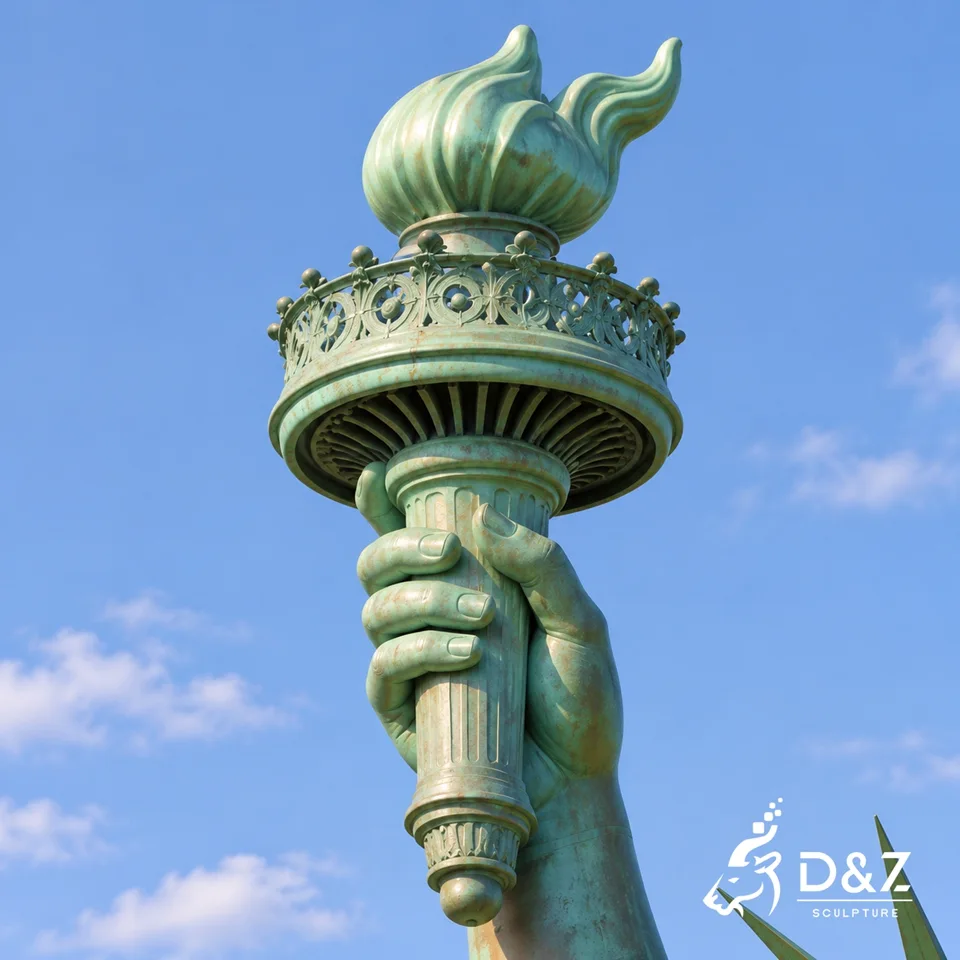
The torch is key to understanding the meaning of the Statue of Liberty and stands as one of the most striking design elements of the entire sculpture.
It represents enlightenment, knowledge, and light—symbolizing the use of reason and the light of thought to dispel ignorance, oppression, and darkness. This aligns with the statue’s formal name: Liberty Enlightening the World.
It is worth noting that the meaning of the torch evolved over time, gaining an additional layer of significance.
In the designer’s original vision, the torch primarily symbolized intellectual enlightenment and the radiance of freedom. However, as increasing numbers of immigrants arrived in New York Harbor by ship, the sight of this raised flame from afar took on a new character: for many, it became a symbol of welcome and guidance.
For those who had endured a long, arduous sea voyage, the torch held by the Statue of Liberty signaled that they had finally reached the United States—and that a new life might be about to begin.
Thus, the same torch carries two distinct yet interconnected meanings: the original ideals of enlightenment and freedom, and the subsequent associations of welcome, hope, and a new beginning, as perceived by immigrants.
What Does the Statue of Liberty’s Crown Represent?
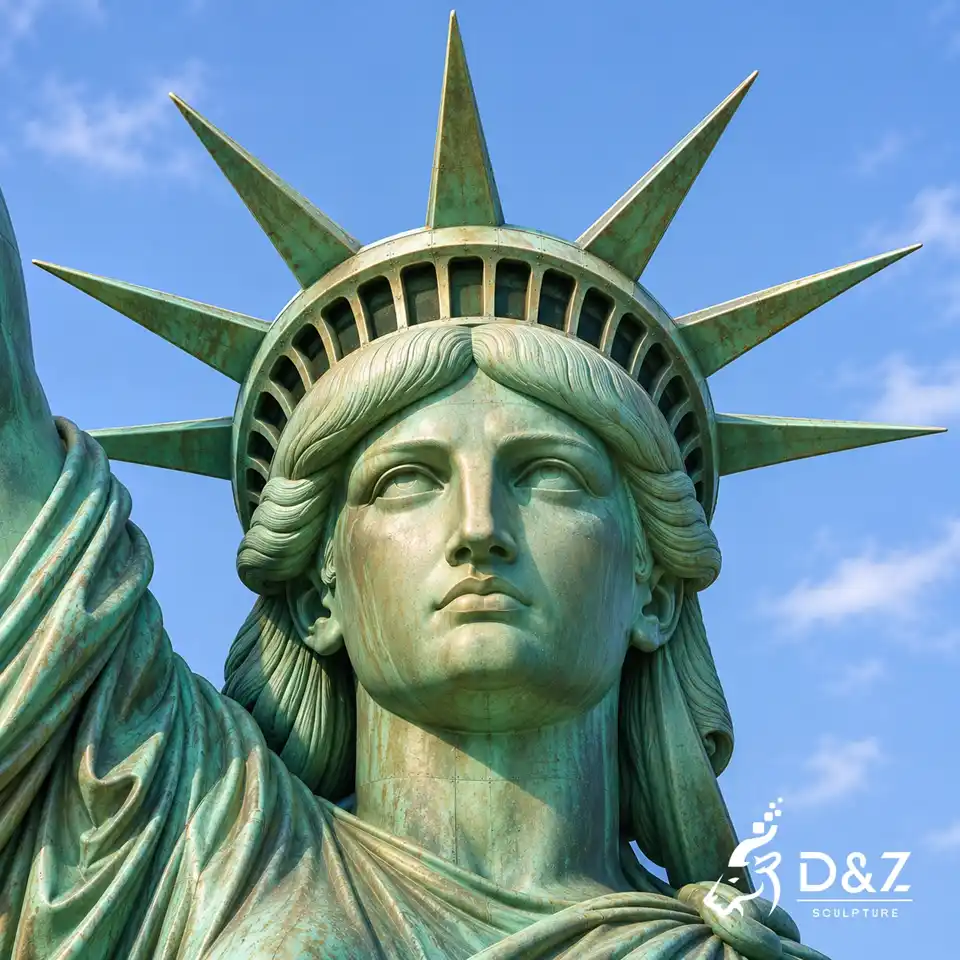
The Statue of Liberty wears a crown featuring seven pointed rays, also known as a diadem.
A widely circulated interpretation of these seven rays is that they represent the seven continents and the seven oceans, signifying that the light of freedom can transcend geographical boundaries and reach every corner of the globe.
Regarding the question, “What do the spikes on the Statue of Liberty represent?” the U.S. National Park Service (NPS) explains that the seven rays on the crown symbolize a “radiant halo” (or aureole)—a motif rooted in classical depictions of the figure of Liberty.
While it is common to hear the interpretation that the seven rays represent the seven continents and seven oceans, this should not be regarded as the sole, definitive official explanation.
In terms of the statue’s overall design, the crown reinforces the visual identity of the figure as a symbol of liberty and enlightenment, while also making the monument highly recognizable from a distance.
What Does the Tablet on the Statue of Liberty Represent?
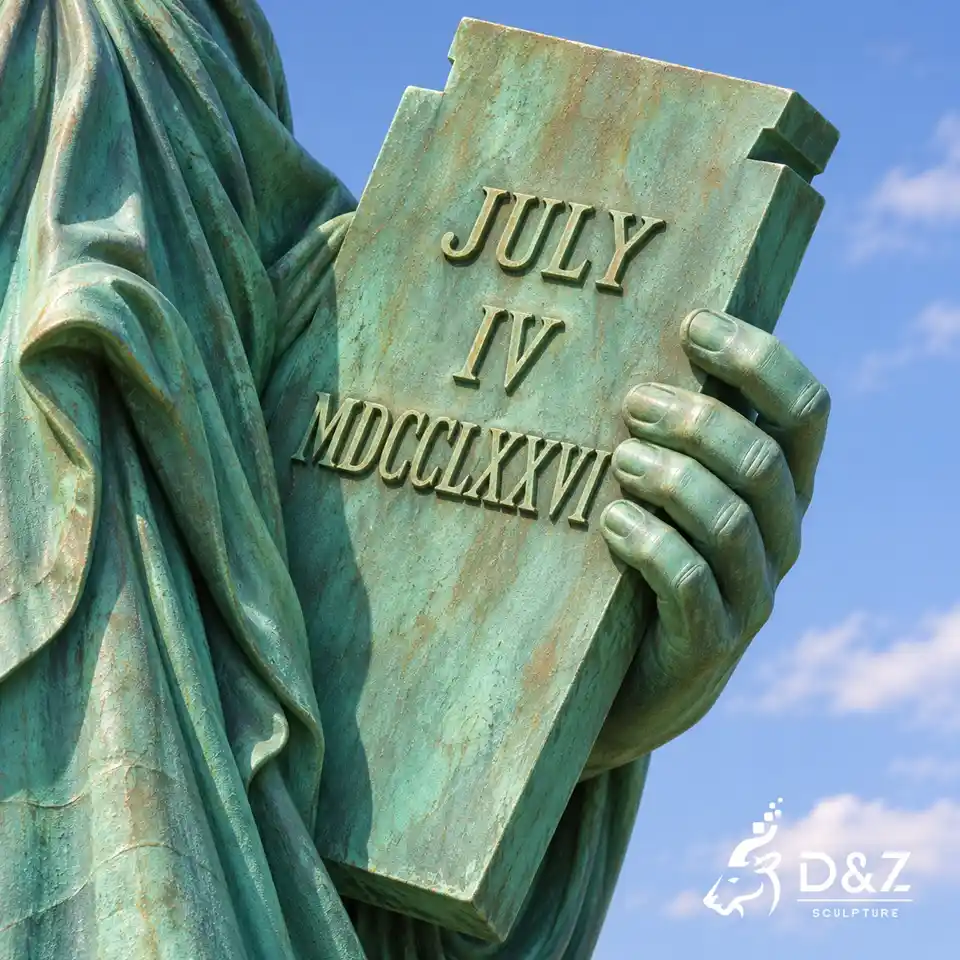
In her left hand, the Statue of Liberty holds a tablet inscribed with a series of Roman numerals:
JULY IV MDCCLXXVI
Converted to the modern calendar, this reads as July 4, 1776—the date the United States Declaration of Independence was adopted.
This tablet is more than a mere decorative element; it serves as a vital link between the monument and the history of American independence.
On July 4, 1776, the Continental Congress adopted the Declaration of Independence, formally announcing that the thirteen North American colonies were breaking away from British rule. This date later became the basis for Independence Day, celebrated annually on July 4th.
Thus, the tablet represents the historical starting point of American independence, self-governance, and the ideals of liberty.
It also serves as a reminder that liberty is not merely an abstract slogan; rather, it is deeply rooted in real historical events, social structures, and the ongoing struggle of people to secure their rights.
What Does the Chain on the Statue of Liberty Represent?
When first encountering the Statue of Liberty, many people focus on the torch held high or the crown upon her head, often overlooking the details near her feet.
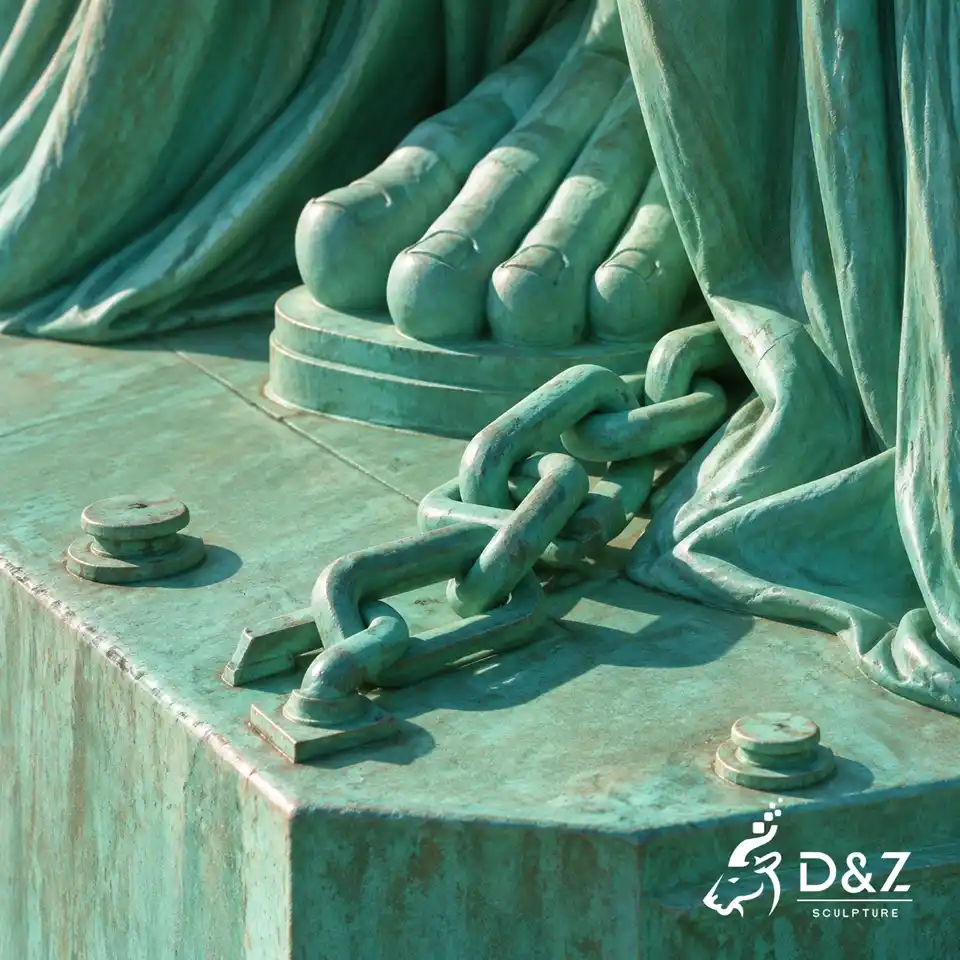
In fact, at the base of the statue lie broken shackles and chains. Because they are positioned low to the ground, they are not easily visible when viewed from below.
This design element is closely associated with the breaking of bonds, the abolition of slavery, and resistance against oppression.
Édouard de Laboulaye, the initiator of the Statue of Liberty project, was a staunch abolitionist. He supported the abolition of slavery in the United States and intended for the statue to express a commitment to liberty, democracy, and opposition to oppression.
The statue emerged in the historical context following the American Civil War and the abolition of slavery. Consequently, the broken chains at the statue’s feet not only symbolize liberation from bondage but also reflect the aspirations of the time to see the institution of slavery brought to an end.
However, there is a crucial historical detail worth noting: when the Statue of Liberty was officially unveiled in 1886, Black Americans had not yet attained full, equal rights; racial discrimination and social injustice remained deeply entrenched.
This means that the ideals of ending slavery and pursuing equality—represented by the statue—did not immediately become reality upon its completion.
In this light, the broken chains serve not only as a symbol of freedom but also as a reminder of the vast gap that once existed between historical ideals and social reality.
What Is the Significance of the Statue of Liberty’s Raised Foot?
The Statue of Liberty does not stand with her feet together in a static pose. A closer look reveals that her right foot is slightly lifted, suggesting a forward step.
This design, in tandem with the broken chains at her feet, conveys a sense of breaking free from constraints and moving onward.
From an artistic perspective, this gesture transforms the figure from a static representation of liberty into one imbued with the momentum of forward action.
It can also be understood this way: freedom is not a final outcome that, once achieved, requires no further effort; rather, it is a process that must be continuously upheld, fought for, and advanced.
Why Is Lady Liberty a Lady?
Freedom is an abstract concept—intangible and invisible. To make such an idea comprehensible through a concrete form, classical art frequently employed female figures to represent concepts like liberty, justice, and victory.
The female form of the Statue of Liberty is rooted in the figure of Libertas, the Roman goddess of liberty.
In the tradition of classical art, Libertas was frequently depicted as a female figure, embodying the ideal of liberty and freedom from enslavement. Bartholdi drew upon this artistic tradition, transforming the abstract concept of freedom into a tangible, powerful, and monumental sculpture.
This is why the Statue of Liberty is more than just a large-scale figurative sculpture; it is a work of public art that conveys its message through the figure’s posture, attire, attributes, and overall composition.
03 | Why Did France Gift the Statue of Liberty?
To truly understand why the Statue of Liberty represents American independence, democratic ideals, and the friendship between France and the United States, one must first grasp its historical background.
The statue was not built merely to decorate New York Harbor; its creation—from the initial concept to its final completion—was driven by specific historical and cultural motivations.
Édouard de Laboulaye and the Vision of Liberty
The conception of the Statue of Liberty is closely linked to the French thinker Édouard de Laboulaye.
In 1865, the American Civil War came to an end, and slavery was abolished. As a French abolitionist, Laboulaye took a keen interest in America’s democratic institutions and its ideals of freedom. He hoped that by highlighting America’s historical achievements, he could encourage French society to further pursue democracy.
Consequently, he proposed the creation of a monumental sculpture symbolizing liberty—a gift to mark the centennial of American independence and to express the friendship of the French people toward the United States.
This was not simply a matter of gifting a piece of art; the intent was to use a grand public monument to convey the values of liberty, democracy, and opposition to oppression to a wider audience.
Frédéric-Auguste Bartholdi and the Design of the Statue
Following the proposal, French sculptor Frédéric-Auguste Bartholdi joined the project and took charge of the statue’s overall artistic design.
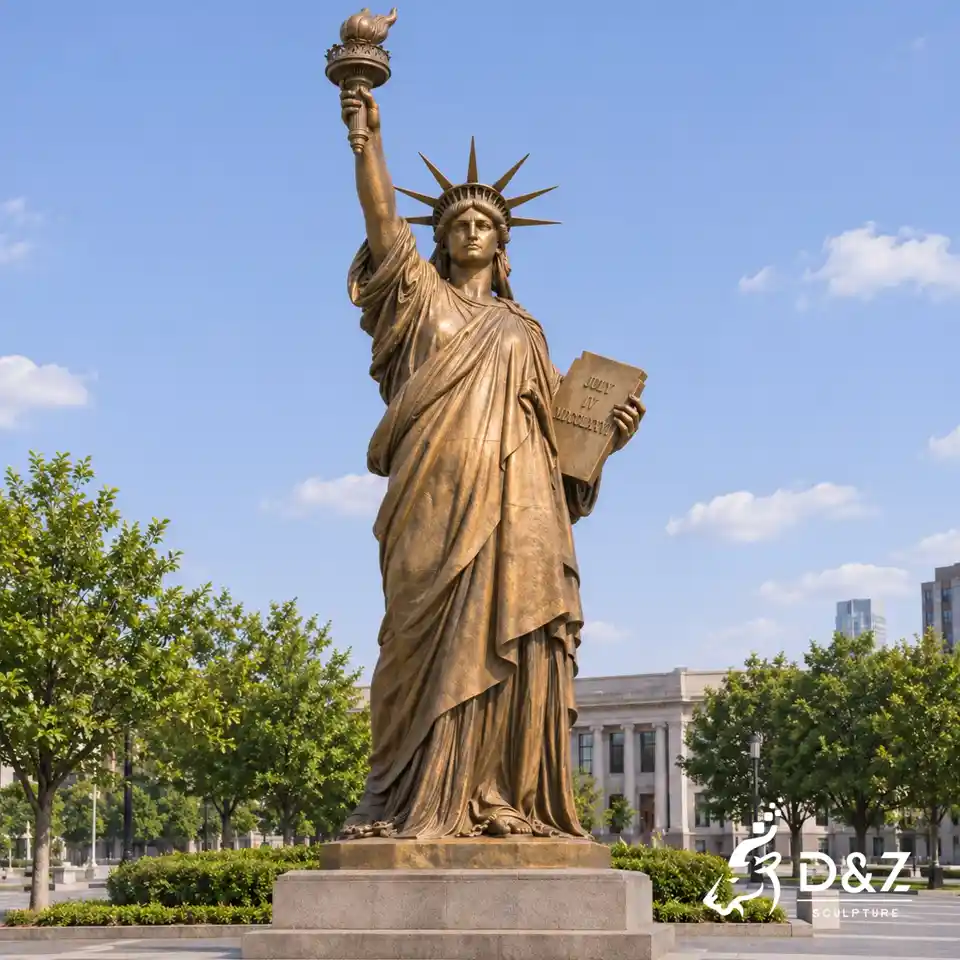
He envisioned a female figure draped in classical robes, holding a torch high in her right hand and a tablet in her left—transforming the abstract concept of liberty into a monumental, commemorative sculpture.
However, for a sculpture of such immense scale, an artistic design alone was not enough.
To ensure the copper exterior could be supported securely, specialized structural engineering was required. Gustave Eiffel and his team were subsequently brought in to design the statue’s internal support framework.
This is what makes the Statue of Liberty so fascinating: it is not merely a work of art, but the result of a synthesis between artistic design and large-scale structural engineering.
How did France and the United States collaborate?
The Statue of Liberty was a joint project between France and the United States, with each nation taking on specific responsibilities regarding fundraising and construction.
- France: Responsible for the design, fabrication, and construction of the statue itself, with funding raised through public contributions.
- The United States: Responsible for raising the necessary funds and constructing the massive pedestal upon which the statue stands.
This collaborative approach imbues the statue with a unique significance: France provided the sculpture, while the United States provided a permanent home for it—a monumental achievement realized by both nations together.
From Design to Completion: The Creation Process and Timeline
From the perspective of large-scale sculpture, the Statue of Liberty possesses another notable feature: it was not cast as a single, solid piece of copper. Instead, it was constructed using an outer “skin” supported by an internal structural framework.
So, what is the Statue of Liberty made of? Its exterior consists of copper sheets, which were hammered into the desired shapes and then meticulously attached to the internal framework. This construction method allowed for the realization of complex human forms while effectively managing the overall weight of such a massive sculpture.
For large-scale public monuments, the visual design is only the first step; structural support, material selection, segmented fabrication, transportation, and on-site assembly are equally critical. The Statue of Liberty stands as a classic example of artistic design and engineering expertise working in perfect harmony.
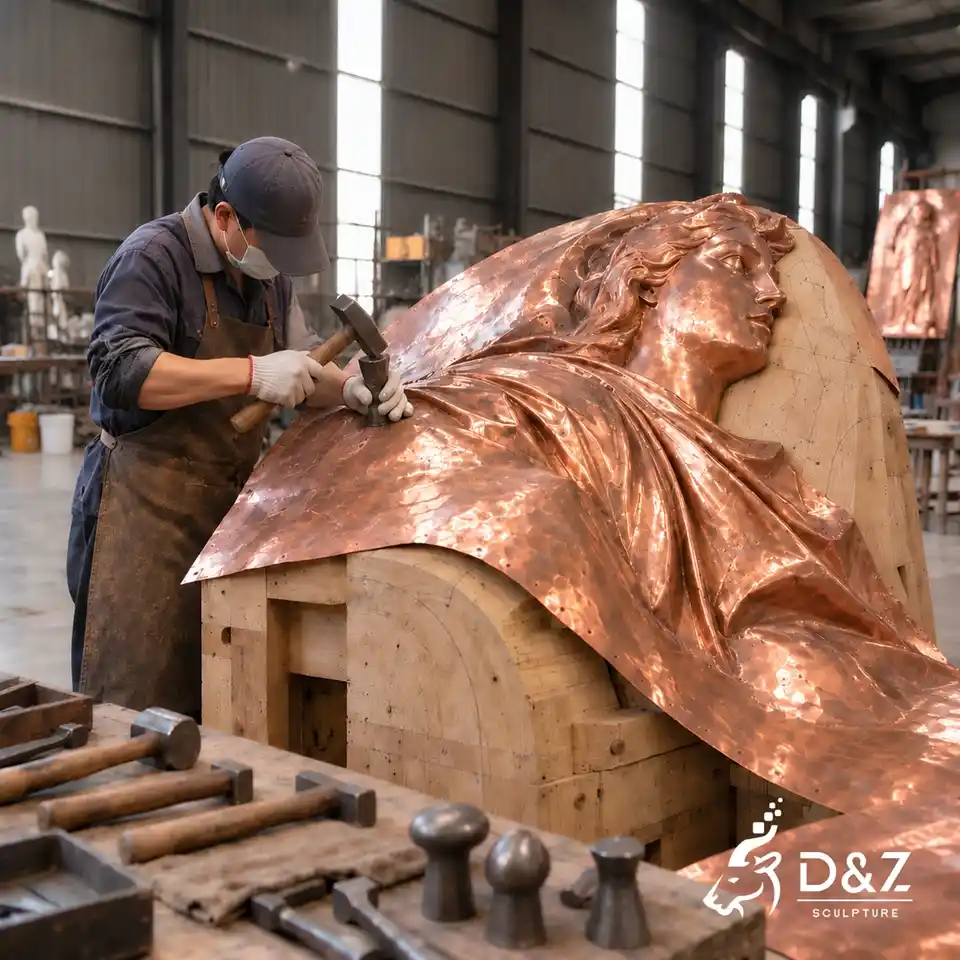
At this point, you might be wondering: when was the Statue of Liberty built? From the initial concept proposed in 1865 to its official unveiling in 1886, the entire project spanned approximately 21 years. The main structure of the statue was assembled in France in 1884, then transported to New York, where it was reassembled before its final, official unveiling on October 28, 1886. Key historical milestones are as follows:
| Year | Significant Event |
|---|---|
| 1865 | Laboulaye proposes the Liberty Monument |
| 1870 | Bartholdi begins design |
| 1875 | Project announced, fundraising underway in France & the US |
| 1876 | Statue construction starts in France |
| 1884 | Assembled in Paris, presented to the US on July 4 |
| 1885 | Shipped to New York Harbor |
| 1886 | Reassembled and unveiled Oct 28 |
It is worth noting that the Statue of Liberty was originally conceived to commemorate the centennial of American independence; however, its actual completion and unveiling took place in 1886—ten years after the 1776 centennial.
04 | The Statue of Liberty and Immigration: Why Is It Called the “Mother of Exiles”?
While freedom, democracy, and enlightenment were the core concepts behind the Statue of Liberty’s original design, its association with immigrant culture has since become one of its most widely recognized symbolic meanings.
Especially during the late 19th and early 20th centuries, a growing number of immigrants entered the United States by way of New York. The Statue of Liberty became the most familiar—and most memorable—visual landmark they encountered upon arriving in the New World.
The Statue of Liberty and Ellis Island
Is the Statue of Liberty on Ellis Island? This is a common point of confusion: the Statue of Liberty is located on Liberty Island, not on Ellis Island.
Ellis Island is a separate island in New York Harbor that once served as a major federal immigration inspection station.
The Statue of Liberty was officially unveiled in 1886, whereas the Ellis Island immigration station did not begin operations until 1892.
During that era, vast numbers of immigrants arrived in New York aboard ocean liners. For many entering the harbor by sea, the Statue of Liberty—standing near the harbor’s entrance—was one of the first signs that they were nearing the United States.
According to the National Park Service, nearly 14 million immigrants entered the United States through New York between 1886 and 1924.
For those who had endured long, arduous journeys, the sight of the torch held by the Statue of Liberty often signaled that their voyage was coming to an end—and that the possibility of a new life was beginning.
With the opening of the Ellis Island immigration station, the connection between the Statue of Liberty and immigrant culture grew even stronger.
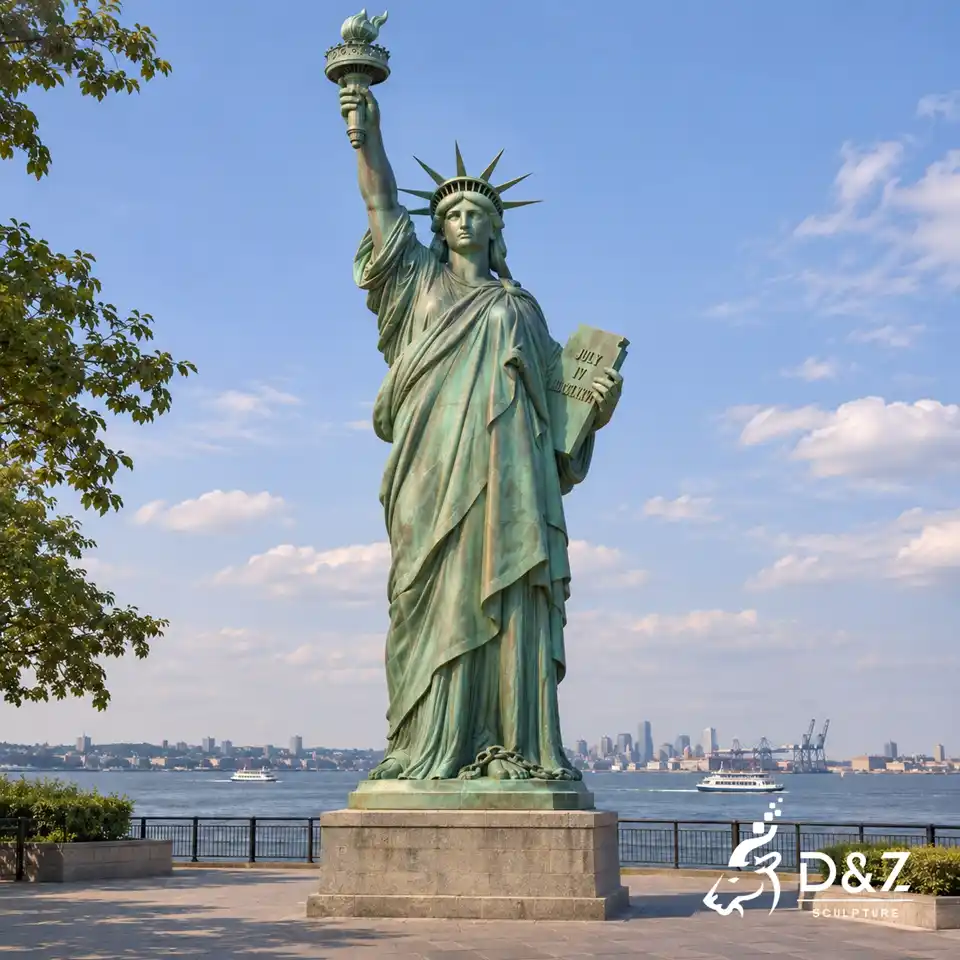
Emma Lazarus and “The New Colossus”
If the Statue of Liberty’s physical form was originally intended to represent freedom and enlightenment, the poem “The New Colossus” by Emma Lazarus further transformed how people perceive and understand the monument.
In 1883, Emma Lazarus was invited to compose a sonnet for a fundraising campaign for the Statue of Liberty’s pedestal. Drawing on her deep concern for the plight of immigrants and refugees, she wrote “The New Colossus.”
The poem was not inscribed on the pedestal at the time of the Statue of Liberty’s unveiling.
When the statue was officially dedicated in 1886, the poem was not yet present on the pedestal. It was only later, through the efforts of those who championed the work, that the text was cast onto a bronze plaque and installed inside the statue’s pedestal in 1903.
The poem portrays the Statue of Liberty as a figure who welcomes wanderers and embraces those from distant lands, bestowing upon her a title that has since become widely known: “Mother of Exiles“.
This is not an official name for the Statue of Liberty, but rather a cultural identity bestowed upon her by the poem.
As the poem gained recognition, the Statue of Liberty evolved beyond a mere monument commemorating American independence and Enlightenment ideals; she became a symbol of welcome for immigrants—a beacon of hope and opportunity.
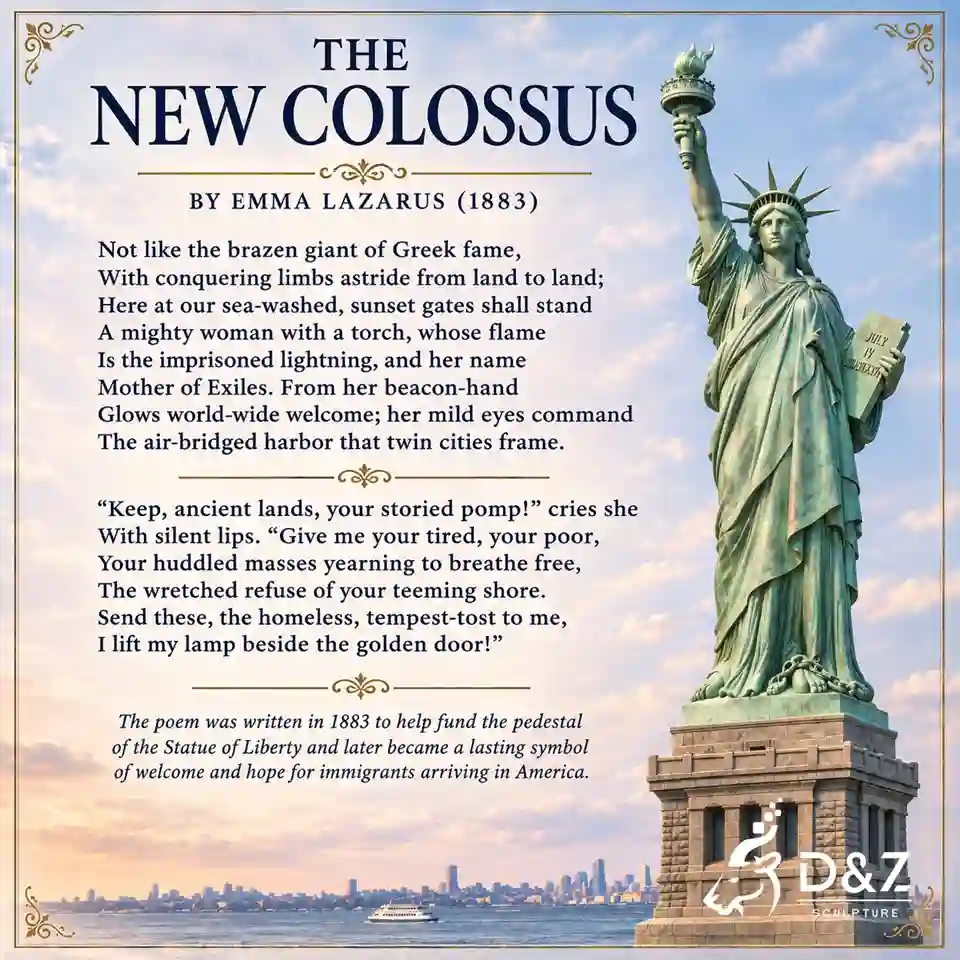
What Does the Statue of Liberty Represent to Immigrants?
For those who have left their homelands—fleeing war, poverty, or seeking to transform their lives—the Statue of Liberty carries profound, specific emotional resonance. She may signify:
- The end of a journey: The conclusion of a long voyage across the sea, marking the beginning of a new life.
- A chance for a fresh start: Leaving behind a familiar environment to arrive in a place where one can seek new employment, a new life, and new opportunities for growth.
- Safety and hope: For those escaping persecution or turmoil, she represents the promise of a secure existence.
- Freedom and dignity: The prospect of breaking free from previous constraints and gaining the right to choose one’s own path in life.
Of course, the immigrant experience cannot be simplistically reduced to the idea that arriving in the United States automatically guarantees the fulfillment of one’s dreams. Many new immigrants continue to face significant challenges, including language barriers, economic hardship, social discrimination, and the complexities of cultural adaptation.
Yet, despite these realities, the hope and new opportunities symbolized by the Statue of Liberty remain a shared, enduring part of the collective memory for many immigrants.
05 | How Has the Meaning of the Statue of Liberty Evolved Over Time?
The symbolic meaning of the Statue of Liberty is not static. As American society has evolved, the history of immigration has unfolded, and different groups’ understandings of “freedom” have shifted; the statue has come to embody increasingly layered cultural meanings.
From a Symbol of Enlightenment and Abolition to an Icon of Immigration
The original design of the Statue of Liberty centered primarily on themes of freedom, democracy, Enlightenment, and the opposition to slavery.
Conceived in the aftermath of the American Civil War, the project—championed by Édouard de Laboulaye—sought to commemorate American independence and the abolition of slavery, while simultaneously encouraging the French people to pursue democracy.
Over time, as the number of immigrants arriving in New York Harbor grew, the Ellis Island immigration station opened, and the poem “The New Colossus” gained prominence; the Statue of Liberty became increasingly intertwined with the culture of immigration.
In particular, after the poem was inscribed on the statue’s pedestal in the early 20th century, the image of the Statue of Liberty as a welcoming beacon of hope for immigrants became deeply embedded in the public consciousness.
It is important to note that this did not erase the statue’s original associations with freedom and democracy; rather, the culture of immigration added new layers of interpretation. The Statue of Liberty as we recognize it today is, in fact, a synthesis of various symbolic meanings that emerged across different historical periods.
The Gap Between Ideals and Reality
While the Statue of Liberty represents freedom, equality, and fundamental human rights, the trajectory of American history has not always aligned with these ideals.
For a long time following the statue’s unveiling, for instance, African Americans continued to endure racial discrimination and were denied equal access to social and civil rights.
For many African Americans, the freedom and equality championed by the Statue of Liberty served only to highlight the stark contradiction between such ideals and the reality they faced.
Immigrant groups have had similarly complex experiences. Although the Statue of Liberty is frequently portrayed as a symbol that welcomes all immigrants, the treatment and opportunities afforded to newcomers have varied significantly depending on their country of origin or ethnic background.
Therefore, a true understanding of the Statue of Liberty requires looking beyond its idealized image to also consider the historical contradictions that lie beneath.
This does not diminish the significance of the sculpture; rather, it brings us to a clearer realization: freedom, equality, and human rights cannot be achieved through a single symbol alone—they require the ongoing, collective effort of society.
Diverse Interpretations Across Groups and Generations
The Statue of Liberty may hold different meanings for different people.
Some see democracy and self-governance rooted in the history of American independence; others interpret the broken chains as a symbol of the abolition of slavery and resistance against oppression; some view the torch as a representation of knowledge and enlightenment; while for many immigrant families, it signifies hope, a new life, and the chance to change one’s destiny.
These interpretations are not necessarily mutually exclusive.
A public monument of profound cultural value can, by virtue of its various formal elements and historical context, allow different individuals to arrive at their own unique understandings.
This is precisely why, even after more than a century, the Statue of Liberty continues to be a subject of discussion and re-evaluation by people all around the world.
06 | Why Is the Statue of Liberty Globally Significant?
Although located in New York, USA, the Statue of Liberty’s cultural influence extends far beyond national borders.
It is more than just a historical monument; it is a piece of public sculpture that integrates art, engineering, history, and social ideals.
A Global Symbol of Freedom and Democracy
The Statue of Liberty has become a globally recognized symbol of freedom and democracy.
Whether in news media, films, history books, public art, or other cultural works, this iconic figure is frequently used to articulate concepts of liberty, independence, and democracy.
In 1984, the Statue of Liberty was inscribed on the UNESCO World Heritage List—a recognition not only of its artistic and engineering merit but also of its profound significance in world history and culture.
A Symbol of Human Rights and Peace
The Statue of Liberty is also frequently invoked to represent the pursuit of human rights, peace, and social justice.
The torch held aloft signifies enlightenment; the broken chains at the statue’s feet represent liberation from enslavement; and the tablet held in its hand is closely linked to the ideals of independence and freedom.
Together, these elements make the statue a powerful visual symbol for expressing the values of liberty, human rights, and opposition to oppression.
An Inspiration for Those Seeking Freedom and Opportunity
For those facing adversity and hoping to transform their lives, the Statue of Liberty represents more than just a geographical destination—it serves as a beacon of spiritual aspiration.
Regardless of one’s origin or past experiences, the statue evokes themes of freedom, hope, and the possibility of a fresh start.
Consequently, the meaning it conveys resonates with people from diverse national and cultural backgrounds.
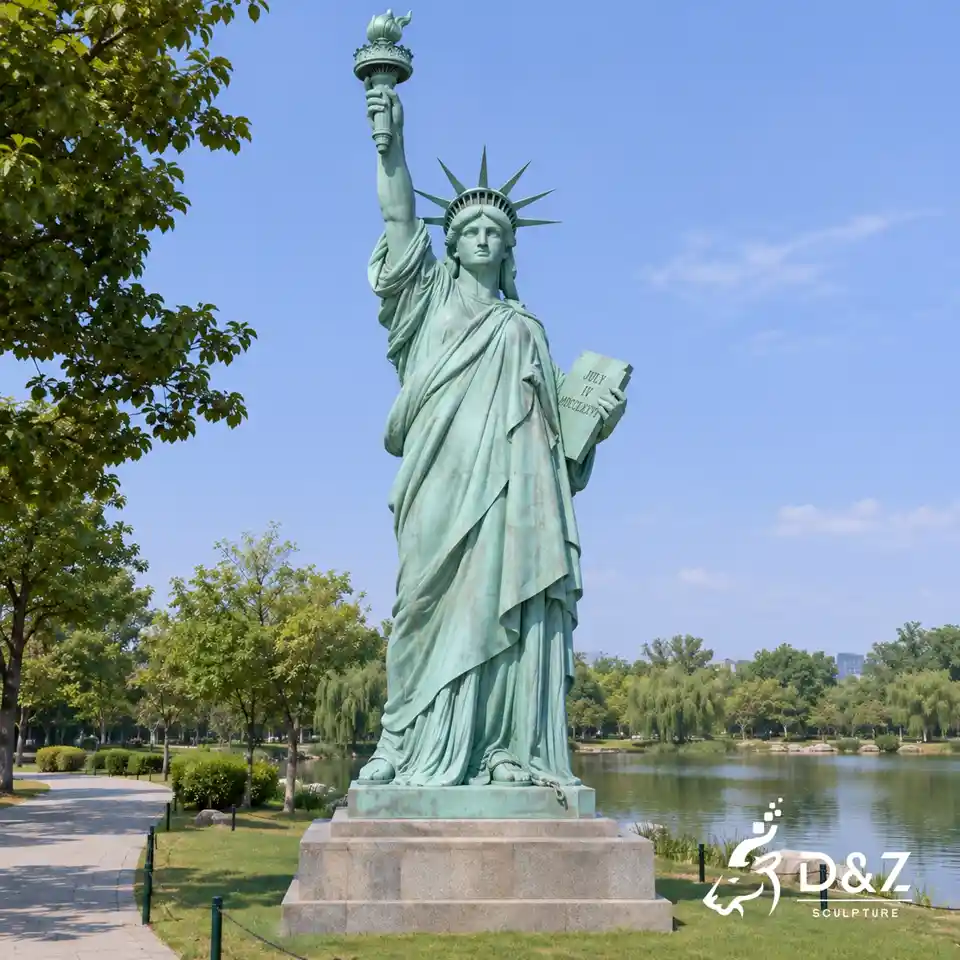
An Iconic Symbol of American Culture and Public Art
The Statue of Liberty has long been a quintessential visual symbol of American culture, appearing frequently in films, paintings, souvenirs, urban landscapes, and a wide array of cultural works.
Beyond its cultural impact, the statue stands as a classic example of large-scale public sculpture and engineering design.
From the design of the figure and the craftsmanship of its copper exterior to its internal support structure, modular fabrication, and on-site assembly, every stage reflects a seamless integration of artistic vision and engineering expertise.
For those exploring large-scale public sculpture projects, the Statue of Liberty is worth examining not only from historical and cultural perspectives, but also in terms of its materials, structure, craftsmanship, and overall project execution.
07 | Fun Facts About the Statue of Liberty
Beyond its symbolic meaning and historical background, there are several details about the Statue of Liberty itself that are worth knowing. These insights help provide a more comprehensive understanding of this monumental sculpture.
1. What Is the Official Name of the Statue of Liberty?
The official name of the Statue of Liberty is La Liberté éclairant le monde, which translates to “Liberty Enlightening the World.”
This name emphasizes the enlightenment and light brought by liberty, while “Statue of Liberty” is the name most commonly used in everyday conversation.
2. Why Is the Statue of Liberty Green?
The exterior of the Statue of Liberty is primarily made of copper sheets, which originally had a reddish-brown metallic hue.
After long-term exposure to the air and the natural environment, the copper surface underwent an oxidation process, resulting in the green layer we see today—commonly known as a “patina.”
This green layer does not mean the sculpture is rapidly deteriorating; on the contrary, the patina acts as a protective coating, slowing down further corrosion of the copper underneath.
Therefore, the green appearance we see today is actually a unique surface effect that developed over time through natural processes.
3. Who Designed and Built the Statue of Liberty?
The primary artistic design of the Statue of Liberty was the work of French sculptor Frédéric-Auguste Bartholdi.
The internal support structure was designed by Gustave Eiffel and his engineering team.
Furthermore, French craftspeople were responsible for constructing the statue itself, while the American side handled fundraising and the building of the pedestal. It was a large-scale public art project brought to life through the collaboration of multiple nations and professionals from various fields.
4. How Tall Is the Statue of Liberty?
The total height of the Statue of Liberty, from the ground to the tip of the torch, is approximately 93 meters.
This consists of the statue itself, which stands about 46 meters tall, and the pedestal, which is also about 47 meters tall.
If you consider only the statue—excluding the pedestal—the height is approximately 46 meters. It is important to distinguish between the height of the statue itself and the height of the entire structure.
5. Where Is the Statue of Liberty?
The Statue of Liberty is located on Liberty Island in New York Harbor. It falls under the jurisdiction of New York State and is managed by the U.S. National Park Service.
It is distinct from the nearby Ellis Island; while the former is famous for the Statue of Liberty, the latter is renowned for its role in the history of American immigration and its immigration museum.
6. Is the Statue of Liberty a Solid Copper Sculpture?
No, it is not. The exterior of the Statue of Liberty consists of copper sheets approximately 2.4 millimeters thick, while its overall form is supported by an internal metal framework.
This design allows for the desired appearance of a large-scale figurative sculpture while reducing its total weight and meeting the structural requirements for long-term outdoor display.
It serves as a prime example of how artistic form, material craftsmanship, and engineering structure can be integrated in large-scale sculpture.
Finally, let’s return to the initial question: what does the Statue of Liberty represent?
Generally speaking, it symbolizes liberty and democracy, as well as the human pursuit of equality, hope, and a new life. It commemorates American independence and the abolition of slavery, stands as a testament to the friendship between France and the United States, and embodies the aspirations for the future held by generations of immigrants.
From the torch and the tablet to the broken chains at its feet, every detail imbues the sculpture with a cultural significance that transcends its physical appearance.
This is precisely what makes large-scale public sculpture so compelling: beyond exceptional form and craftsmanship, it has the capacity—through its design, materials, history, and cultural symbolism—to convey enduring and profound ideas.
08 | FAQs About the Statue of Liberty
Q1: Why Was the Statue of Liberty Built?
A: The Statue of Liberty was originally a gift from France to the United States, intended to commemorate the centennial of American independence, express the friendship between the two nations, and signify a shared commitment to the ideals of liberty and democracy.
Q2: How Long Did It Take to Build the Statue of Liberty?
A: The entire project spanned approximately 21 years, from the initial concept in 1865 to the official unveiling in 1886. The construction of the statue itself—from design and fabrication to its final assembly in France—took about 9 years.
Q3: Why Is the Statue of Liberty Important?
A: It is not only a significant historical landmark in the United States but also an iconic symbol of liberty, democracy, and immigrant culture. In 1984, it was designated a UNESCO World Heritage Site.
Q4: What Does the Statue of Liberty Represent in America?
A: In the United States, it represents national independence, liberty, democracy, and self-governance; it also embodies the aspirations of immigrants seeking new lives and opportunities.
Q5: What Does the Statue of Liberty Represent Today?
A: Today, it continues to symbolize freedom, hope, human rights, and equality, while serving as a key representative of American history, immigrant culture, and public art.
Q6: What Does the Statue of Liberty Represent Spiritually?
A: On a spiritual level, it represents hope, courage, enlightenment, and the power of a fresh start—encouraging people to pursue freedom, dignity, and a better life.
Q7: Why Is Lady Liberty a Lady?
A: The design is rooted in the artistic depiction of Libertas, the Roman goddess of liberty. In classical art, female figures were frequently used to personify abstract concepts such as liberty and justice.
Q8: What Is in Lady Liberty’s Left Hand?
A: In her left hand, she holds a tablet inscribed with the Roman numerals “JULY IV MDCCLXXVI,” representing July 4, 1776—the date the United States Declaration of Independence was adopted.
Q9: When Did the Statue of Liberty Turn Green?
A: The Statue of Liberty was originally reddish-brown; over time, the copper surface underwent natural oxidation, gradually developing a green patina. By 1906, this green appearance was clearly established, with the entire transformation process taking about 30 years.
09 | References & Further Reading
The following authoritative sources provide additional historical, cultural, and technical information about the Statue of Liberty:
- Statue of Liberty Facts
- Creating the Statue of Liberty
- The Immigrant’s Statue
- Frequently Asked Questions
- From Haven to Home: 350 Years of Jewish Life in America
- Statue of Liberty
10 | From Historic Monuments to Custom Public Art Projects
As the story of the Statue of Liberty illustrates, an exceptional piece of public sculpture requires more than just striking aesthetics and superb craftsmanship; it must also convey meaningful cultural significance through its form, materials, and intricate details.
If you are planning a large-scale public sculpture—whether for commemorative purposes or as an expression of cultural values—D&Z Sculpture offers comprehensive, end-to-end project solutions. From refining creative concepts, sculpture design, and material selection to custom fabrication, packaging, shipping, and installation support, we are here to guide you through every step.