Introduction
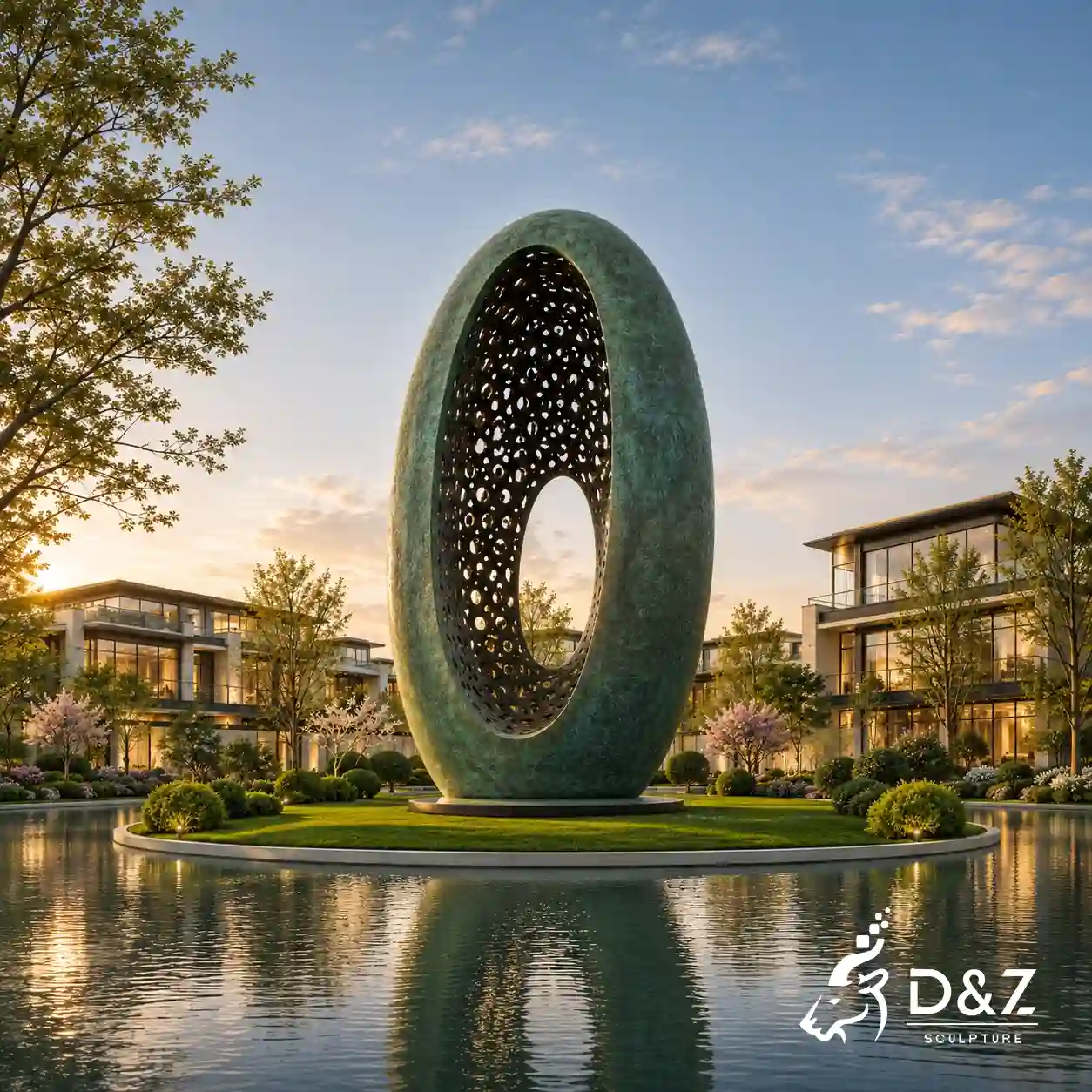
Abstract sculpture is more than an art form. It is a way to express ideas and emotions through shape and form. Constantin Brancusi’s famous Bird in Space is a good example. Instead of showing feathers, claws, or other realistic details, the sculpture uses a simple, flowing form to capture the feeling of flight, lightness, and freedom.
Sculpture has been used to express human ideas and emotions for thousands of years. Traditional sculptures often represent people, animals, or familiar objects. Abstract sculpture moves beyond realistic forms and uses shapes, lines, space, and imagination to communicate artistic ideas. Bold metal forms, flowing curves, and clean geometric shapes can all become part of an abstract sculpture.
So, what is an abstract sculpture? What makes it different from traditional figurative sculpture? In this guide, we’ll explore its definition, styles, history, materials, and uses, along with practical tips for choosing the right piece for your space.
Table of Contents
01 | What Is an Abstract Sculpture?
An abstract sculpture is a three-dimensional art form that does not need to reproduce real objects exactly. Artists may simplify, distort, or combine recognizable subjects such as people, animals, and plants. They can also move beyond recognizable forms and create entirely original shapes. These sculptures use elements such as shape, line, volume, space, and texture to express ideas and emotions.
In sculpture, abstract does not mean meaningless or randomly created. It simply refers to a different way of expressing an idea. Two people may look at the same artwork and see different things, depending on their experiences and perspectives. There is no single correct interpretation, and that is part of what makes abstract sculpture interesting.
How Is Abstract Sculpture Related to Abstract Art?
Abstract art is a broad artistic category that includes painting, sculpture, and other visual art forms. Abstract sculpture is the three-dimensional expression of abstract art. Abstract art sculptures can take many forms, from simplified human figures to completely original geometric and organic shapes.
Unlike abstract paintings, sculptures occupy physical space. Viewers can walk around them and discover different shapes, spatial relationships, and lighting effects from different angles. This means abstract sculpture must also consider volume, structural stability, material properties, and how the artwork interacts with its surroundings.
02 | What Makes an Abstract Sculpture?
An expressive abstract sculpture starts with a clear idea and brings it to life through different visual elements. The following five elements work together to shape its appearance, texture, and artistic expression.
Shape and Line
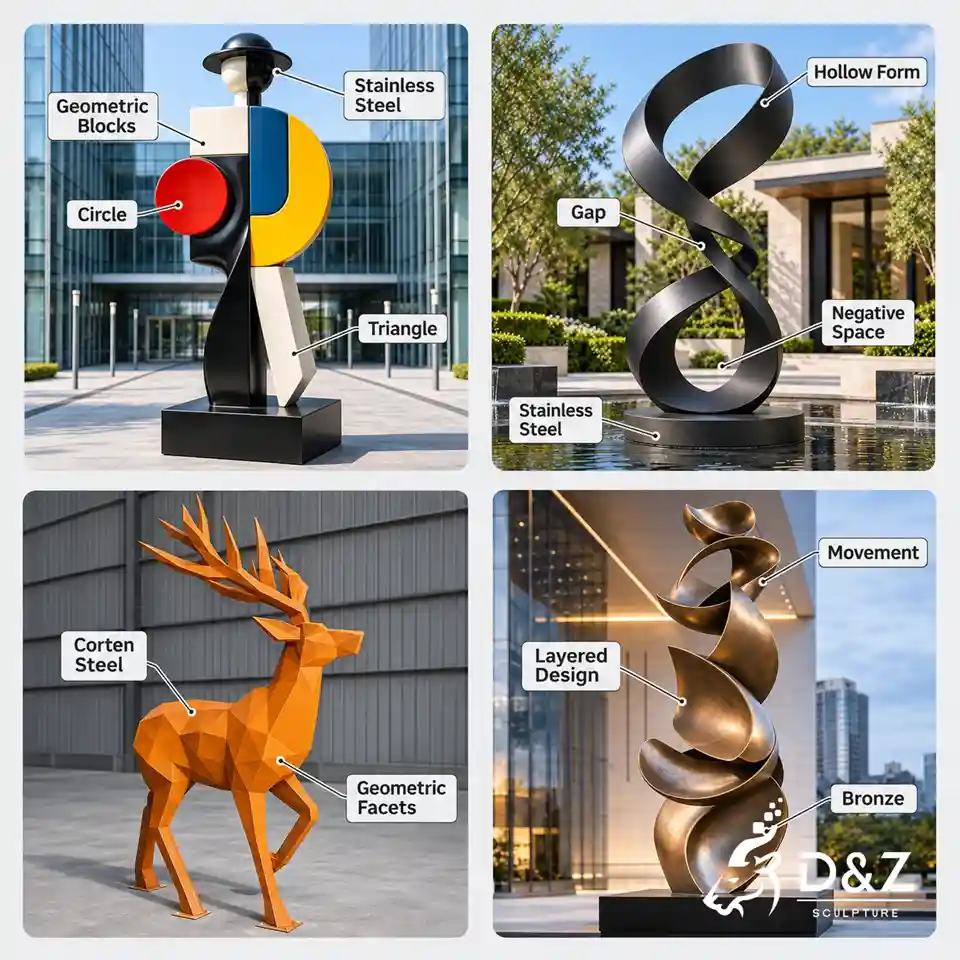
Geometric blocks, circles, triangles, flowing curves, intersecting lines, and irregular outlines can all be used in abstract sculpture. Even simple shapes can create complex forms when combined in different ways. Strong, angular lines often create a sense of power, while soft curves can suggest movement, lightness, and a more natural feeling.
Space and Volume
Space is not just about the solid volume of a sculpture. It also includes openings, gaps, and the empty areas created by its form, often called negative space. Through hollow structures, overlapping elements, and intersecting forms, a sculpture can connect more naturally with its surroundings and create a sense of openness and depth.
Material and Texture
The material and its surface finish have a direct impact on how a sculpture looks and feels. Mirror-polished, brushed, matte, textured, or naturally weathered surfaces can each create a different visual effect.
Even solid, heavy metals can communicate warmth, freedom, or strength through thoughtful design. The material and the form need to work together to bring the artistic idea to life.
Movement and Balance
Although most sculptures remain still, designers can create a sense of movement through tilted forms, rotation, repetition, and asymmetrical structures. At the same time, the center of gravity, support points, and load distribution must be carefully considered to ensure that the sculpture is visually dynamic yet structurally stable and safe.
Concept and Emotional Expression
The concept is at the heart of an abstract sculpture. An artist may want to express freedom, life, love, strength, peace, or a connection with nature. These ideas are reflected in the shapes and forms of the artwork.
That is why different people may feel different things when looking at the same sculpture. Everyone can bring their own experiences and imagination to the artwork.
03 | What Are the Different Styles of Abstract Sculpture?
There is no single, fixed classification system for abstract sculpture. Different styles often overlap and influence one another. Here are five common forms you may come across.
Geometric Abstract Sculpture
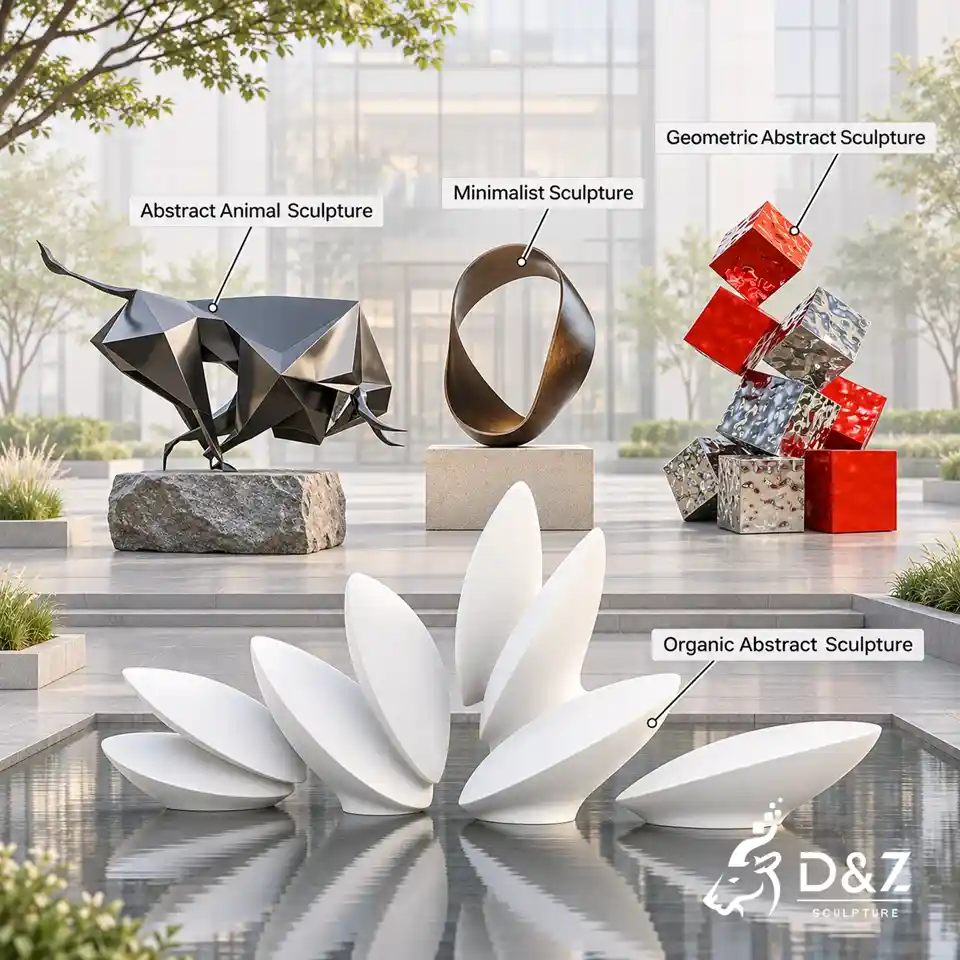
Geometric abstract sculpture uses basic shapes such as circles, squares, triangles, spheres, and cubes. It focuses on proportion, order, structure, and spatial relationships. Its clean lines and clear forms make it a popular choice for modern architecture, commercial plazas, and public art projects. Abstract geometric sculpture can also combine different shapes and structures to create more complex visual effects.
Organic or Biomorphic Sculpture
Organic or biomorphic sculptures often take inspiration from flowing water, plants, mountains, the human body, and other natural forms. They use flowing curves and irregular shapes to create a natural, soft, and lively appearance.
Minimalist Abstract Sculpture
Minimalist abstract sculpture removes unnecessary details and decoration to focus on form, material, proportion, and space. Its clean and understated appearance works well with modern architecture, simple garden designs, and contemporary indoor and outdoor spaces.
Abstract Figurative Sculpture
Abstract figurative sculpture keeps some recognizable features of people or animals while simplifying or transforming their proportions, outlines, and details. Facial features, fur, and body structures do not need to be reproduced realistically.
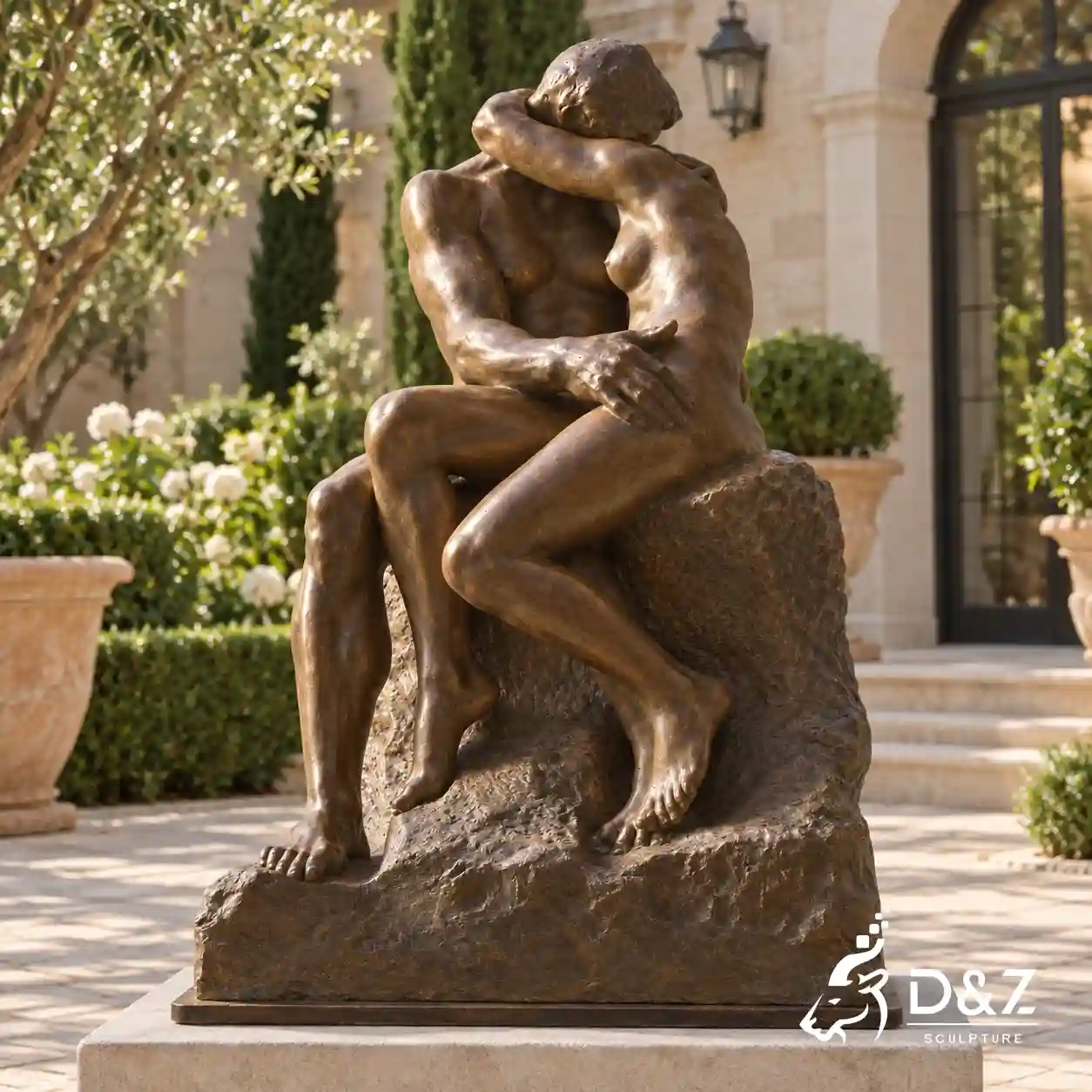
For example, an abstract figure sculpture may simplify the human form to express love, strength, or life. An abstract animal sculpture can capture an animal’s posture, movement, or character while giving the design a more artistic and distinctive appearance.
Kinetic Abstract Sculpture
Kinetic abstract sculpture uses wind, mechanical systems, or other power sources to create movement. Its appearance changes as the elements move and interact. However, not all kinetic sculptures are abstract. Figurative sculptures can also incorporate movement.
04 | What Is Figurative vs. Abstract Sculpture?
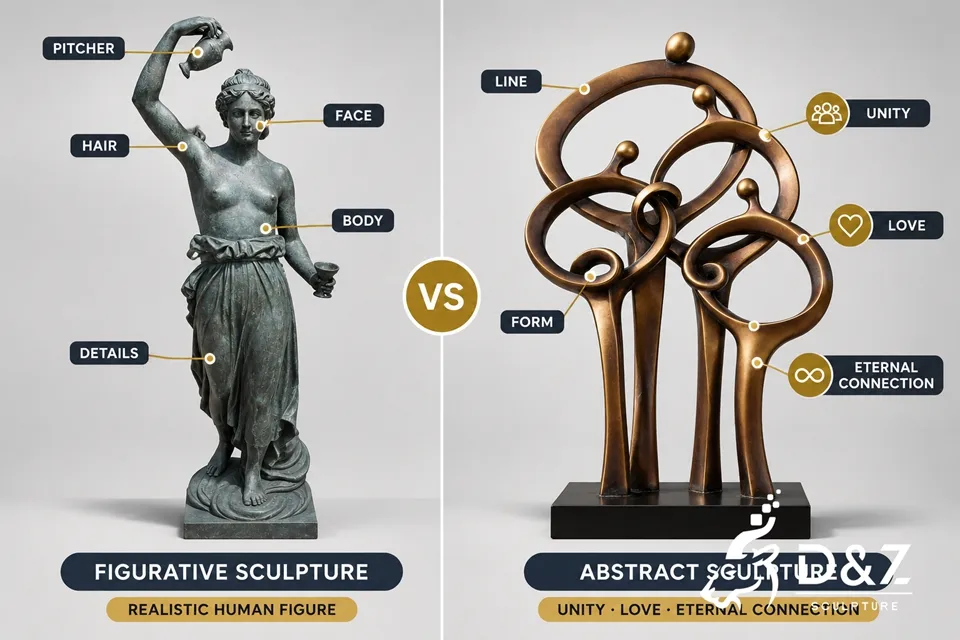
When choosing a sculpture, you may wonder whether an abstract or figurative style is more suitable. The main differences come down to the subject, form, and way the artwork communicates an idea.
| Comparison | Abstract Sculpture | Figurative Sculpture |
|---|---|---|
| Subject | Shapes, concepts, emotions, and non-realistic forms | People, animals, and recognizable objects |
| Appearance | Simplified, distorted, geometric, or free-form shapes | Retains recognizable features of real subjects |
| Expression | Focuses on personal feelings and artistic ideas | Focuses on representing the original subject |
| Viewing Experience | Leaves more room for imagination | Has a clear subject that is easy to recognize |
| Design Approach | Can move beyond realistic forms | Usually starts with a real-world reference |
The two styles are not completely separate. Abstract sculptures can retain recognizable features, while figurative sculptures can also include abstract elements. The right choice depends on your project theme, architectural style, and the atmosphere you want to create.
05 | What Is the History of Abstract Sculpture?
Modern abstract sculpture began to take shape in the early 20th century. You don’t need to study an entire art history course to understand it. A look at a few key stages can help explain how this art form developed.
Early Exploration
In the early 20th century, some artists began moving away from the limitations of traditional realistic sculpture. Instead of focusing only on reproducing people and objects, they started exploring the expressive possibilities of shape, space, structure, and materials.
Development of Modern Abstract Sculpture
Art movements such as Cubism and Constructivism influenced the development of sculpture. Artists experimented with geometric structures, simplified forms, and non-realistic approaches, helping abstract sculpture develop into a more established artistic language.
Expansion of Styles and Materials
As artistic ideas continued to evolve, different approaches such as minimalism, organic abstraction, and kinetic sculpture gained attention. Advances in metalworking and material technology also expanded the possibilities for sculpture, creating more options for large-scale abstract works and public art projects.
Contemporary Abstract Sculpture
Today, contemporary abstract sculpture is widely used in urban landscapes, public spaces, commercial buildings, and private residences. Digital modeling, precision fabrication, and traditional craftsmanship work together to make more complex forms and structures possible.
From indoor art pieces to large outdoor installations, each project can be developed around its design concept, site conditions, and practical manufacturing requirements.
06 | What Are Some Famous Abstract Sculptures and Artists?
Looking at well-known artworks can help you understand the different approaches to abstract sculpture. The following artists and their works have played important roles in the development of modern sculpture.
Constantin Brancusi
Brancusi was known for reducing forms to their essential qualities. Rather than relying on detailed features, he used proportion, contour, and surface to express the character of his subjects. His Bird in Space series captures the feeling of flight through an elegant, elongated form and remains one of the best-known examples of modern abstract sculpture.
Henry Moore
Henry Moore often transformed the human body into organic abstract forms. Many of his sculptures feature openings that connect solid shapes with surrounding space. His bronze works combine a strong physical presence with soft, natural contours.
Barbara Hepworth
Barbara Hepworth explored openings, solid and empty space, and the relationship between form and its surroundings. She often worked with organic shapes and natural contours, showing that the space within a sculpture can be just as important as the solid material itself.
Alexander Calder
Alexander Calder was a leading figure in kinetic sculpture. He used balanced structures and lightweight elements to create artworks that move with the wind, bringing motion and the passage of time into sculpture.
Naum Gabo
As an important figure in Constructivism, Naum Gabo explored the relationship between lines, space, structure, and materials. He experimented with strings, sheets, and other elements to create sculptural forms, opening up new possibilities for modern sculpture.
07 | What Materials Are Used in Abstract Sculpture?
The material affects not only how a sculpture looks but also how it can be shaped, where it can be installed, and how it needs to be maintained. Each material has its own advantages, so the right choice depends on the design, budget, and project conditions.
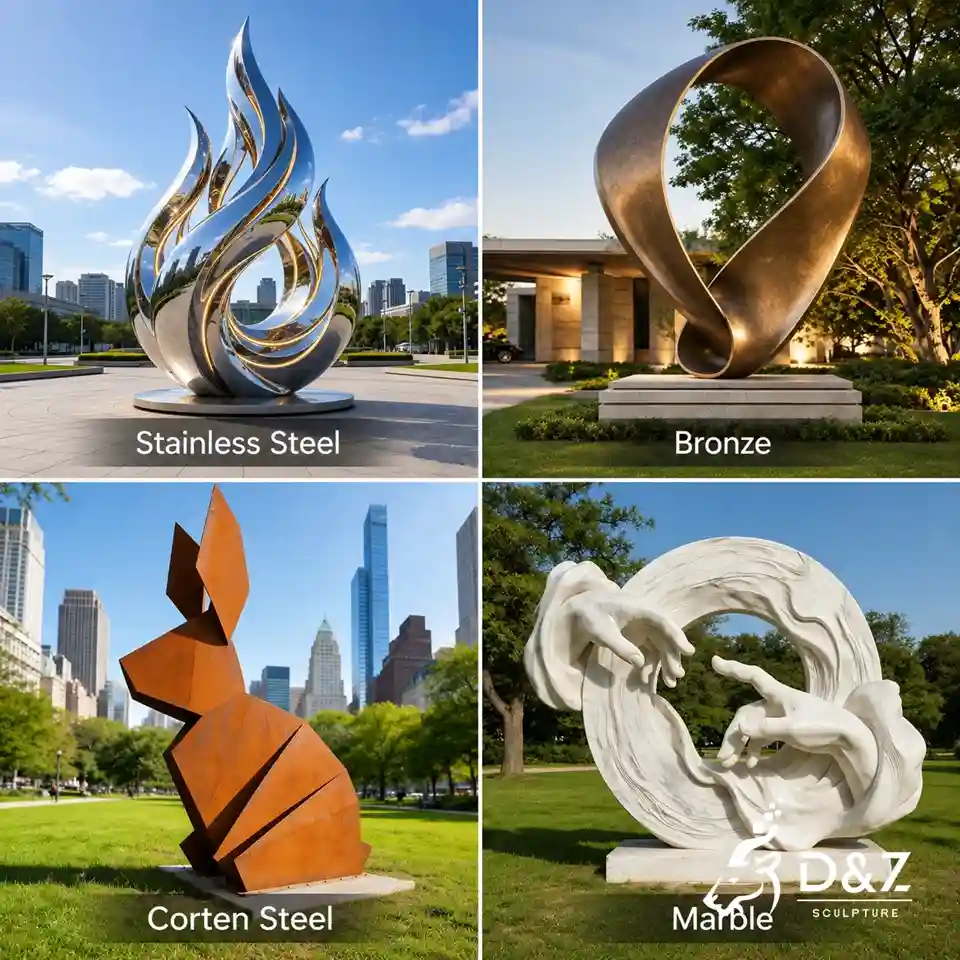
Stainless Steel
Appearance: Stainless steel can be mirror-polished, brushed, matte-finished, or painted. It offers a clean, modern look and works well for geometric, flowing, and openwork designs.
Use: It is suitable for many indoor and outdoor settings and offers good corrosion resistance. Actual outdoor performance depends on the stainless steel grade, environment, and surface finish.
Design Advantages: Its versatility makes it suitable for complex structures and large abstract metal sculptures. Different finishes can create modern, minimalist, or visually striking results.
Corten Steel
Appearance: Corten steel develops a distinctive rust-colored patina with a rich, textured appearance. It creates a sense of natural character and depth.
Use: It is commonly used in outdoor landscapes, gardens, parks, and public art projects. Suitability depends on the local climate, drainage, and installation conditions. Initial rust runoff should also be considered to protect surrounding surfaces.
Design Advantages: Its natural patina works well with plants, stone, and architecture. It is suitable for large geometric, organic, and nature-inspired abstract designs.
Bronze
Appearance: Bronze can be finished in natural bronze, dark brown, black, or verdigris tones. Its surface has a rich, warm character and a timeless artistic appeal.
Use: Bronze is suitable for many indoor and outdoor settings. The lost-wax casting process can capture detailed forms, with long-term performance depending on the alloy, finish, and environment.
Design Advantages: Bronze works especially well for organic forms, abstract figures, animals, and expressive artistic designs. Abstract bronze sculpture is often chosen for luxury hotels, villas, art spaces, and public art projects.
Marble
Appearance: Natural marble has distinctive veining and can develop a smooth, refined finish through carving, grinding, and polishing.
Use: It is commonly used in indoor art spaces, hotels, villas, and landscape projects. Outdoor applications require consideration of the stone type, water absorption, climate, and protective treatment.
Design Advantages: Every piece of natural marble has its own unique pattern. Abstract marble sculpture works well for minimalist, organic, and carved abstract forms.
Other Materials Used in Abstract Sculpture
Beyond these materials, artists also work with wood, ceramic, clay, and glass. An abstract wood sculpture can highlight natural grain and organic forms. An abstract ceramic sculpture can explore different glazes and firing techniques. An abstract clay sculpture offers freedom in shaping and surface texture, while an abstract glass sculpture uses transparency, light, and color to create distinctive visual effects.
Each material has its own strengths, but not all are suitable for large outdoor projects. For sculptures intended for long-term outdoor display, weather resistance, structural strength, and maintenance should be considered from the beginning.
08 | Why Is Abstract Sculpture Still Relevant Today?
Abstract sculpture continues to play an important role in contemporary art and design, not only because of its distinctive appearance but also because of the many ways it can communicate ideas and interact with spaces.
Freedom of Artistic Expression
Abstract sculpture is not limited by the appearance of real objects. Designers can use shape, line, space, and materials to communicate ideas in many different ways, offering greater creative freedom.
Encouraging Imagination
There is no single interpretation. People with different experiences, tastes, and perspectives may see different meanings in the same artwork, making the viewing experience more personal.
Encouraging Material and Craft Innovation
Abstract sculpture continues to explore new forms and structures, encouraging innovation in materials, fabrication, and surface finishes. Digital modeling, metal fabrication, and traditional craftsmanship make increasingly complex designs possible.
Working with Modern Architecture and Public Art
Modern architecture often focuses on clean lines, proportion, and spatial relationships. Abstract sculpture can complement these design elements and become a distinctive focal point within a building or landscape.
Why does abstract sculpture continue to attract attention today? Because it does more than decorate a space. It can connect with architecture, the surrounding environment, and nature. Some pieces blend quietly into their surroundings, while others become the defining visual feature of an entire project.
09 | Where Are Abstract Sculptures Used?
The right abstract sculpture can make a real difference to a space. It can create a focal point, make an area more memorable, add visual depth, and connect with the architecture and landscape. Its shape and material can also help define the atmosphere of the surroundings.
Abstract sculptures can be used in many indoor and outdoor settings. Here are some common applications.
Hotels and Resorts
Placing an abstract sculpture at a hotel entrance, lobby, lounge, water feature, or courtyard can add artistic character and create a memorable experience for guests. It can also become a recognizable photo spot.
Commercial and Corporate Spaces
In office lobbies, corporate headquarters, business parks, and commercial plazas, abstract sculptures can serve as focal points and help communicate a company’s identity and design vision.
Gardens and Landscape Projects
An abstract garden sculpture can work alongside plants, pathways, water features, and natural surroundings. It adds depth to a landscape and gives an ordinary garden a stronger artistic identity.
Public Spaces
A large abstract outdoor sculpture can become a recognizable piece of public art in city squares, urban parks, green spaces, and cultural districts, adding character to the surrounding environment.
Private Residences and Villas
In villa gardens, residential entrances, foyers, and living rooms, abstract sculptures can serve as personal art pieces. Choosing a design that suits the architecture, landscape, and owner’s preferences helps create a more distinctive space.
10 | What Abstract Sculpture Designs Does D&Z Offer?
As a large-scale sculpture manufacturing partner, D&Z Sculpture develops custom abstract sculpture solutions around each project’s design concept, site conditions, and practical requirements. Here are some design directions to help you explore the possibilities.
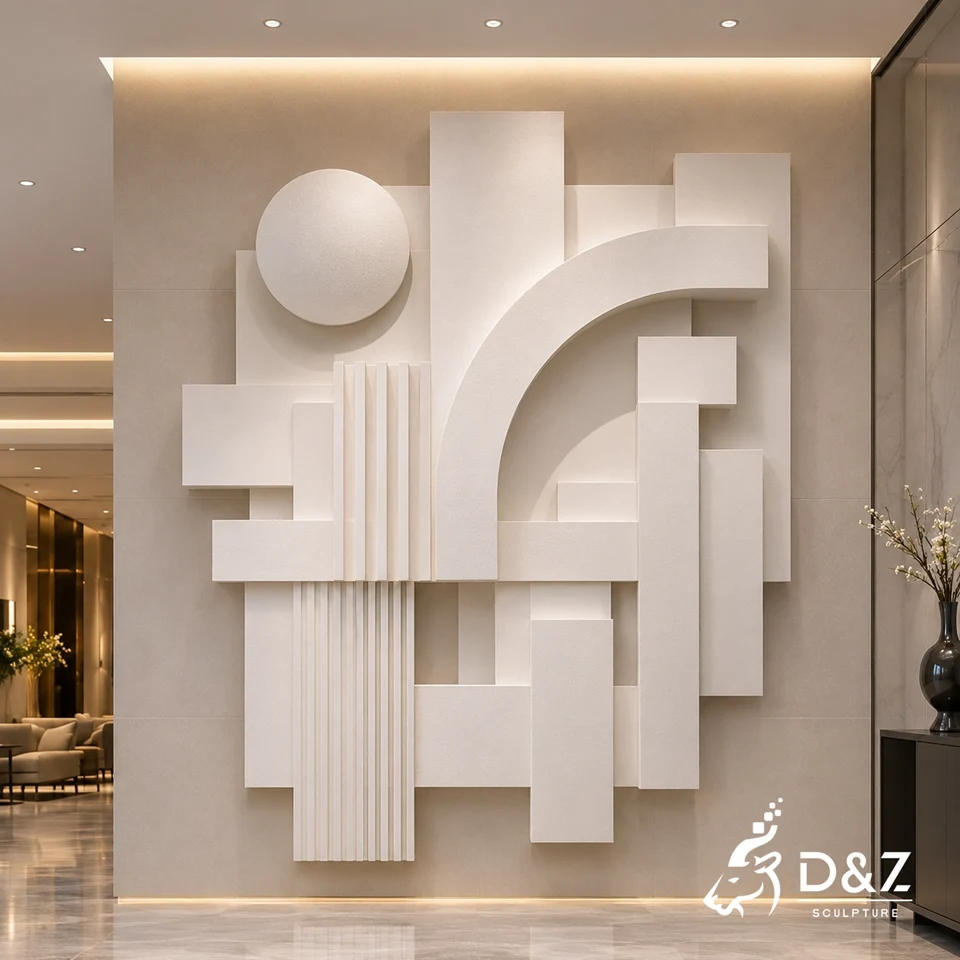
Geometric Abstract Sculpture
Using geometric blocks, circles, faceted surfaces, and intersecting structures, these designs create clean, modern forms for contemporary architecture, commercial plazas, and corporate spaces.
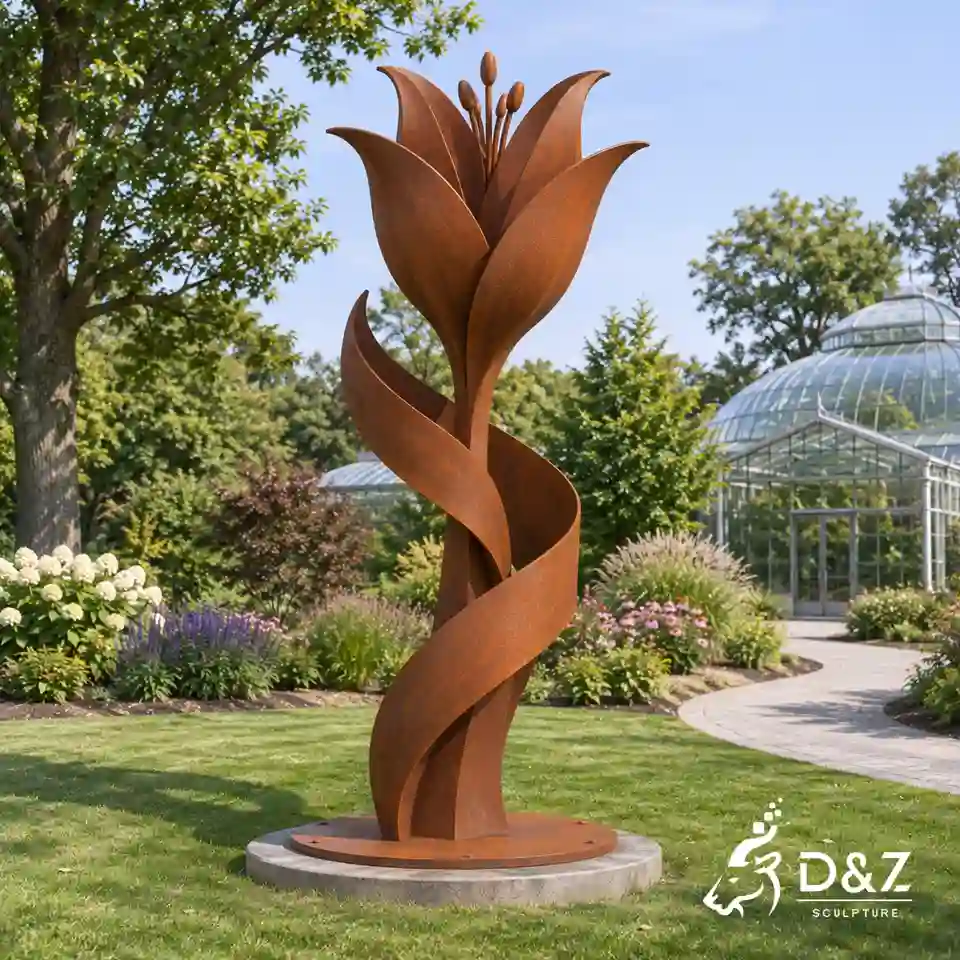
Organic Abstract Sculpture
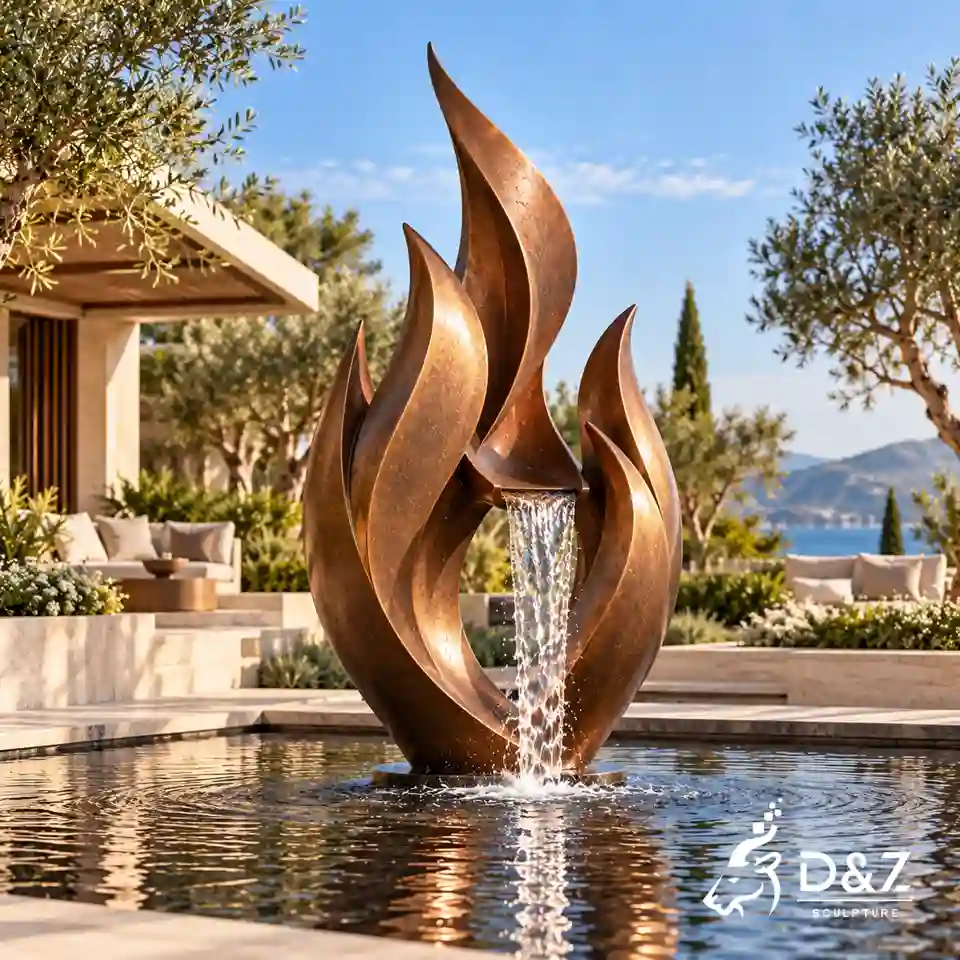
Flowing curves, twisting structures, and natural forms create a softer, more dynamic appearance. These designs work well in hotels, gardens, resorts, and landscape projects.
Abstract Figure Sculpture
Simplified human outlines, elongated proportions, and combined forms can express themes such as love, companionship, strength, and life. These designs are suitable for hotel lobbies, art spaces, villas, and public areas.
Abstract Animal Sculpture
These designs simplify the posture, outline, and character of animals while retaining their recognizable identity. Geometric or flowing forms add artistic expression, making them suitable for gardens, hotels, and public landscapes.
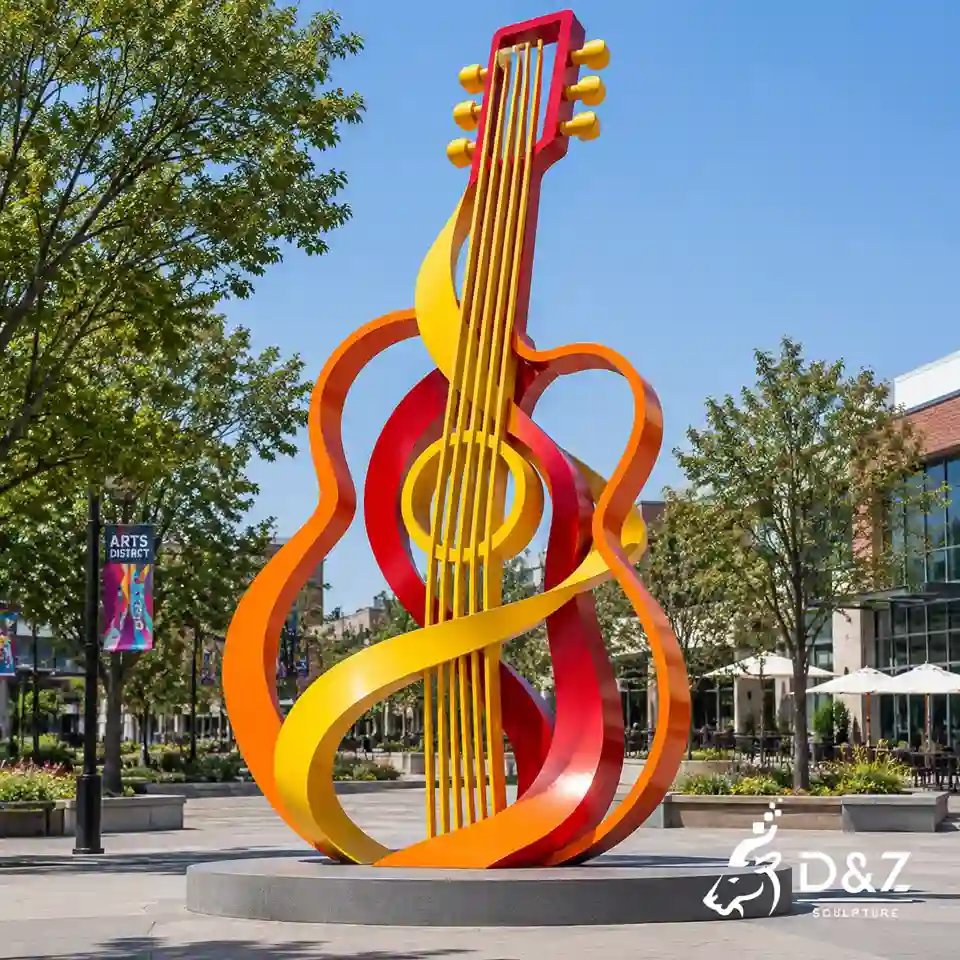
Large Abstract Outdoor Sculpture
For plazas, hotels, public green spaces, and large landscape projects, sculptures can be designed around the available space and site requirements. Material selection, structural stability, weather resistance, and installation methods all need to be considered.
These designs can be customized in terms of shape, dimensions, materials, colors, and surface finishes. You can share reference images or initial ideas, and our team can help develop them into a practical design based on your site and manufacturing requirements.




11 | How to Choose the Right Abstract Sculpture for Your Space or Project?
If you are choosing an abstract sculpture for a hotel, garden, commercial space, or public art project, don’t focus on appearance alone. The design, size, material, finish, and installation method should all suit the actual site.
Choose a Style That Matches Your Space
For modern and minimalist architecture, geometric, minimalist, and streamlined designs are often a good fit. Organic and nature-inspired forms work well in gardens and natural landscapes. Art galleries and distinctive exhibition spaces may benefit from more expressive and creative designs.
Consider Size and Proportion
A sculpture that is too large can overwhelm a small space, while an open plaza or large landscape may need a more substantial piece to create visual impact. Consider viewing distance, eye level, and the proportions of nearby buildings and landscape features.
Select Materials for the Environment
Indoor and outdoor projects have different material requirements. Outdoor installations may need to account for rain, temperature changes, humidity, corrosion, and wind loads. Each material also has different weathering, finishing, and maintenance requirements.
Choose the Right Surface Finish
Stainless steel can be mirror-polished, brushed, matte-finished, or painted in different colors. Bronze can have a natural, dark brown, or verdigris finish. Corten steel can retain its natural weathered patina, while marble can be finished to highlight its natural veining and texture.
Different finishes create very different visual results. It is best to consider the building colors, surrounding landscape, and overall project design before making a decision.
Plan for Installation, Structure, and Maintenance
For large sculptures, appearance is only one part of the project. Weight, center of gravity, load distribution, structural supports, foundation embeds, and fixing methods must also be considered. Transportation, on-site installation, future maintenance, budget, and delivery schedules should be planned in advance.
If you are still unsure which shape, size, or material would work best, send us your site photos, dimensions, and initial ideas. The D&Z team can help you compare suitable options based on your project requirements.
12 | FAQs About Abstract Sculpture
Q1: What is an abstract sculpture?
A: It is a three-dimensional artwork that uses shapes, lines, volume, space, and texture to express ideas and emotions rather than simply reproducing real objects.
Q2: Does an abstract sculpture always have to be non-representational?
A: No. It can be inspired by people, animals, or natural objects while simplifying or transforming their recognizable features.
Q3: What is figurative vs. abstract sculpture?
A: Figurative sculpture focuses on recognizable subjects, while abstract sculpture places more emphasis on form, space, and artistic expression. The two styles can also be combined.
Q4: What materials are commonly used for abstract sculptures?
A: Common options include stainless steel, bronze, Corten steel, and marble. Other artists also work with wood, clay, ceramic, and glass.
Q5: Can abstract sculptures be used outdoors?
A: Yes. The material, surface finish, structural design, foundation, and local weather conditions all need to be considered for long-term outdoor use.
Q6: What are the most common styles of abstract sculpture?
A: Common styles include geometric, organic, minimalist, figurative, and kinetic forms.
Q7: Can I customize an abstract sculpture for my project?
A: Yes. You can customize the design, dimensions, materials, colors, surface finishes, and structural details according to your site and project requirements.
Q8: How do I choose a large outdoor abstract sculpture?
A: Consider the site dimensions, viewing distance, material durability, structural stability, foundation, installation method, and maintenance requirements.
Q9: How much does a custom abstract sculpture cost?
A: Pricing depends on size, material, design complexity, surface finish, fabrication requirements, packaging, transportation, and installation. Share your project details for a more accurate quotation.
Q10: How is a custom abstract sculpture made?
A: The process usually includes concept development, design drawings or 3D modeling, material selection, fabrication or casting, surface finishing, quality inspection, and installation preparation.
13 | Custom Abstract Sculpture Solutions by D&Z
D&Z Sculpture designs and manufactures custom abstract sculptures in stainless steel, bronze, Corten steel, and marble for hotels, resorts, commercial spaces, public art, and private landscapes.
From design and production to quality inspection, packaging, transportation, and installation support, we help bring your project from concept to completion.
Share your site photos, reference images, preferred dimensions, and budget. Our team will recommend suitable designs and materials and provide a quotation.