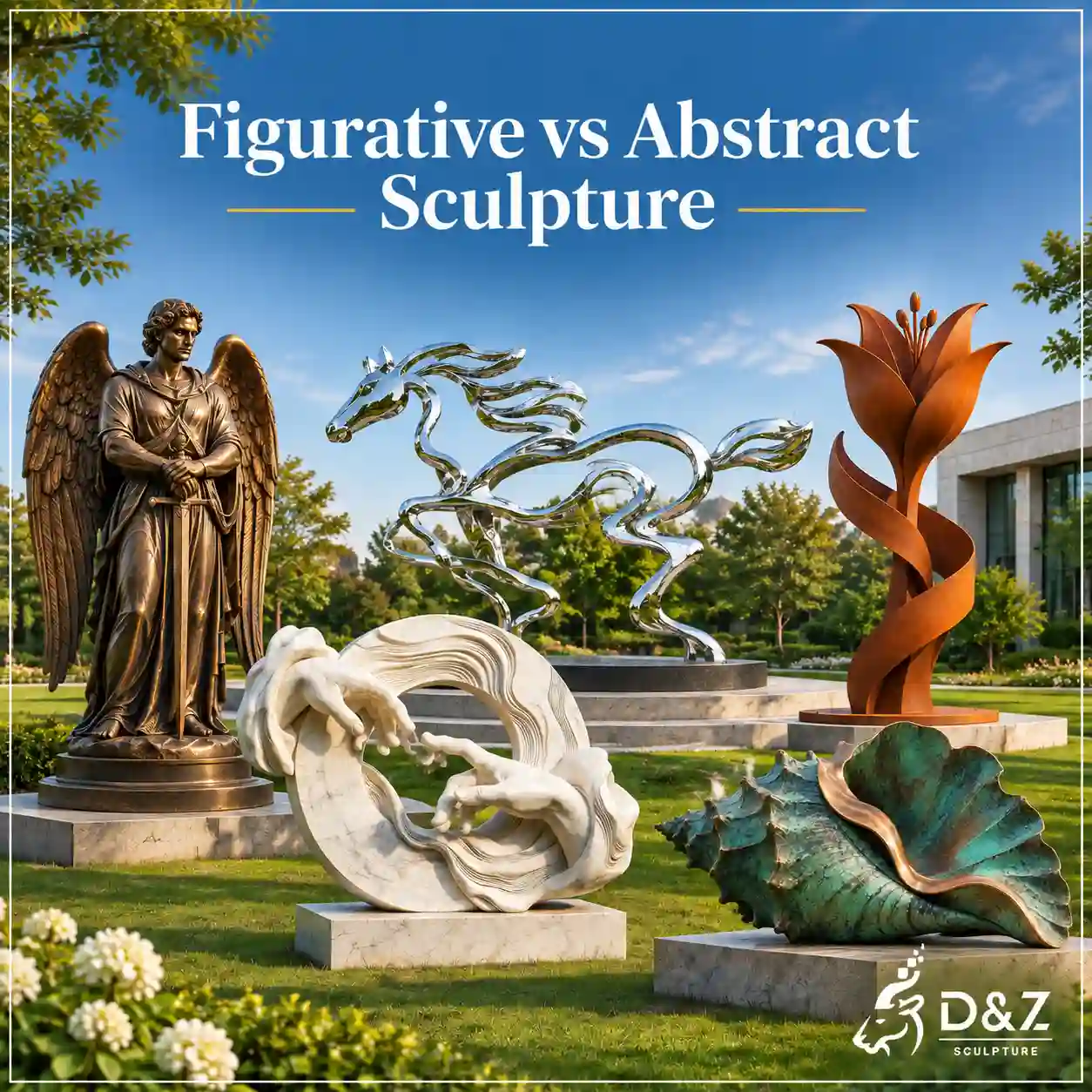
What Is Figurative vs Abstract Sculpture? A Practical Guide for Your Project
What Is Figurative vs Abstract Sculpture? Based on our experience working with sculpture buyers, designers, and project planners, this question is about more than just understanding two artistic styles. Most people want to know which style works better for their space and which one can express the right feeling for their project.
When comparing the two, some buyers worry that abstract sculpture may be too subtle or difficult for visitors to understand. Others feel that figurative sculpture may look too traditional or not modern enough.
In this guide, we’ll look at figurative and abstract sculpture from a practical project perspective. We’ll explain their main characteristics, compare their differences, and share how to choose the right style, material, and design for your space. We’ll also cover what to consider before commissioning a custom sculpture, helping you move from an initial idea to a finished artwork.
Table of Contents
01 | What Is Figurative Sculpture?
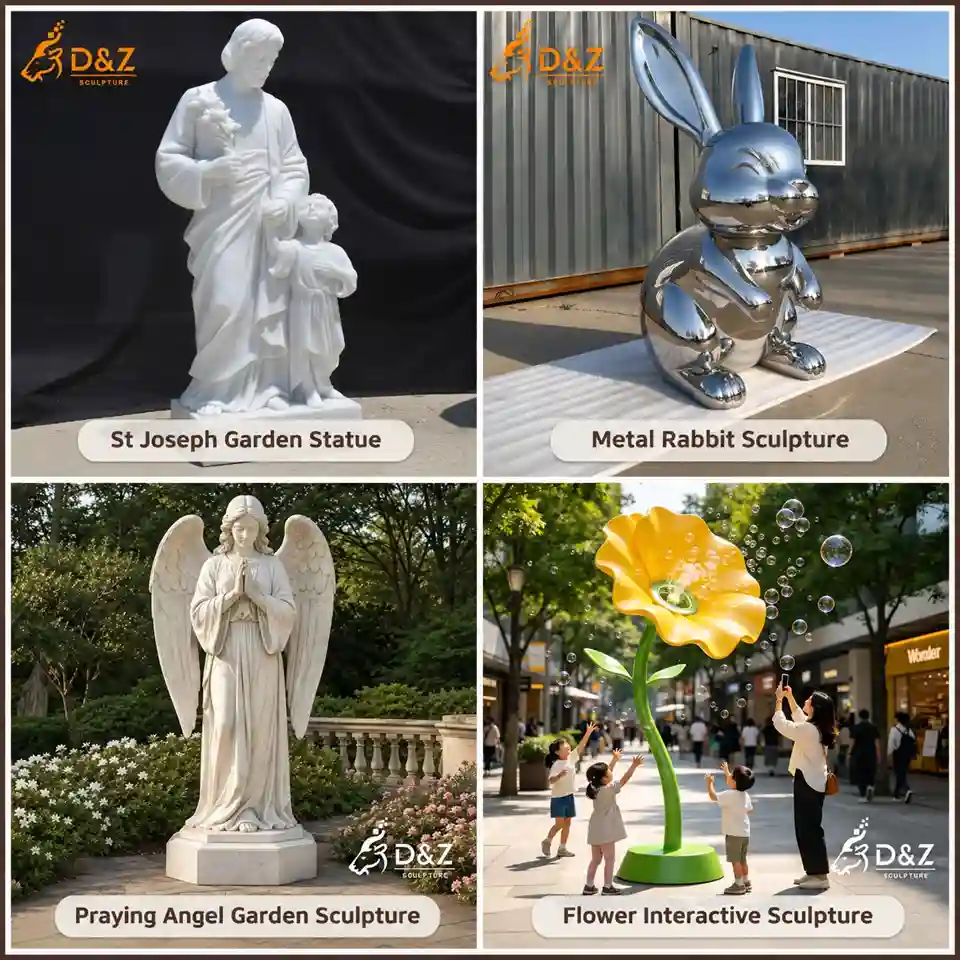
Figurative sculpture is based on recognizable subjects from the real world. Visitors can usually tell what the sculpture represents at first glance, whether it is a person, an animal, or a natural object.
Its main purpose is to use recognizable forms to tell a story, express emotions, or represent a particular subject. The sculpture retains the basic shape and structural features of its subject, with details such as facial expressions, body gestures, skin texture, or animal features added according to the design.
Common Types of Figurative Sculpture
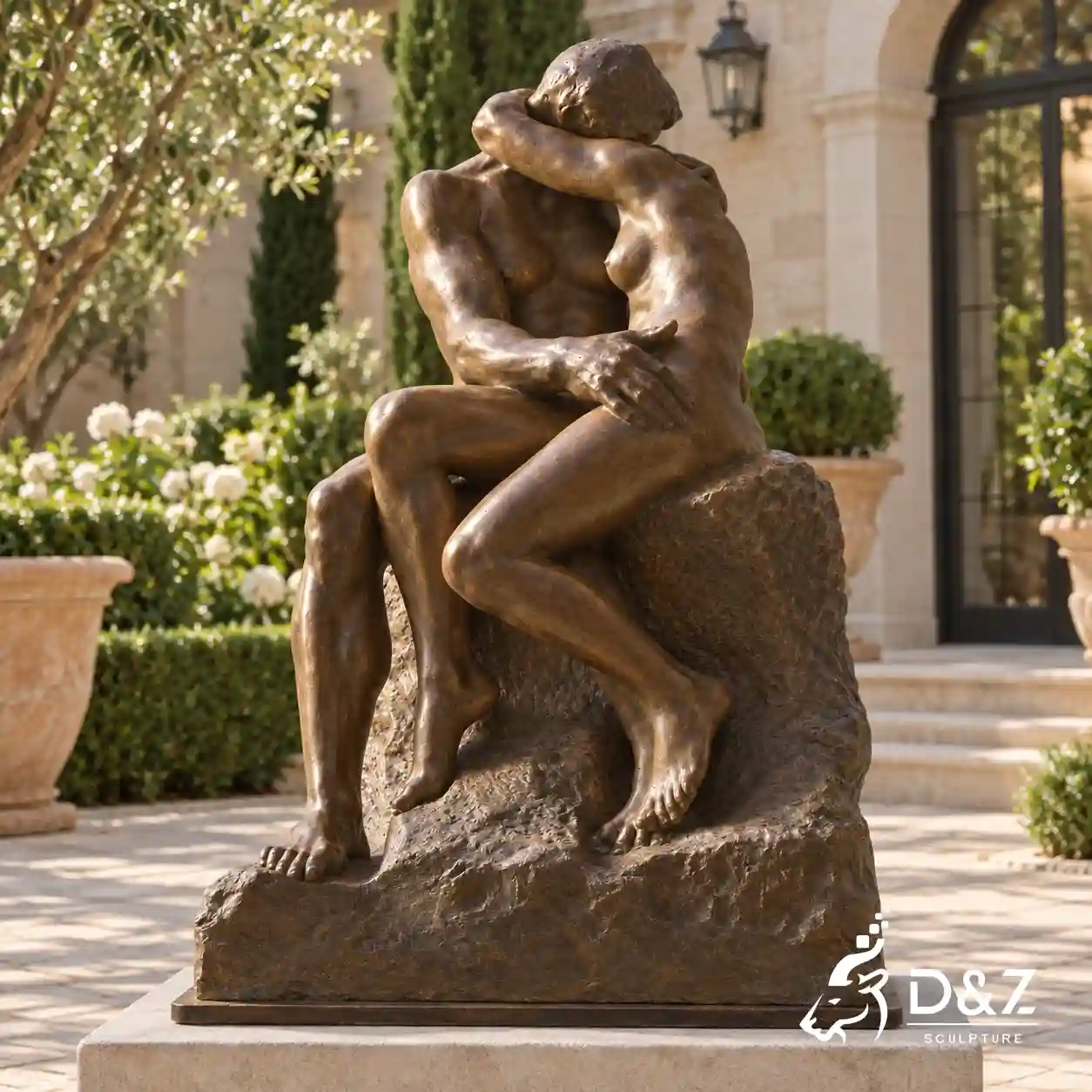
- Human Figure Sculpture: Portraits, dancers, couples, parent-and-child figures, and historical figures.
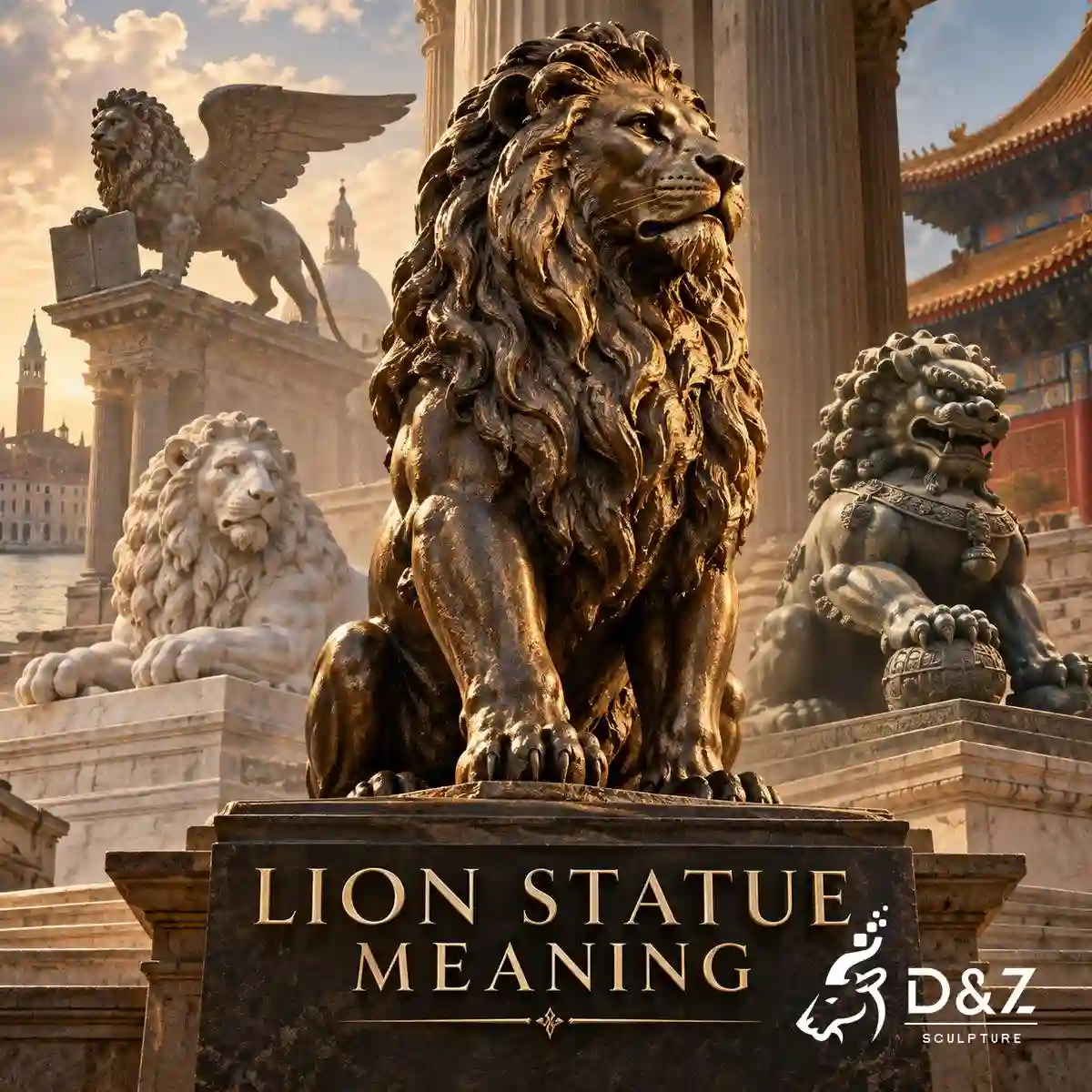
- Animal Sculptures: Lions, horses, birds, dolphins, deer, and other animals.
- Mythological and Symbolic Figure Sculpture: Mythological characters, angels, Buddha figures, and other symbolic subjects.
- Natural Form Sculpture: Recognizable flowers, trees, plants, and other elements inspired by nature.
Realistic vs. Stylized Figurative Sculpture
It’s worth understanding the difference between realistic and stylized figurative sculpture.
Realistic figurative sculpture aims to closely reproduce its subject. Facial features, body proportions, muscles, and even small details such as hair or fur are carefully modeled. This style is often suitable for memorials, portrait sculptures, and traditional estates.
Stylized figurative sculpture takes a more artistic approach. It simplifies certain details, adjusts proportions, or uses softer lines while keeping the subject recognizable. This creates a balance between clear visual identity and modern design, making it suitable for contemporary hotels, luxury gardens, and modern residential spaces.
Both approaches can create meaningful figurative art sculpture. The right choice depends on how realistic or artistic you want the final piece to look.
02 | What Is Abstract Sculpture?
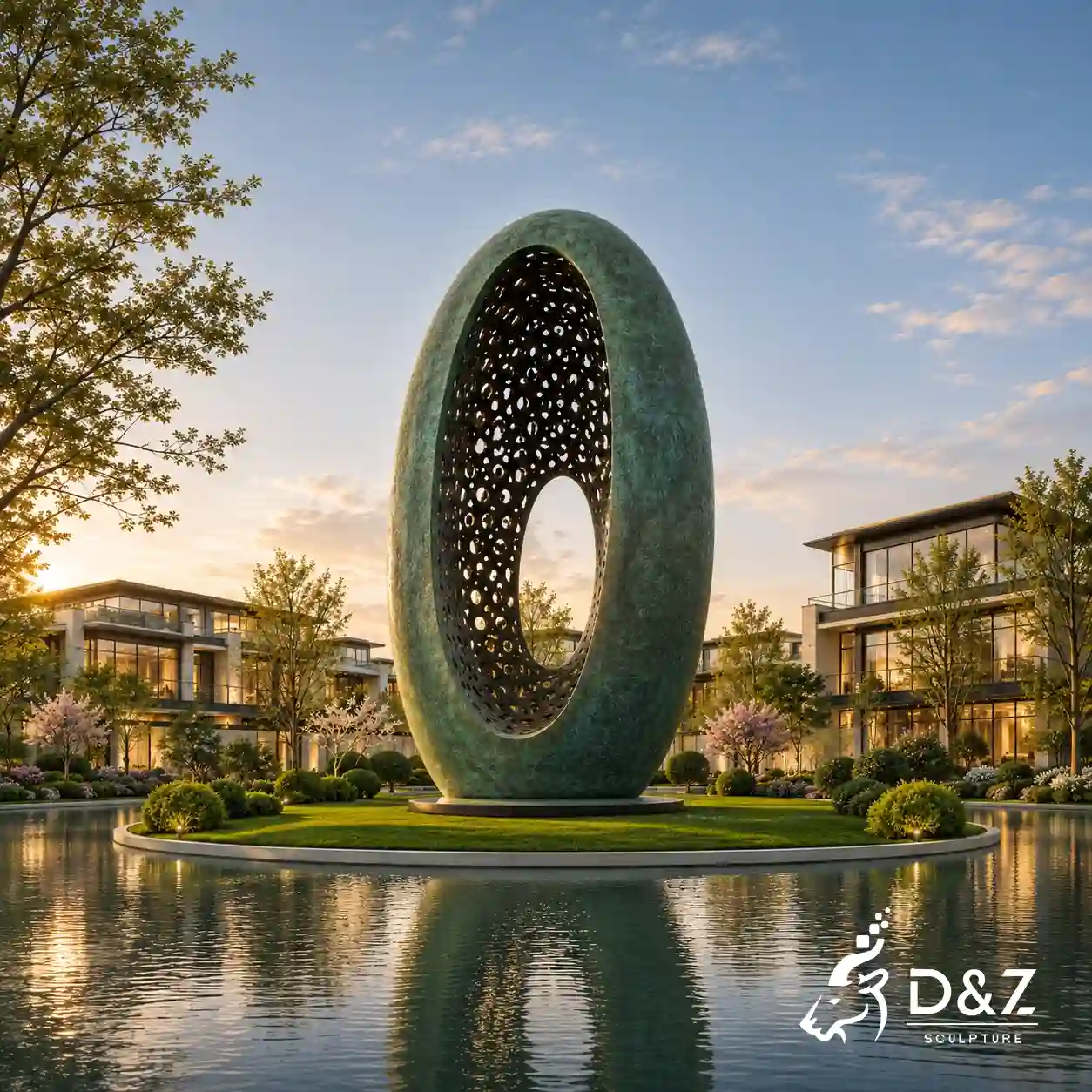
Unlike figurative sculpture, abstract sculpture does not aim to reproduce recognizable real-world subjects in a literal way. Instead, it uses lines, curves, geometric shapes, solid forms, open spaces, and materials to express ideas and feelings.
Its focus is on form, movement, light, shadow, and atmosphere rather than reproducing every detail of a real object.
Abstract sculpture offers greater freedom in shape and proportion. Designers can stretch, twist, overlap, or combine different forms to create visual movement and depth. Open spaces and layered structures can also produce changing light and shadow effects.
The same sculpture may look different from different viewing angles or under different lighting conditions.
Common Types of Abstract Sculpture
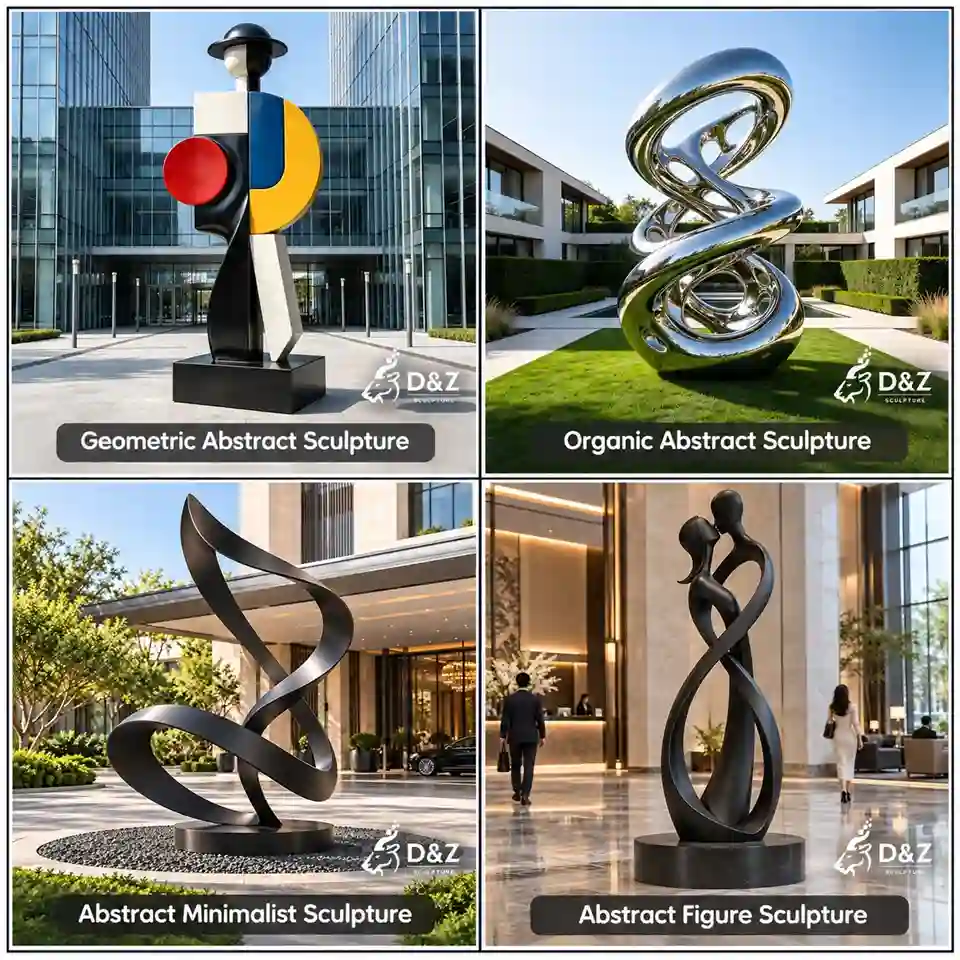
- Abstract Geometric Sculpture: Made from regular or irregular geometric shapes, angular surfaces, and clean lines. It works well in modern architecture and minimalist spaces.
- Organic Abstract Sculpture: Uses flowing curves and natural-looking forms inspired by water, clouds, waves, and plants. It creates a softer and more relaxed atmosphere.
- Abstract Minimalist Sculpture: Uses a limited number of shapes and simple structures to create a strong visual statement. It is suitable for hotel lobbies, open plazas, and spaces with a clean architectural style.
- Abstract Figure Sculpture: Retains hints of a human form but removes facial details and simplifies body proportions. It often expresses emotions such as love, companionship, connection, and growth rather than representing a specific person.
How Does Abstract Sculpture Express Ideas and Emotions?
Abstract sculpture communicates in a different way from figurative sculpture. Rather than telling a story through recognizable subjects, it uses form to create a feeling.
For example, upward-reaching shapes can suggest energy, hope, and growth. Intertwining curves may express warmth, connection, or harmony. Sharp geometric forms can communicate strength, order, and a sense of professionalism.
Different viewers may interpret the same abstract art sculpture in different ways. That’s part of its appeal. It can become a focal point in a space while leaving room for personal interpretation.
If you’d like to learn more about abstract sculpture, you can also explore our guide: What Is an Abstract Sculpture? Definition, Characteristics, History & Examples
03 | Figurative vs Abstract Sculpture: What Are the Key Differences?
Figurative and abstract sculpture differ in how they use shape, detail, proportion, and artistic expression. Neither style is automatically better than the other. The right choice depends on the message you want to communicate and the environment where the sculpture will be displayed.
Here is a quick comparison:
| Comparison | Figurative Sculpture | Abstract Sculpture |
|---|---|---|
| Main Subject | Recognizable people, animals, or natural objects | Shapes, forms, lines, and concepts |
| Shape and Proportion | Usually follows the basic structure of its subject | Allows more freedom to stretch, simplify, or reshape forms |
| Details | May include facial features, anatomy, textures, and fine details | Focuses more on overall shape, surfaces, and light |
| Artistic Expression | Tells stories and represents recognizable subjects | Expresses emotions, ideas, and atmosphere |
| Visual Impact | Creates a familiar and memorable image | Creates a distinctive visual identity and modern artistic feel |
| Viewing Experience | Easy to recognize and understand | Encourages personal interpretation and exploration |
Which Differences Matter Most When Choosing a Sculpture?
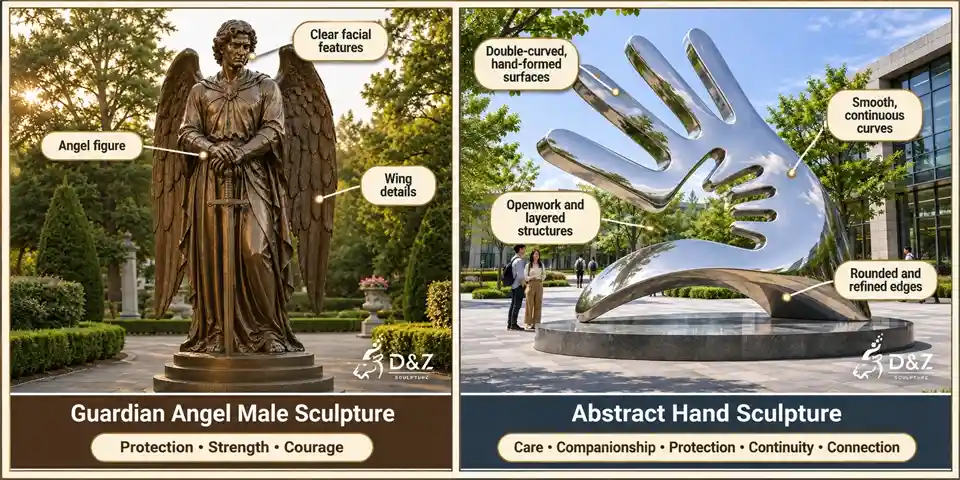
Subject Recognition: Figurative sculpture has a clear subject. Visitors can usually understand what it represents immediately. Abstract sculpture has no fixed subject to identify, allowing viewers more freedom to interpret its form.
Shape and Proportion: Figurative sculpture generally follows the anatomy or natural structure of its subject, even when the design is stylized. Abstract sculpture is not limited by realistic proportions and can freely reshape or combine different forms.
Details and Surface: Figurative sculpture can include detailed facial expressions, body features, textures, and patterns. These details often help communicate the subject. Abstract sculpture usually places more emphasis on its overall silhouette, curves, surfaces, and light effects. Too many small details may distract from its main composition.
Artistic Expression: Figurative sculpture is effective for storytelling, memorials, cultural themes, and recognizable symbols. Abstract sculpture is more focused on atmosphere, emotion, spatial design, and brand identity.
Visual Impact: Figurative sculpture creates a memorable image through recognizable subjects. Abstract sculpture often works well with architectural and landscape lines, adding a contemporary artistic element to the space.
Viewing Experience: Figurative sculpture is generally easier to understand and connect with. Abstract sculpture offers a more open viewing experience, encouraging visitors to observe its shapes, movement, and changing light from different angles.
04 | Which Sculpture Style Is Right for Your Project?
Choosing a sculpture style is not simply about following current trends. It means finding a design that fits your project’s purpose, architectural style, surrounding environment, and viewing conditions.
Here are some suggestions based on common project types.
| Project Type | Suggested Styles | Design Considerations |
|---|---|---|
| Hotel Entrance | Figurative or Abstract | Match the hotel’s identity and architectural style. Create a welcoming focal point. |
| Private Estate or Villa | Figurative or Semi-Abstract | Complement garden layouts and personal preferences without making the space feel crowded. |
| Commercial Plaza | Abstract or Geometric | Use clear shapes and strong silhouettes to create a recognizable landmark. |
| City Park | Both | Combine cultural themes, natural surroundings, and public viewing needs. |
| Resort | Abstract or Organic | Use flowing forms that work naturally with water, plants, and landscape features. |
| University Campus | Both | Reflect the institution’s history, values, and different campus functions. |
How Should You Choose for Different Spaces?
Hotel Entrances: Both figurative and abstract sculptures can work well at hotel entrances. For cultural or traditionally themed hotels, stylized figurative sculpture can create a memorable identity. For modern luxury hotels and minimalist business hotels, a large abstract sculpture can become the main visual feature. The key is to match the sculpture with the hotel’s positioning and exterior architecture while creating a welcoming first impression.
Private Estates and Villas: Figurative or semi-abstract sculpture is often a good choice for private gardens and residential landscapes. Simple animal sculptures, such as deer or birds, can work well beside garden paths and water features. Semi-abstract sculptures may be more suitable for main lawns and terraces, adding artistic character without making the space feel too formal. The design should reflect the owner’s preferences and work naturally with the existing landscape.
Commercial Plazas: Abstract and abstract geometric sculpture are strong options for commercial plazas. Large, clean forms and bold silhouettes are easier to recognize from a distance. They can help create a landmark, strengthen the identity of a commercial development, and give the space a modern appearance.
City Parks: Both figurative and abstract sculpture can be used in public parks. Figurative sculpture is suitable for cultural, historical, or educational areas. Organic abstract sculpture can work well in open lawns, beside lakes, or near main entrances, where it can connect with the surrounding landscape. The choice should consider local culture, natural surroundings, and visitors of different ages.
Resorts: Organic abstract sculpture is often a good fit for resorts. Soft curves and flowing forms can complement lakes, plants, mountains, and other natural features. They help create a relaxed atmosphere without making the space feel too formal or heavy.
University Campuses: Both styles can work well in university environments. Figurative sculpture is often suitable for historical memorial areas and cultural spaces. Abstract sculpture can be placed in front of libraries, academic buildings, and open plazas to represent exploration, knowledge, and creativity.
Can You Combine Figurative and Abstract Sculpture in One Project?
Yes. You do not have to choose only one style for an entire project.
For example, a large abstract sculpture can serve as the main landmark, while smaller stylized figurative sculptures can be placed along garden paths or beside water features.
The key is to make sure the shapes, scale, materials, and finishes work together rather than compete with each other.
What Else Should You Consider Before Choosing?
- Project Theme: If your project has a clear cultural story, memorial purpose, or recognizable brand identity, figurative sculpture may be a better fit. If the goal is to create a modern atmosphere or express a broader concept, abstract sculpture may work better.
- Architecture and Landscape: Classical architecture and traditional gardens often work well with figurative sculpture. Modern glass buildings, minimalist architecture, and contemporary landscapes can provide a natural setting for abstract sculpture. However, these are design references rather than fixed rules.
- Viewing Distance: For lobbies, seating areas, and other close-viewing spaces, figurative sculpture can show more facial and anatomical details. For plazas, lakesides, and park entrances, a strong silhouette and clear overall shape may have greater impact from a distance.
- Desired Visual Effect: If you want a recognizable subject that feels familiar and welcoming, consider figurative sculpture. If you prefer a more understated, contemporary look that enhances the surrounding space, abstract sculpture may be a better choice.
If you are unsure, semi-abstract sculpture can be a practical middle ground. It keeps some recognizable features while simplifying the overall form.
05 | How Can You Make Sure the Finished Sculpture Matches Your Expectations?
One of the biggest concerns when commissioning a custom sculpture is the difference between the reference image, the design proposal, and the finished product. The final sculpture may look different from what you expected, with proportions that feel out of place or details that don’t match the original idea. This can lead to delays and additional costs.
At D&Z Sculpture, we focus on reducing these differences through clear design confirmation and production checks. Here are the main steps to consider.
Share Reference Images and Design Ideas
You don’t need to have a complete design plan before contacting us. Reference images, sketches, or even a few examples of sculptures you like can be a good starting point. Tell us which features you want to keep and which shapes, lines, or details you would like to change or simplify. This helps our team understand your preferences and avoid misunderstandings during design development.
Confirm Dimensions and Proportions
Dimensions are not just about height, width, and depth. They should also relate to the installation space, ceiling height, pathway width, nearby trees, and surrounding buildings. A sculpture may look impressive in a design drawing but feel too large and overwhelming when installed. On the other hand, a sculpture that is too small may not have enough visual presence. We recommend checking the overall proportions against the actual site before production.
Confirm Materials and Surface Finishes
The same sculpture can look very different depending on its material and finish. Mirror-polished stainless steel, brushed stainless steel, bronze, marble, and Corten steel all create different visual effects and textures. For outdoor projects, environmental conditions such as coastal salt exposure, rain, and sunlight should also be considered. For indoor projects, appearance, reflection, and surface texture may be more important. Where appropriate, material and finish samples can help you understand the actual appearance before production. This is especially useful when choosing the finishes effect.
Review 3D Models and Multiple Viewing Angles
Once the design is developed, we can create a 3D model to help you review the overall shape and proportions. If you provide site photos, we can also prepare visual presentations showing how the sculpture may look in its intended location. Front, side, 45-degree, and wider views help you understand the design from different angles. You can request adjustments to curves, outlines, proportions, and overall volume before production begins. This is one of the most important stages for confirming the final appearance.
Check Structural and Installation Requirements
An attractive design must also be practical to manufacture, transport, and install. For large outdoor sculptures, structural considerations may include weight, wind exposure, internal supports, welding or casting methods, lifting points, embedded parts, and foundation requirements. Our team reviews the relevant structural and installation requirements during project development. Site-specific foundation and engineering requirements should also be confirmed according to the installation location. The goal is to create a sculpture that looks right and can be installed safely and reliably.
Follow Production and Quality Checks
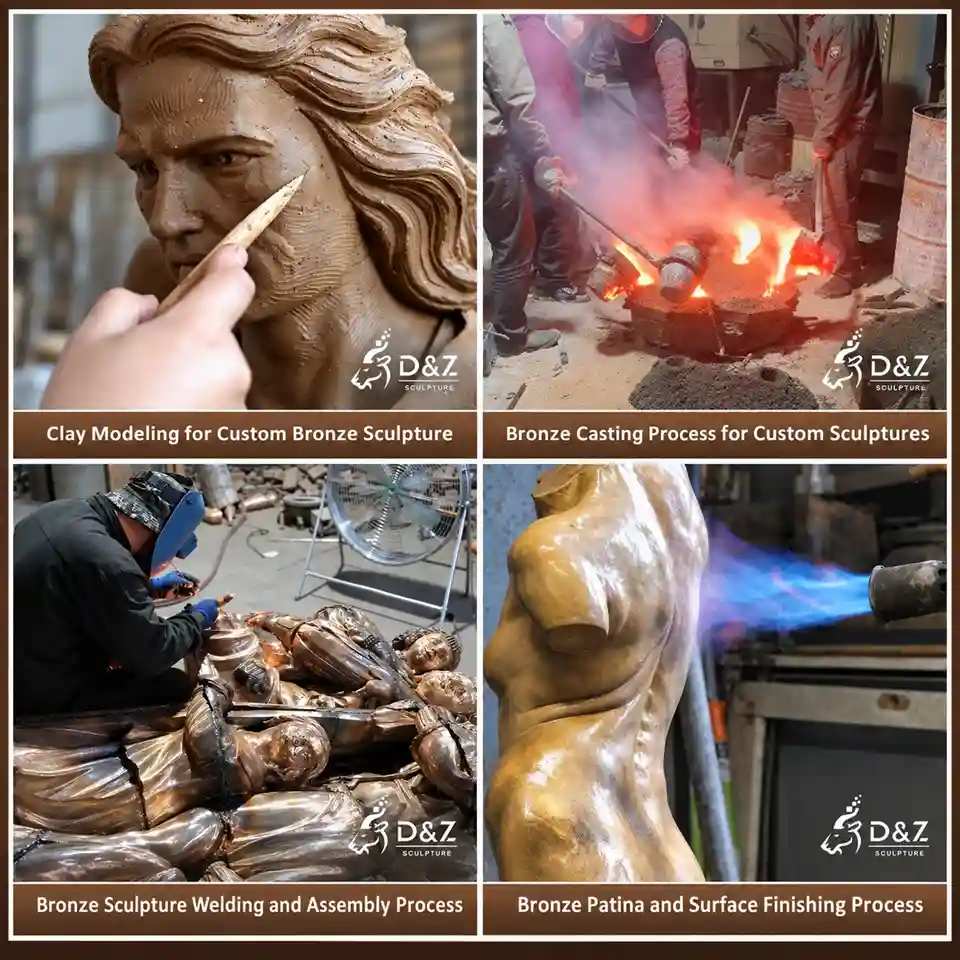
Production checks help reduce the risk of discovering problems after delivery. Take the bronze sculpture for example, the clay model is an important stage for confirming the overall shape, expression, and proportions. It is much easier to make design adjustments at this stage than after casting. During later production stages, we check dimensions, joints, surface details, polishing, and patina or color finishes according to the material and design. We can also share production photos and videos from different angles so you can follow the progress and review key details. After the finished sculpture passes the agreed quality checks, it is prepared for packaging and shipment.
06 | What Should You Prepare Before Contacting a Sculpture Supplier?
Many buyers start with only a general idea. They may not have finished drawings or know exactly what information a sculpture supplier needs before providing a quotation.
The good news is that you don’t need to prepare everything at once. If you only have reference images, a basic concept, or a few photos of your site, you can still contact us. Our team can help you organize your ideas and develop a suitable design.
Here is some information that can help us understand your project.
| Information | What You Can Share |
|---|---|
| Project Location | Country, city, indoor or outdoor environment, and site photos |
| Design Ideas | Reference images, sketches, preferred style, and design details |
| Sculpture Dimensions | Approximate height, width, and depth |
| Material and Finish | Bronze, 304/316 stainless steel, Corten steel, marble, and preferred surface finish |
| Budget | Your estimated project budget or price range |
| Quantity | Number of sculptures and whether they form a coordinated series |
| Timeline | Expected production, delivery, and installation dates |
Why Do We Need This Information?
Project Location and Site Photos: Tell us where the sculpture will be installed, such as a hotel lobby, private garden, commercial plaza, or coastal landscape. Photos and basic site dimensions help us understand the surrounding environment, access conditions, and possible installation limitations.
Design Ideas and Reference Images: Share the subject, style, and visual details you prefer. You can also tell us which designs you don’t like. This helps narrow down the design direction.
Dimensions and Material Preferences: Approximate dimensions are enough for an initial discussion. You can also share whether you prefer bronze, stainless steel, Corten steel, or marble, along with any preferred colors or surface finishes.
Budget and Project Schedule: Your budget and expected delivery date help us recommend a more suitable material, size, and production approach. They also help us assess whether the proposed design can meet your project requirements.
Quantity and Installation Needs: Let us know whether you need one sculpture or a group of coordinated pieces. If the project includes multiple sculptures, we can consider their overall arrangement and visual consistency.
Once we have this information, we can evaluate the project, discuss suitable design directions, and prepare a proposal and quotation based on the confirmed requirements.
You don’t need to have every detail figured out. Even an early idea is enough to start a conversation.
07 | Which Materials Work Best for Figurative and Abstract Sculptures?
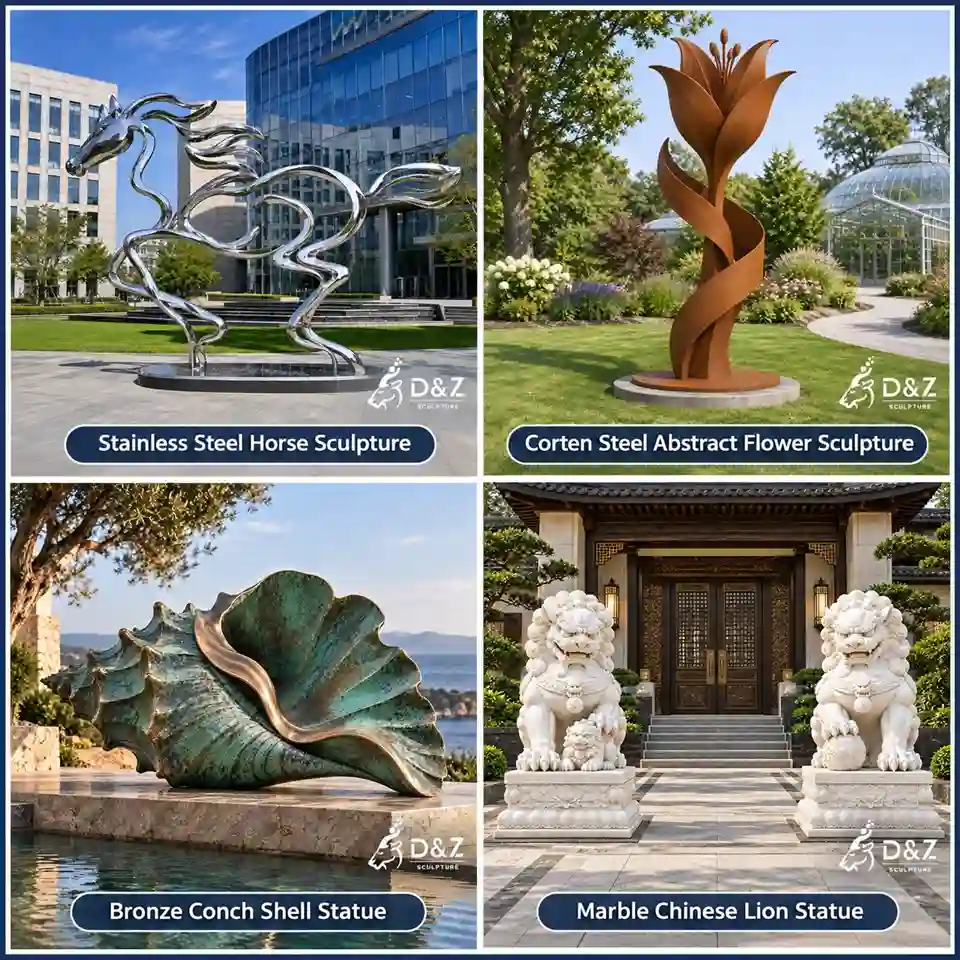
Common materials for figurative and abstract sculpture include stainless steel, Corten steel, bronze, and marble.
There is no single best material for every project. Each has different visual characteristics, fabrication requirements, and maintenance needs. The right choice depends on the design, installation environment, expected appearance, and budget.
Stainless Steel Sculpture
Stainless steel is a popular choice for modern figurative and abstract sculpture. Common grades include 304 and 316 stainless steel.
304 stainless steel works well in many standard outdoor environments. For coastal locations or areas with higher chloride exposure, 316 stainless steel is generally a better option. The final grade should still be selected according to the actual environment and maintenance requirements.
Available finishes include mirror polishing, brushed surfaces, and painted finishes.
Stainless steel is especially popular for abstract sculpture because its smooth curves and reflective surfaces can interact with surrounding architecture, light, and landscape. It can also be used for modern figurative designs, including human and animal sculptures.
Corten Steel Sculpture
Corten steel develops a natural weathered surface that gives sculptures a warm, rustic appearance.
It works well for outdoor landscape projects, gardens, parks, and architectural spaces with natural or industrial design elements.
Geometric forms, abstract shapes, and simplified silhouettes are particularly effective in corten steel sculpture.
It should be noted that runoff may also stain nearby paving or walls during the weathering process. Coastal salt exposure and constantly wet conditions should be carefully evaluated before choosing this material.
Bronze Sculpture
Bronze is widely used for both realistic and stylized figurative sculpture because it can capture detailed shapes and textures.
Many bronze sculptures are produced through the lost-wax casting process. The material offers a warm, substantial appearance and works well for human figures, animal sculptures, and symbolic subjects.
Bronze can also be used for simple abstract forms. Different patina treatments can create dark brown, green, or other customized surface effects.
It is suitable for both indoor and outdoor applications when the material, finish, and maintenance requirements are properly considered.
Marble Sculpture
Marble has a natural texture and an elegant, timeless appearance.
It is often used for classical figurative sculpture, portrait figures, and simplified abstract stone sculpture. Every piece of marble has its own natural patterns, giving each sculpture a distinctive appearance.
Because marble is heavy and requires careful stone carving, it is particularly suitable for fixed installations in gardens, hotel lobbies, and architectural spaces.
Different marble types have different properties. Outdoor use, surface protection, cleaning, and long-term maintenance should be considered when selecting the stone.
08 | How Does D&Z Sculpture Support Your Project from Design to Delivery?
At D&Z Sculpture, we provide more than sculpture manufacturing. We work with buyers, designers, and project teams to help turn an initial idea into a finished sculpture.
From design development to production, packaging, shipping, and installation support, we coordinate the key stages according to your project requirements.
- Project Consultation: We start by understanding your project, site conditions, design preferences, and budget. Our team can help you compare suitable sculpture styles, materials, and dimensions.
- Design Development: Based on your ideas and reference images, our designers develop the concept and refine the shape, lines, and proportions. We also consider how the sculpture will fit into the surrounding space.
- 3D Modeling and Engineering: We develop 3D models to review the overall design and coordinate structural requirements. For large outdoor sculptures, we consider factors such as wind exposure, weight, support structures, lifting, and installation.
- Custom Manufacturing: Based on the approved model, we use fabrication methods suited to each material, carefully controlling the sculpture’s form, details, and surface finish.
- Quality Inspection: We check the finished sculpture against the agreed design, dimensions, surface finish, and structural requirements. Photos and videos from different angles can be shared for your review.
- Packaging and Worldwide Shipping: We prepare protective packaging based on the sculpture’s size, weight, structure, and transportation method. Reinforced crates and protective materials help reduce the risk of damage during handling and shipping. We can coordinate sea, land, or air freight according to the project.
- Installation Support: We can provide installation drawings and guidance, and arrange on-site installation assistance when required and available for the project location.
From the first design discussion to final delivery, our goal is to make the process clear and manageable, so you can focus on the overall project with confidence.
09 | FAQs About Figurative and Abstract Sculpture
Q1: What is the main difference between figurative and abstract sculpture?
A: The main difference is whether the sculpture represents a recognizable subject. Figurative sculpture depicts recognizable people, animals, or natural objects. Abstract sculpture focuses on shapes, lines, forms, and materials to express ideas or emotions.
Q2: Is abstract sculpture difficult to understand?
A: Not necessarily. You don’t always need to identify what an abstract sculpture represents. Its purpose may be to create a visual experience, express an emotion, or complement the surrounding space. In hotels, plazas, and public landscapes, an abstract sculpture can become a focal point without requiring every visitor to interpret it in the same way.
Q3: Is figurative sculpture only suitable for traditional gardens?
A: No. Figurative sculpture can also have a modern appearance through simplified details, stylized proportions, and contemporary materials. It can work well in modern hotels, residential gardens, resorts, and commercial spaces. The key is to choose a design that matches the surrounding architecture.
Q4: Which sculpture style is better for hotels and resorts?
A: There is no single answer. Cultural or traditionally themed hotels may benefit from stylized figurative sculpture, while modern luxury hotels often work well with abstract designs. Many resorts combine both styles, using a large abstract sculpture as the main focal point and smaller figurative pieces throughout the landscape.
Q5: Can I get a quotation by providing only one reference image?
A: Yes. A reference image is a good starting point for an initial discussion. For a more accurate quotation, we will also need information such as the approximate dimensions, material, surface finish, base requirements, and shipping or installation needs. These details can affect the final production cost.
Q6: Can figurative and abstract styles be combined in one sculpture?
A: Yes. This is often described as semi-abstract sculpture. For example, a human sculpture can retain its overall body shape while removing facial details and simplifying the limbs. An animal sculpture can keep its recognizable silhouette while using flowing surfaces instead of realistic fur or feathers. This approach combines visual recognition with contemporary artistic expression.
Q7: What sculpture style works best for a luxury modern residence?
A: Semi-abstract and minimalist abstract sculpture are popular choices for modern residences. Medium-sized abstract designs can work well in indoor lobbies and entrance areas, while stylized figurative sculptures, such as birds or deer, can add warmth to gardens, terraces, and water features. The final choice should match the home’s architecture and landscape design.
Q8: Which materials are suitable for outdoor figurative and abstract sculptures?
A: Stainless steel, bronze, and Corten steel are commonly used for outdoor sculptures. Marble can also be suitable for certain outdoor applications. The best material depends on the design, local climate, exposure to moisture or salt, maintenance requirements, and budget. For coastal projects, material grade and surface protection should receive special attention.
Q9: What information do I need to prepare before commissioning a custom sculpture?
A: It helps to prepare your project location, reference images, approximate dimensions, preferred material, budget, quantity, and expected delivery date. However, you don’t need to have everything ready. Even a basic idea or a few site photos are enough for an initial discussion with our team.
10 | Contact D&Z Sculpture for Your Custom Project
Looking for a figurative, abstract, or semi-abstract sculpture for your hotel, villa, resort, commercial development, or public landscape project?
Not sure which style, material, or size will work best? Share your site photos, reference images, project requirements, budget, and timeline with us.
The D&Z Sculpture team can help you explore suitable design options, develop 3D proposals, and prepare a quotation based on your project needs.
From design and custom manufacturing to packaging, worldwide shipping, and installation support, we work with you to turn your ideas into finished sculptures.
Let’s discuss your project and find the right sculpture solution together.